

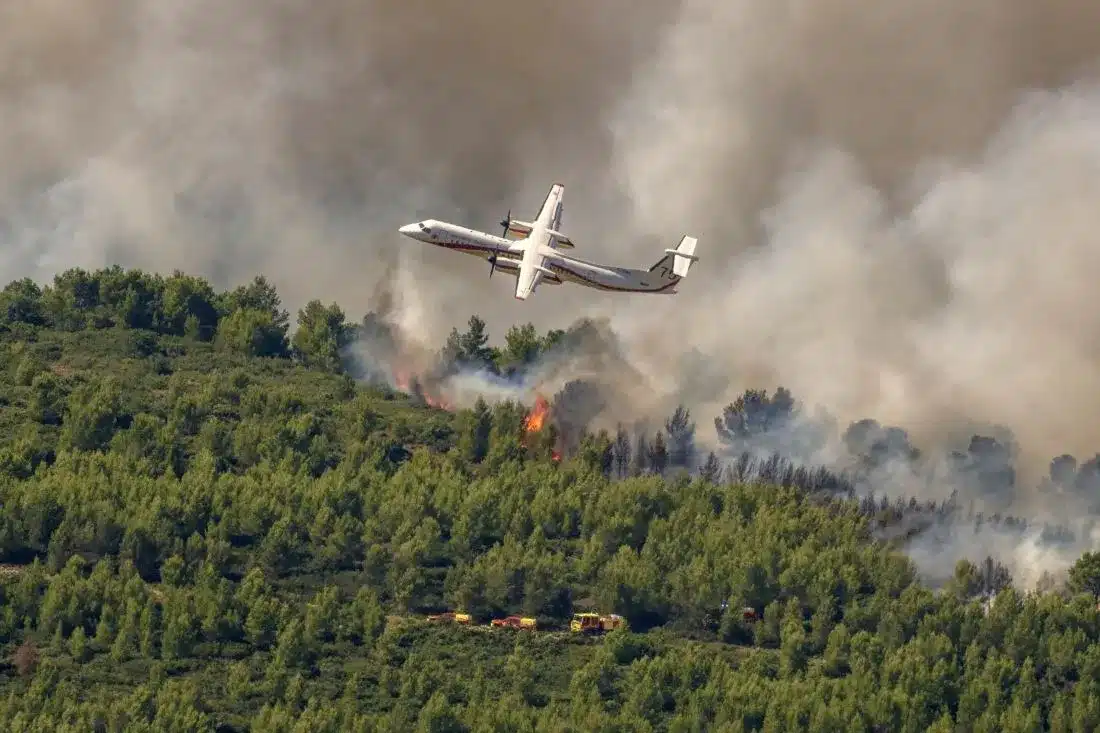

Southern France wildfires have scorched nearly 1,000 hectares of forest in the Pyrénées-Orientales region. Dry weather, strong winds and rugged terrain are making firefighting operations more challenging as authorities work to contain the blaze.
PARIS: Why are the southern France wildfires spreading so quickly? That question is being asked as firefighters continue battling a major blaze that has already destroyed nearly 1,000 hectares of forest in the Trévillach area of the Pyrénées-Orientales department. Although the fire has eased in intensity since it first erupted overnight, emergency crews remain on high alert because weather conditions continue to favour the spread of the flames.
According to local authorities, the wildfire broke out in rugged mountainous terrain, making access difficult for ground crews. Firefighters have been supported by water-bombing aircraft, which have carried out repeated aerial operations to slow the advance of the fire and protect nearby communities. Officials said emergency teams are working around the clock to bring the blaze under control before weather conditions deteriorate further.
Despite the scale of the wildfire, authorities have not issued evacuation orders. However, several roads leading to the affected area have been closed to ensure public safety and allow emergency vehicles to operate without obstruction. Residents have been advised to stay away from the fire zone, monitor official updates and follow instructions from local authorities.
The southern France wildfires are being fuelled by a combination of hot temperatures, low humidity and dry vegetation, all of which increase the risk of rapid fire spread. Strong winds can carry burning embers over long distances, igniting new fires well ahead of the main blaze. In mountainous regions, steep slopes also allow flames to move uphill more quickly, making containment efforts significantly more difficult.
Southern France experiences wildfires almost every summer, particularly in Mediterranean regions where prolonged dry spells leave forests highly vulnerable. Climate experts have warned that rising temperatures and increasingly frequent heatwaves are extending the wildfire season across southern Europe. As a result, firefighters are responding to larger and more intense fires than in previous decades.
In recent years, France has strengthened its wildfire response by investing in specialised firefighting aircraft, improving early warning systems and expanding forest monitoring programmes. Authorities also conduct public awareness campaigns urging residents and visitors to avoid activities that could accidentally ignite fires during periods of extreme risk.
The southern France wildfires remain under close surveillance as firefighting operations continue. Officials say containing the blaze remains the immediate priority, while weather conditions over the coming days will determine whether emergency crews can fully extinguish the fire and prevent further damage to forests, wildlife and surrounding communities.scription