

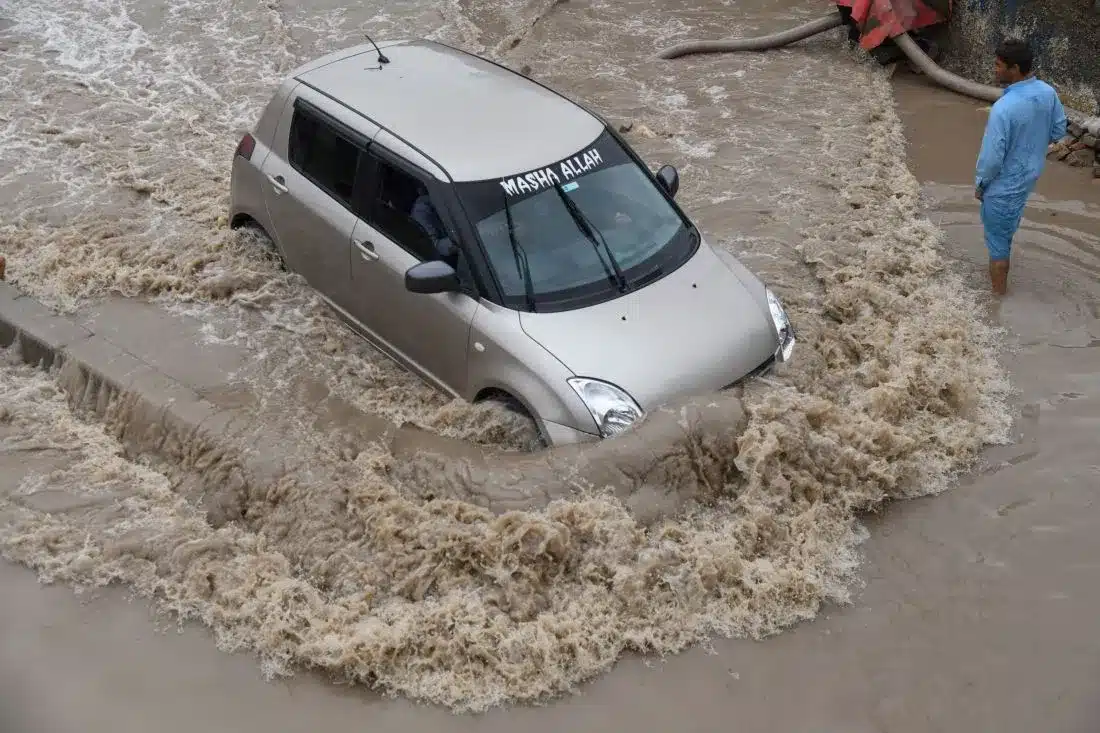

UAE rainfall vehicle checks help drivers prevent costly damage after floods and ensure safety before returning to the road.
The United Arab Emirates doesn’t do rain quietly. Lastly, it was back few years back when the UAE experienced its rainfall mayhem. The region was drowned in floods. However, this year the skies are again shrouded with dark clouds, resulting in heavy alerts, floods, vehicle damage and more.
Rainfall Mayhem in the UAE this week
Heavy downpour and thunder lashed large parts of the UAE this week, with authorities issuing a series of safety alerts as flooding hit roads and communities across Dubai, Abu Dhabi, and the Northern Emirates. Some parts of Abu Dhabi and Ajman have received rainfall up to 93.3mm. For a country that averages under 100mm annually, that’s not weather — that’s a crisis in slow motion.
One of the main issues people are facing is vehicle damage. Drawing on the experience of mayhem in 2023, nearly 60% of vehicles were totalled in the rainstorm. People suffered seeing their luxurious cars drowning in the streets of big cities like Dubai and Abu Dhabi.
Is your car broken down amid the waterlogging?
Meanwhile, now garages across the UAE have been flooded with vehicles that broke down while driving through waterlogged streets or failed to start in submerged parking lots, with repair costs rising so high. Engine damage, dysfunctional brakes, and electrical short circuits are among the most reported complaints, alongside the embarrassingly overlooked issue of damaged wipers.
What’s the current situation in garages?
During this period, The Brew News had a conversation with a local auto repair shop owner of SAB Auto Care LLC, Adil Khan, located at Ras Al Khor, Dubai, about the ongoing situation. Adil Khan, informed how he manages to keep a check on the vehicles getting damaged by waterlogging and rainfall. He said, “This is a difficult situation to handle. Many of the garages in the area are not functioning due to waterlogging in the working space. Only a few garages are functional and are facing difficulties in catering to a large number of vehicles damaged.”
Citing the primary issues, he said, “Some of the main issues people are facing are electrical failures, engine damage and underbody repairs.” Moreover, Adil shared some post-flood vehicle check ideas in order to get through this rainfall drama.
So, before you turn that key, here’s your five-step post-flood vehicle check:
1. Check the engine oil dipstick – If the oil looks milky or frothy, water has entered the engine. Do not start the car; just call a mechanic immediately.
2. Inspect the air filter – Soaked air filter means your engine could have sucked in water. A hydrolocked engine is an expensive lesson in patience.
3. Test the brakes before you move – Waterlogged brakes are among the top complaints mechanics are seeing — Just pump them gently before hitting any main road.
4. Check your electrics – Hazard lights, windows, dashboard warnings — short circuits in electrical systems are a common result of submersion.
5. Dry the interior immediately – If water has seeped into the cabin, it should be removed using towels or wet vacuums, while doors and windows should be opened to ventilate and dry the interior to prevent odours and mould.
According to the weather forecast, the rain might last until the end of this week. So, in order to keep your car safe, kindly check these steps before hitting the road.
This article is contributed by Alina Khan, a contributor to The Brew News.