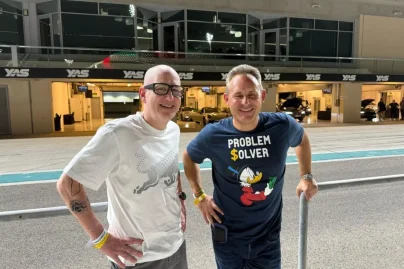
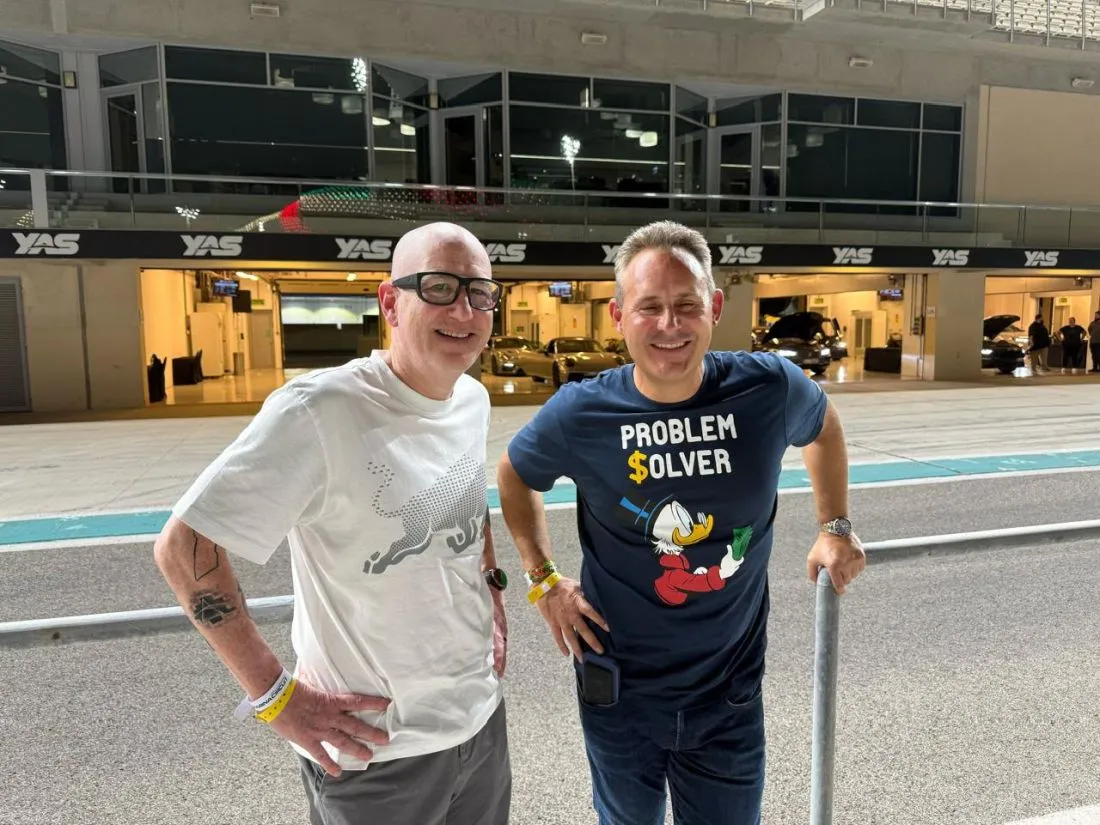
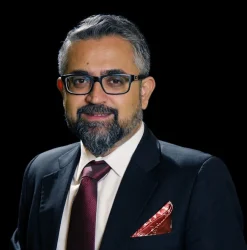
Dutch Brothers Racing founders Alan and Jon reveal why they entered motorsport later in life, embracing risk, failure and constant learning to prove ambition does not need an age limit.
Dubai: Starting again is difficult at any age, but walking into motorsport as a beginner after building an established career brings an entirely different test. For Alan and Jon, the founders of Dutch Brothers Racing, that challenge is precisely the point.
In this interview with The Brew News Managing Editor Shaneer N Siddiqui, the Dutch Brothers Racing founders explain why they chose to pursue racing later in life, what starting from zero has taught them, and why their philosophy, “Every Lap Has Meaning”, extends far beyond the track.
The Brew News: Most people reach a certain point in life where they become more cautious, not less. What made you decide that this was the moment to become racing drivers — and was there a moment when you thought, “Are we completely mad doing this?”
ALAN: I think the more interesting question is: at what age are you supposed to stop doing things that scare you?
Jon and I have spent a lot of our careers telling people to take risks, keep learning and push themselves. Eventually you have to take your own advice.
Are we completely mad? Almost certainly. But there’s a difference between being reckless and doing something difficult with intent. We have coaches. We train. We spend ridiculous amounts of time on simulators. We’re approaching this properly.
JON: Also, Alan had already bought the car, so philosophically we were quite far down the road. But there is something serious underneath all of this. We didn’t want to reach a point where the most interesting things we’d ever done were behind us.
We’re not trying to recreate our twenties. We’re trying to find out what we’re capable of now.
The Brew News: Neither of you came from a professional racing background. What was it actually like walking into motorsport later in life and effectively starting again from zero?
JON: Humbling. In your career, you eventually become accustomed to knowing what you’re doing. Then you put on a helmet, get into a race car, and discover there is an entirely new and highly efficient way of feeling incompetent, and that’s actually one of the things I love about it.
ALAN: We’re genuinely beginners. We’re not pretending otherwise. That’s important to DBR. People are going to see us improve, but they’re also going to see us get things wrong. Bad laps. Missed braking points. Mistakes. Andy looking disappointed in us.
Part of the attraction is earning it, and from a content perspective, that’s much more interesting than pretending we arrived fully formed.
The Brew News: We often hear people say, “I’d love to do that, but I’m too old,” or “I’ve missed my chance.” What has racing taught you about that mindset?
ALAN: Usually “I’m too old” means “I’m afraid I won’t be good at it.” We understand that because we’re living it.
Some younger drivers have been racing since they were children. We’re not going to manufacture a story in which those years of experience don’t matter. They do. But that’s not a reason not to start.
JON: You don’t have to be 20 to become better at something. That’s really the point. Maybe your dream isn’t racing. Maybe it’s starting a company, learning something new or completely changing direction.
You probably haven’t missed your chance. Although if your dream is Formula One, we should probably have a separate conversation.
The Brew News: There must have been a first moment when this stopped feeling like two guys pursuing a dream and started feeling like, “We are actually racing drivers.” What was that moment?
JON: I’m not sure we’ve allowed ourselves to say that yet. There are race drivers who have earned that description over many years. We respect the sport too much to put on a suit, take some photographs and declare ourselves racing drivers.
ALAN: Ask us after we’ve lined up on the grid. That’s the moment. When the helmets are on, the cars are there and nobody particularly cares about our LinkedIn profiles anymore. Then it’s real. And probably slightly terrifying.
The Brew News: You’re building Dutch Brothers Racing while continuing with full-time careers. How do you find the time, energy and discipline to pursue something this demanding alongside normal working life — and what sacrifices have you had to make?
ALAN: You don’t find the time. You decide something matters and make the time. That means early mornings, late nights, training, simulator sessions and occasionally looking at your calendar and questioning several recent life decisions. But that’s also why DBR isn’t just about motorsport.
Most people following us have jobs, families and responsibilities. They understand trying to fit something ambitious into an already full life.
JON: And that matters for the brands we want to work with as well. We’re not trying to build an audience around two guys simply driving cars. We’re building a community around performance, ambition, humour and the idea that you can keep challenging yourself. Motorsport is the platform. The story is much bigger.
The Brew News: You’ve deliberately chosen to document the whole journey — the training, mistakes, setbacks and slow improvements — rather than only showing the glamorous side of motorsport. Why was showing the struggle important to you?
JON: Because otherwise we’d be lying. Social media is very good at showing the champagne and remarkably bad at showing the Tuesday night simulator session where you’ve spent two hours trying to gain three-tenths of a second. We think the three-tenths are actually the story.
ALAN: We’re building DBR in public. People who follow us now aren’t joining at the finish line. They’re coming into the garage while we’re still figuring it out.
That’s valuable for our partners too. A sponsor isn’t just buying space on a car. They can become part of a story that’s unfolding week by week—training, racing, setbacks, breakthroughs, events and everything around it. We want partnerships that become part of the content rather than interrupting it. If we can make people actually want to watch something with a sponsor in it, we’ve done our job.
The Brew News: Your philosophy is “Every Lap Has Meaning.” Away from racing, what has this experience taught you about pressure, resilience and performance that you now carry into your careers and everyday lives?
ALAN: Racing is brutally honest. The stopwatch doesn’t care about your title, your experience or how persuasive you are in a meeting. You either improved or you didn’t. That’s refreshing.
JON: And improvement happens in very small increments. You don’t suddenly become fast. You brake a little later. Carry a little more speed. Make one better decision. Then you do it again. That’s where Every Lap Has Meaning came from.
It’s our racing philosophy, but increasingly it’s how we think about everything: pay attention, learn quickly and make the next one better. Preferably without hitting anything.
The Brew News: Imagine someone in their 40s, 50s or beyond reading this who has a dream they’ve quietly decided is no longer realistic. What would you say to them — and what do you hope your story proves?
JON: Start. Not recklessly. Not because someone posted a motivational quote on Instagram. Start intelligently. Get help. Be prepared to be bad at it. Learn. But start.
ALAN: We’re not trying to prove that age doesn’t matter. It does. We’re trying to prove that it doesn’t automatically get the final vote.
The Brew News: Dutch Brothers Racing is really an experiment: what happens when two people who should probably know better decide there is still time to do something extraordinary?
JON/ALAN: We don’t know exactly where it ends. That’s why we’re documenting it. And if somebody watches us and thinks, Maybe I haven’t missed my chance either, then every lap really did have meaning.
Impact to expect – Editor’s Note:
Dutch Brothers Racing could resonate beyond motorsport because its central idea is widely relatable: established careers and growing responsibilities do not necessarily mean personal ambition must shrink. By documenting the difficult parts alongside the excitement, Alan and Jon could encourage older audiences to reconsider goals they assumed had passed them by, while offering brands an authentic route into content centred on performance, learning and reinvention.