

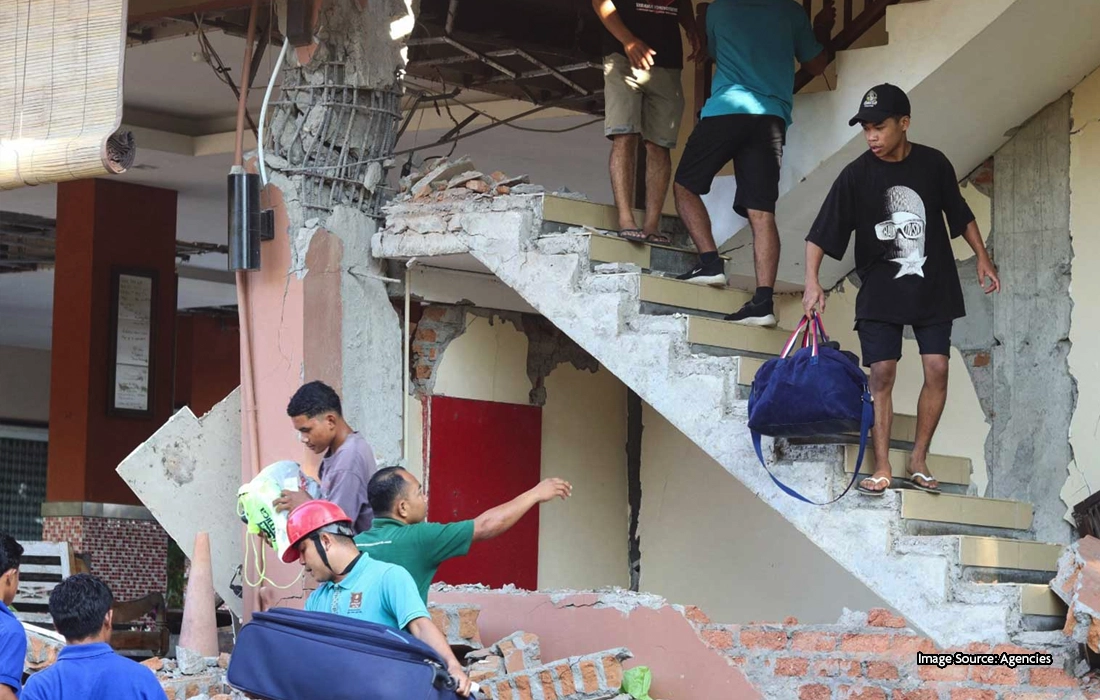

The Indonesia earthquake has killed at least 38 people after a powerful magnitude 7.7 quake struck near Flores early on Saturday.
JAKARTA: At least 38 people have died after a powerful magnitude 7.7 Indonesia earthquake struck off the eastern part of the country early on Saturday, August 15, triggering a tsunami warning and sending people rushing to safety.
The earthquake hit near Flores island in East Nusa Tenggara province and was followed by dozens of aftershocks. Rescue teams are now trying to reach some of the worst-hit areas as authorities assess the full scale of the damage.
Earlier reports from East Nusa Tenggara Governor Emanuel Melkiades Laka Lena said five people had died after being hit by falling rubble while they were sleeping. The number of confirmed deaths later rose as more information came in from affected areas.
Also read; Germany wildfire forces 1,800 people to leave their homes
Maumere, the largest town in Sikka Regency on Flores, was among the areas badly affected, with deaths and damaged buildings reported. Other areas closer to the epicentre have been difficult for emergency teams to reach because of landslides and communication problems.
Around 2,000 people have also left their homes in affected areas.
The quake initially raised fears of a tsunami. Waves measuring less than one metre were recorded in several locations, and people in coastal communities were advised to move to safer areas.
The tsunami warning was lifted around three hours after the earthquake.
However, the danger did not end with the first tremor. Dozens of aftershocks followed, adding to fears among residents and making rescue work more difficult.
Power cuts and damage to roads have also affected efforts to reach some communities.
Also read: A new cattle virus is spreading in Germany and farmers are on alert
The Indonesia earthquake once again highlights the country’s vulnerability to major natural disasters.
Indonesia sits along the Pacific Ring of Fire, an area where several tectonic plates meet. This makes earthquakes and volcanic eruptions relatively common across the country.
For families in the affected areas, attention is now focused on finding missing people, helping those who have been injured and providing shelter to residents who cannot safely return home.
Authorities and rescue teams continue to assess the damage, meaning the number of casualties could change as more remote communities are reached.
News Impact
Rescue operations are likely to remain the main priority in the coming hours, particularly in areas cut off by damaged roads, landslides and communication problems.