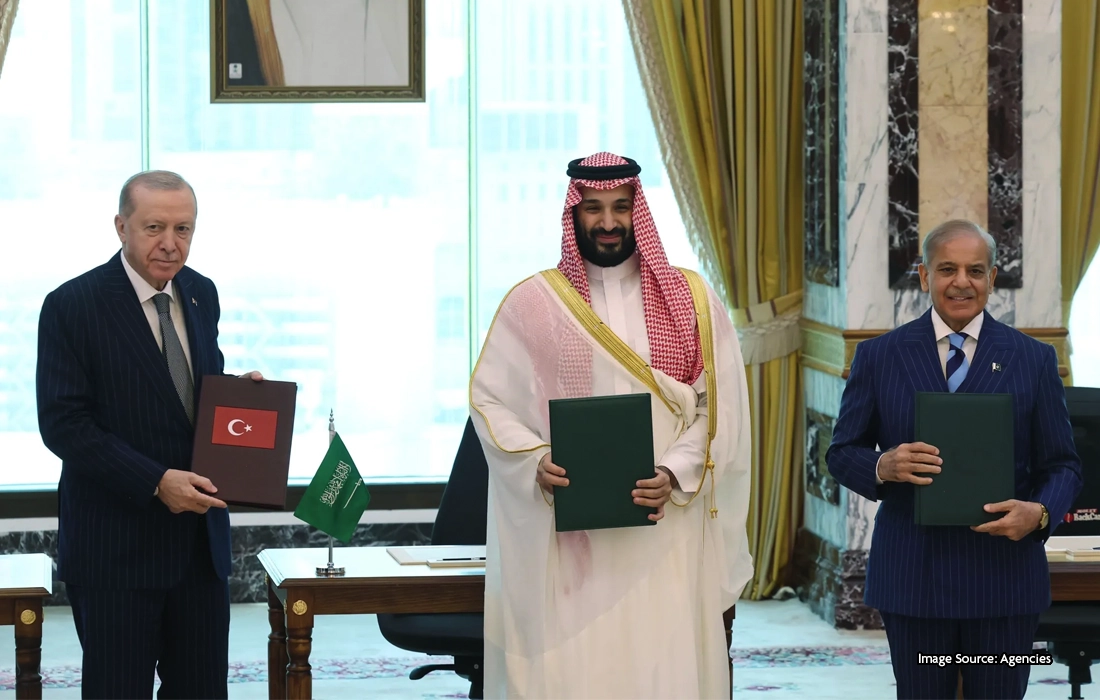

The Makkah defence agreement brings Saudi Arabia, Pakistan and Turkiye into a new collective security arrangement, treating an armed attack against one country as an attack against all three.
MAKKAH: Saudi Arabia, Pakistan and Turkiye have signed a major Makkah defence agreement, strengthening military cooperation between three of the Muslim world’s most influential countries at a time of heightened tensions across the Middle East.
Signed in Makkah on August 7, 2026, the agreement says an armed attack against any one of the three countries will be considered an attack against all three.
Pakistan’s Ministry of Foreign Affairs said the agreement reflects their shared commitment to strengthening collective security and promoting peace, security and stability in the region and beyond.
Also read: GCC issues urgent call for stronger global action amid regional crisis
The pact follows months of discussions between the three countries and builds on their existing defence relationships.
Pakistan and Saudi Arabia already have longstanding military ties, including training and technical cooperation. Turkiye and Pakistan also maintain close defence links, while Saudi Arabia has strengthened defence cooperation with Turkiye in recent years.
The Makkah defence agreement comes at an important moment for Middle East security. Ongoing regional conflict has increased concerns over attacks on energy infrastructure, shipping routes and other strategic assets.
For Saudi Arabia, stronger defence partnerships could provide another layer of security at a time when regional risks remain high. Pakistan brings extensive military experience to the partnership, while Turkiye is a NATO member with a large defence industry and advanced capabilities in areas including drones and military technology.
Also read: Saudi Arabia, Pakistan and key Muslim nations join Trump’s Board of Peace for Gaza
However, the agreement should not automatically be seen as a commitment by all three countries to enter every future conflict. How the collective defence clause works in practice will depend on the terms of the agreement and decisions made by the three governments during a crisis.
The pact could also have wider political and economic effects. Greater security cooperation may lead to closer ties in defence manufacturing, technology, investment, trade and military training.
For the wider Middle East, the agreement signals that regional powers are looking at new ways to strengthen their own security partnerships while maintaining relations with traditional allies.
The Makkah defence agreement could therefore become an important part of the region’s changing security landscape. Its real impact, however, will become clearer through future military cooperation and how the three countries respond together when faced with regional security challenges.

Shaneer N. Siddiqui is the Managing Editor at TheBrewNews.com, with more than 20 years of experience in journalism, media, communication, and business strategy. A lifelong news enthusiast, he enjoys telling stories that inform, engage, and matter. Whether he’s following the latest developments or guiding the editorial team, Shaneer stays focused on bringing readers meaningful news. Outside the newsroom, he likes reading, exploring new ideas, and staying curious about the changing world of media.
Connect with him to follow his latest work and insights.