

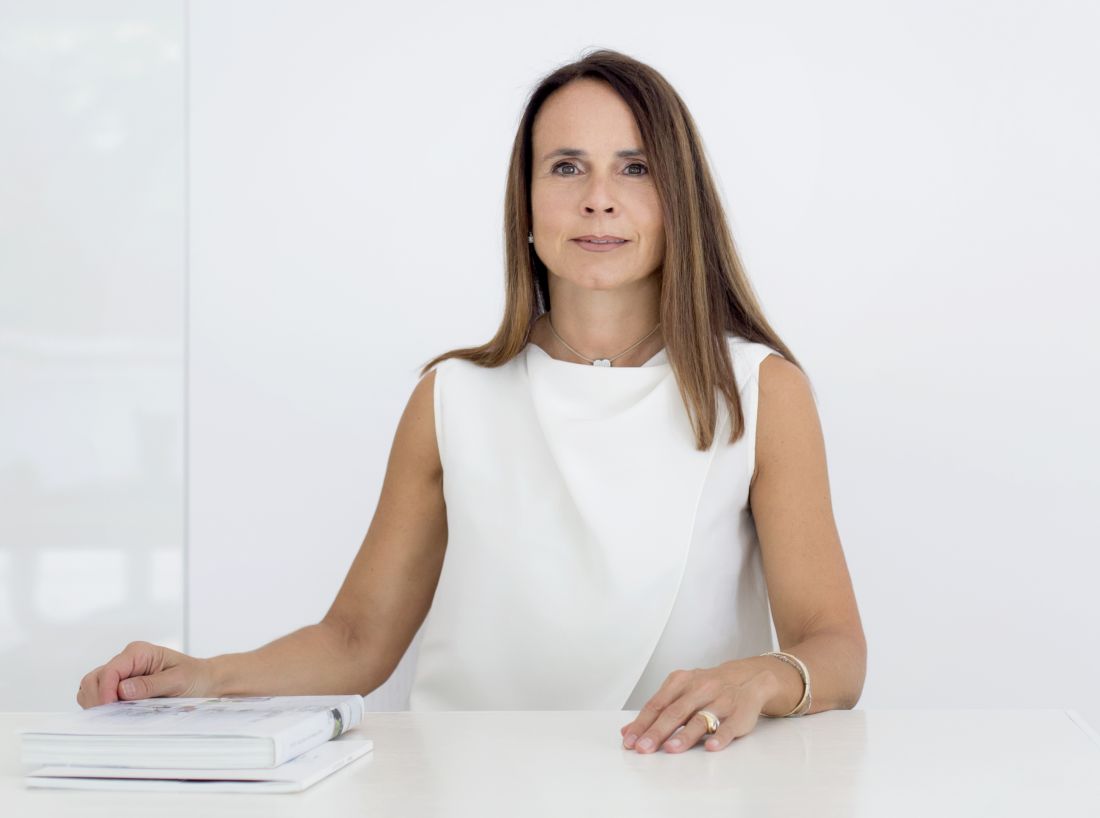

Architect and designer Monica Armani born into Italian rationalism, apprenticing at her father’s studio where her own style took its roots in the tenets of this important movement: Form follows function, scale and structure in balance, and low ornamentation. Monica discusses with The Brew News, Managing Editor Shaneer N Siddiqui, about her creative process, Italian design heritage, sustainable luxury, and debut showcase at Dubai Design Week with OBEGI Home.
The Brew News: Your design journey is deeply rooted in architectural precision and Italian heritage. How do these influences merge in your work, especially when designing luxury outdoor spaces?
Monica Armani: I was lucky to be born and raised in a wonderful country — Italy — where art, culture, architecture, and exceptional craftsmanship are deeply rooted and layered over centuries. I feel like a descendant of this heritage.
From my father, a rationalist architect of the 1960s, I inherited a sense of proportion, the logic of design, and a love for detail — a mindset that still guides everything I create today.
From a young age, I was surrounded by beauty, and it was natural for me to absorb the excellence of Italian culture.
I like to imagine outdoor spaces as true “destinations”: places that convey well-being and intimacy, where every element from furniture to lighting, from fabrics to rugs contributes to creating an authentic, refined, and immersive experience.
Each of my projects is a constant dialogue between rationality and intuition, between architectural rigor and poetic lightness. In this sense, architecture and Italian heritage become two languages that naturally intertwine in my work.
The Brew News: Tribù is synonymous with discreet luxury and craftsmanship. What has this collaboration allowed you to explore creatively that perhaps other partnerships haven’t?
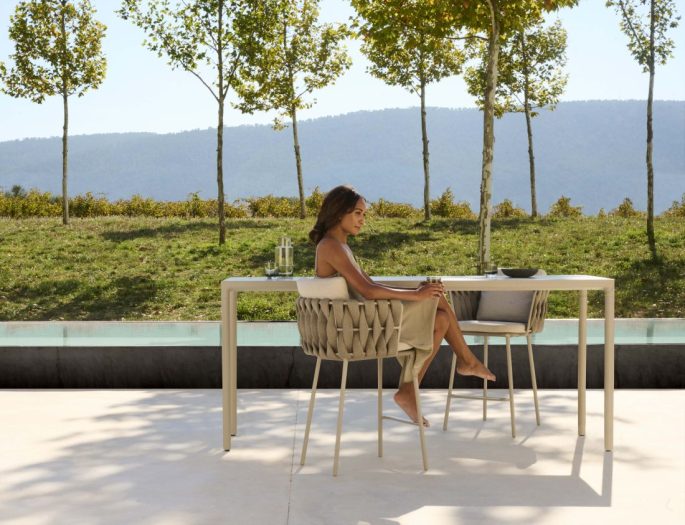
Monica Armani: My collaboration with Tribù is truly special. It’s a long and beautiful story born from a sincere, human connection with Koen De Cock, the founder’s son and the company’s Managing Director. Together, we’ve created unique collections that remain best sellers even today, such as Tosca, which after twelve years has become an icon in the world of outdoor living.
Tribù is a family company that mirrors the origins of the great brands that shaped design history, like B&B Italia and Cassina, only forty years later. We always start from a concept, then trace the path to create collections with the right balance between design, sophistication, and functionality.
Every project we share is both a professional and human adventure that grows deeper each time.
The Brew News: In your opinion, how does luxury in outdoor furniture differ from indoor settings — both in terms of form and emotional experience?
Monica Armani: Today, the distinction between indoor and outdoor is becoming increasingly subtle. Outdoor spaces now match indoor environments in quality, comfort, and attention to detail. While indoor spaces are more controlled and enclosed, the outdoors represents freedom and a connection with the landscape.
For this reason, designing outdoor spaces must be a sensory and emotional experience — where sunlight, air, and the contact with nature blend with design to create something truly unique.
Real luxury today lies in the ability to design and create spaces that are deeply personal and unrepeatable.
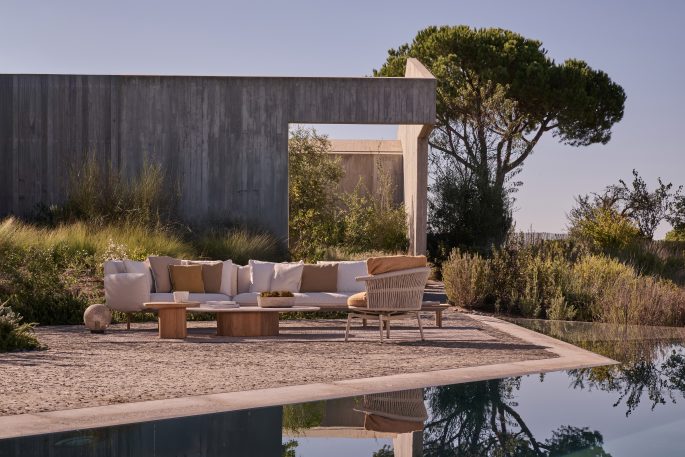
Outdoor collections have expanded into comprehensive systems designed to meet every need – from urban terraces to large gardens, from resorts to intimate patios.
These are wide, flexible collections, adaptable to any context, capable of taking on infinite configurations while always maintaining coherence, elegance, and harmony.
The Brew News: Sustainability is reshaping the future of high-end design. How do you balance ecological responsibility with the refined materiality expected in luxury collections?
Monica Armani: For me, sustainability is not a trend, it’s an intrinsic part of the design process itself. A project is sustainable when it’s built to last, when it’s conceived intelligently.
True sustainability lies in the quality of design. A well-designed object endures across generations; it doesn’t need to be replaced, and thus it continues to express its value over time. Of course, materials and technologies evolve, and today we can rely on increasingly advanced, environmentally friendly solutions. But what truly makes the difference is the way we think and design.
Every choice — in form, material, and production — must follow a principle of coherence. I believe the luxury of the future will be defined by this very ability to unite excellence with awareness, beauty with responsibility.
The Brew News: Dubai is increasingly becoming a global hub for design. What excites you most about showcasing your work here during Dubai Design Week, and how does the Middle Eastern design narrative inspire you?
Monica Armani: Dubai is a place of extraordinary energy, where different cultures meet and influence each other.
I’m fascinated by its ability to look toward the future with curiosity, while also striving to build a contemporary identity that still dialogues with tradition.
Presenting my work here with OBEGI Home is an opportunity to share my vision with an international audience attuned to quality, but also to listen, learn, and be inspired by new perspectives.
In Middle Eastern culture, there’s a strong sense of space, light, and materiality, elements that resonate deeply with my own design language. I believe that from these encounters, new dialogues can emerge, where design becomes a universal language of beauty and well-being.
The Brew News: Can you walk us through your creative process — from concept to final form — and how it may differ when working on objects, furniture, or large-scale architecture?
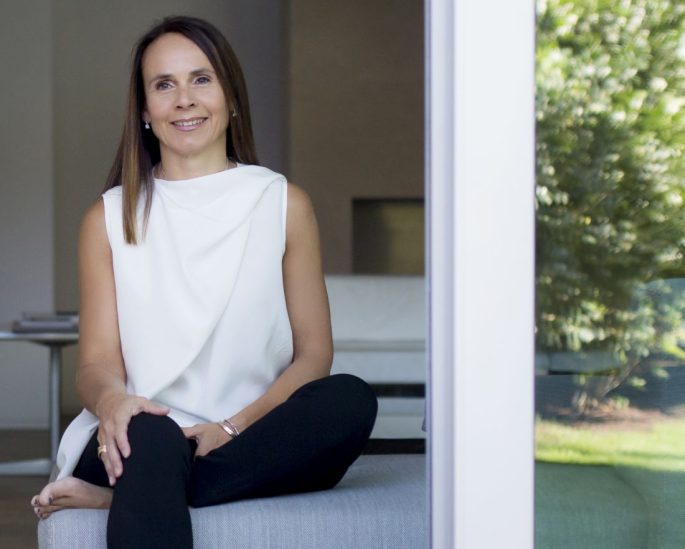
Monica Armani: My creative process is complex and layered, whether I’m designing a building or an object. The only thing that changes is the scale: my way of working is like a camera zoom, moving from the detail to the overall vision without ever losing harmony.
I’m very focused on detail — the more details I can coordinate, the more harmonious and successful the result will be. In my work, the constant dialogue between architecture and design generates harmony, coherence, and identity.
It’s within this continuity that I recognize my way of designing: everything is part of a single language. The philosophy behind my process — which I call Design in Molecules — reflects this vision.
The Brew News: Looking ahead to 2025 and beyond, what key design trends do you believe will define the luxury outdoor living experience globally?
Monica Armani: For me, luxury will be expressed through outdoor furniture collections that are increasingly broad, versatile, and complete — capable of creating true living environments, coherent in style and adaptable to different contexts and ways of living.
A discreet kind of luxury, built on aesthetic continuity and compositional freedom, where each element interacts with the others to offer a total, refined, and authentic outdoor experience.
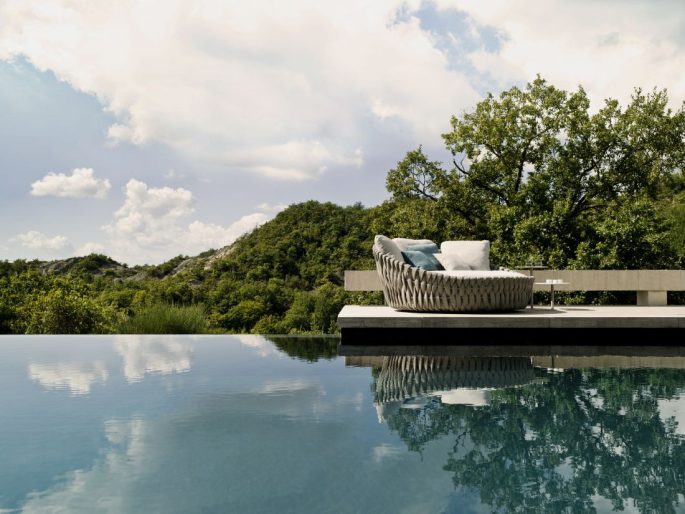
The Brew News: Your work is often described as ‘elegantly restrained’. How do you approach minimalism in a way that still conveys richness and emotion?
Monica Armani: My stylistic language has distilled over time and become very recognizable. Every line I draw, every material I choose, every detail I design must have a reason to exist. When everything finds its place — with nothing superfluous — a sense of harmony emerges that conveys calm and beauty. That’s the essence of my work.
An object or a space can be simple and yet rich in meaning, if every detail is thoughtfully considered. Emotion arises from light, proportion, the tactile quality of materials – from how a place or object makes you feel.
My minimalism is warm and human: it leaves room for people, for time, and for the experiences that unfold within it.
The Brew News: Finally, what is your personal vision of ‘living beautifully’? And how do you aim to translate that vision into the spaces and objects you design?
Monica Armani: For me, living beautifully means living in balance. It means surrounding yourself with spaces and objects that speak of quality, harmony, and care.
Beauty is not an ornament, it’s a way of thinking, feeling, and being in the world. Every project I create comes from the desire to shape harmonious places and objects that welcome you, that evoke unique emotions and sensations, atmospheres where body and mind can relax, where you feel in tune with yourself and with what surrounds you.
For me, beauty is silent: it shouldn’t impose itself, but gently accompany everyday life. Ultimately, that’s what design is about: creating well-being through form, feeling, and harmony, turning every environment into an experience that makes you feel good.