

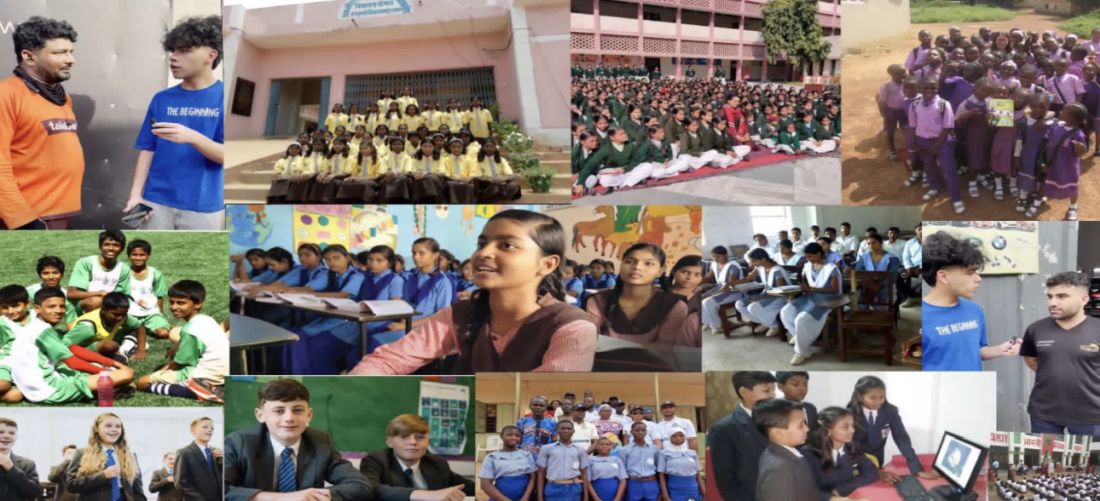

Dubai student Arham Kidwai is scaling ClimateShield from a youth-led idea into a climate intelligence platform reaching 18,000 students across 300 schools, with education initiatives extending through UNICEF’s Learning Passport and a new collaboration with The Alliance for Sustainable Schools.
DUBAI: What began as one Dubai student’s response to the growing risks of extreme weather is developing into an international climate education initiative. Arham Kidwai, a student at GEMS Modern Academy, is behind ClimateShield, a climate intelligence and education platform now reaching 18,000 students across 300 member schools.
Kidwai’s work gained international recognition through the 2025 World Education Medals in the Student category, where his ClimateShield project was recognised for applying technology and education to real-world climate challenges.
But the award was not the end of the story.

Since that recognition, Kidwai has focused on expanding the platform’s reach and turning climate information that can often feel technical or distant into knowledge that students and communities can understand and use.
ClimateShield combines climate and geospatial information from sources including NASA and Copernicus. The platform is designed to translate complex datasets into accessible climate intelligence covering risks such as heat, floods, drought, wildfires, storms, air quality and water stress.
Its educational component is equally important. The platform includes a learning hub covering climate science, disaster preparedness, climate justice, data literacy, policy and resilience, helping young people move beyond simply learning about climate change towards understanding risk and preparedness.
Climate education modules have also been delivered through UNICEF and the Learning Passport, while ClimateShield has established a new collaboration with The Alliance for Sustainable Schools as Kidwai seeks to broaden its educational impact.
The project has applications beyond classrooms. ClimateShield says its climate information has also supported communities, including farmers in India, in better understanding and preparing for climate-related risks.
That combination of education, data and practical action has attracted recognition from education leaders.
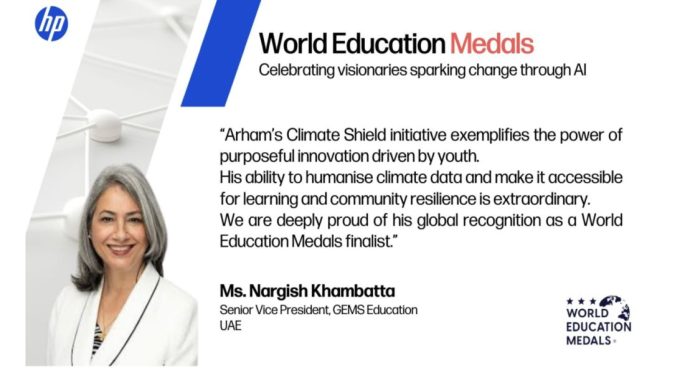
Nargish Khambatta, Senior Vice President at GEMS Education, described Kidwai’s initiative as an example of “purposeful innovation driven by youth”, highlighting its ability to make climate data accessible for learning and community resilience.
The scale of the ClimateShield impact is particularly notable because the project remains rooted in a simple idea: young people do not have to wait until adulthood to contribute to major global challenges.
For Kidwai, the next chapter is therefore bigger than an award. It is about transforming a student-led project created in Dubai into a practical climate intelligence ecosystem capable of helping schools and communities understand what climate risk means where they live.
Impact to expect
ClimateShield could demonstrate how youth-led innovation from the UAE can move beyond competitions and awards into measurable international impact. By combining AI, climate data and education, the initiative has the potential to give more students and communities practical tools to understand local climate threats and prepare earlier for them.