


Joseph Vijay Chandrasekhar political rise culminates in a sweeping TVK win, signalling a major shift in voter sentiment and leadership expectations.
Chennai: The political ascent of Joseph Vijay Chandrasekhar, long celebrated as one of Tamil cinema’s most influential figures, has now taken a decisive turn into governance with the sweeping electoral victory of his party, Tamilaga Vettri Kazhagam (TVK). What began as a cautious, almost symbolic entry into politics has, in a remarkably short span, evolved into a formidable grassroots movement that has reshaped the state’s political landscape.
For years, Vijay’s public persona carried subtle political undertones. His films often reflected themes of social justice, anti-corruption, and empowerment of the marginalised, resonating deeply with younger voters and working-class communities. Unlike many celebrity entrants before him, Vijay resisted the temptation of immediate electoral politics, instead choosing to build a structured political base through welfare initiatives, student engagement programmes, and localised outreach under TVK’s banner.
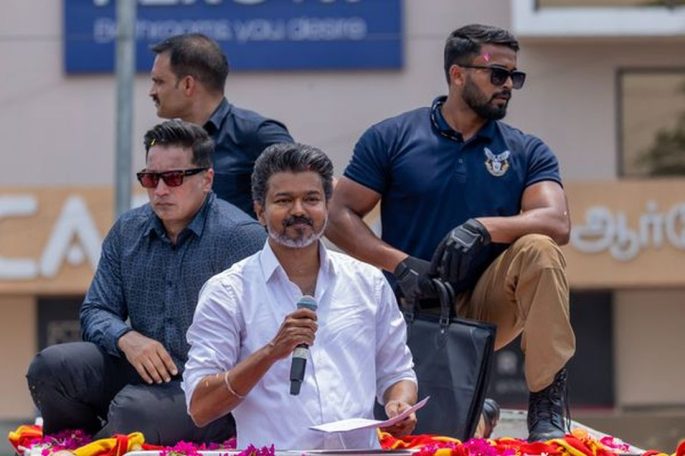
This slow-burn strategy proved critical. By the time TVK formally contested state elections, it was no longer perceived as a personality-driven outfit but as an organisation with ideological clarity and administrative ambition. The campaign itself was disciplined and message-driven, focusing on governance reform, education, employment, and transparency. Vijay’s rhetoric remained measured, avoiding inflammatory politics while consistently projecting accountability and inclusivity.
The election results, however, exceeded even optimistic projections. TVK not only secured a clear majority but also disrupted entrenched political strongholds, signalling a generational shift in voter sentiment. Analysts point to a coalition of first-time voters, urban middle classes, and rural constituencies disillusioned with legacy parties as the backbone of this victory.
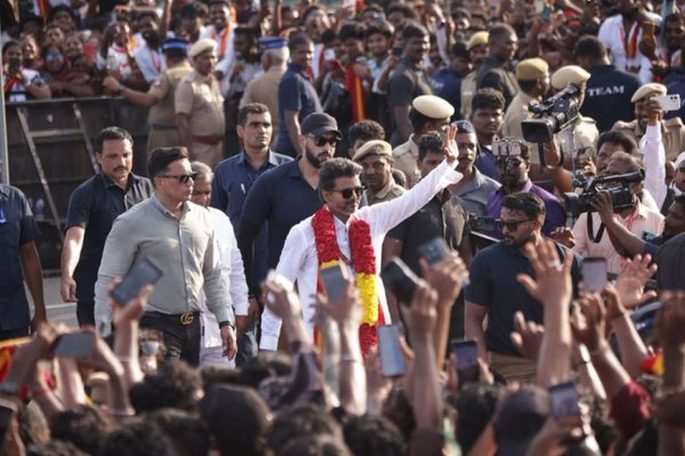
What distinguishes Vijay’s rise is not merely celebrity influence but timing and narrative control. He entered politics at a moment of institutional fatigue, offering a hybrid appeal: cultural familiarity combined with administrative promise. His leadership style, marked by restraint and calculated visibility, contrasts sharply with the theatrics often associated with star-politicians.
The challenge now transitions from mobilisation to governance. Expectations are exceptionally high, and the electorate that delivered this mandate is equally capable of withdrawing it. Whether TVK can translate its electoral success into sustainable policy outcomes will determine if Vijay’s political journey becomes a lasting chapter in statecraft or a momentary disruption in a historically cyclical system.
For now, though, the message from the electorate is unambiguous: a new political force has arrived, and it carries both the weight of public trust and the burden of delivering meaningful change.