
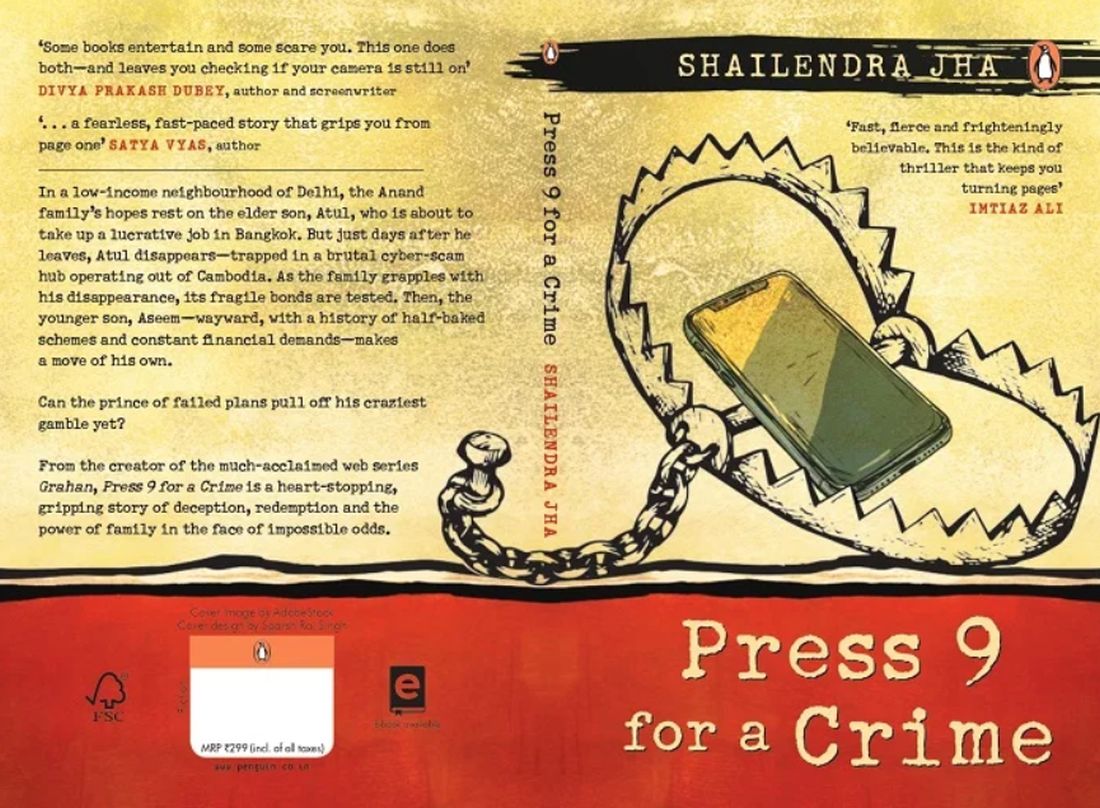

Press 9 for a Crime by Shailendra Jha reflects Indian realities of cyber scams, job trafficking and digital slavery through a gripping family-driven thriller.
NEW DELHI: In an age where Indians wake up daily to news of digital arrest scams, fake overseas jobs and organised phishing rackets, Press 9 For A Crime feels disturbingly close to real life. Written by journalist-turned-filmmaker Shailendra Jha and published by Penguin Random House India, the novel is less a conventional thriller and more a mirror to India’s growing digital anxieties.
Set in a lower-income Delhi neighbourhood, the story centres on the Anand family, whose struggles will resonate deeply with Indian readers. Limited opportunities, financial pressure, and the dream of social mobility form the backdrop of their lives. When Atul, the responsible eldest son, secures what appears to be a promising job in Bangkok, it feels like a familiar Indian success story in the making. Instead, it becomes a cautionary tale. His sudden disappearance pulls the family into a shadowy network of cross-border cybercrime syndicates operating from Southeast Asia.
What makes Press 9 for a Crime particularly powerful is how it roots global cybercrime in distinctly Indian vulnerabilities. Fraudulent job agents, blind faith in foreign opportunities, and families willing to risk everything for economic escape are realities faced by thousands across India’s small towns and cities. Jha exposes how poverty, aspiration and lack of digital awareness combine to feed modern-day digital slavery.
The emotional core of the novel lies with Aseem, Atul’s impulsive younger brother. Unlike the typical heroic protagonist, Aseem is flawed, underprepared and driven by instinct rather than intelligence. His journey across borders, powered by desperation and sibling loyalty, captures the chaos ordinary Indians face when institutions fail them. Police apathy, bureaucratic delays and limited diplomatic reach feel painfully authentic.
Jha’s writing style adds to the realism. The language flows between Indian-English and Hindi rhythms, reflecting how people actually speak and think. The pacing is sharp, never indulgent, and the tension builds without sensationalism. Scenes inside scam compounds, where victims are forced to scam others under threat, underline the uncomfortable truth that cybercrime is sustained by human suffering, not just technology.
The novel also echoes themes familiar from Jha’s earlier work on Grahan, bringing the same emotional urgency and social awareness. Yet, despite its bleak subject matter, the book resists cynicism. It suggests that resilience, stubborn hope and human connection can still disrupt even the most ruthless systems.
Press 9 for a Crime stands out as an important Indian novel for our times. It does not merely entertain; it warns, educates and provokes reflection. In a country where smartphones are everywhere but digital safety is uneven, this book feels essential reading. It reminds us that behind every scam headline lies a family waiting for a call that may never come, and sometimes, salvation arrives through the courage of those who refuse to stop searching.