
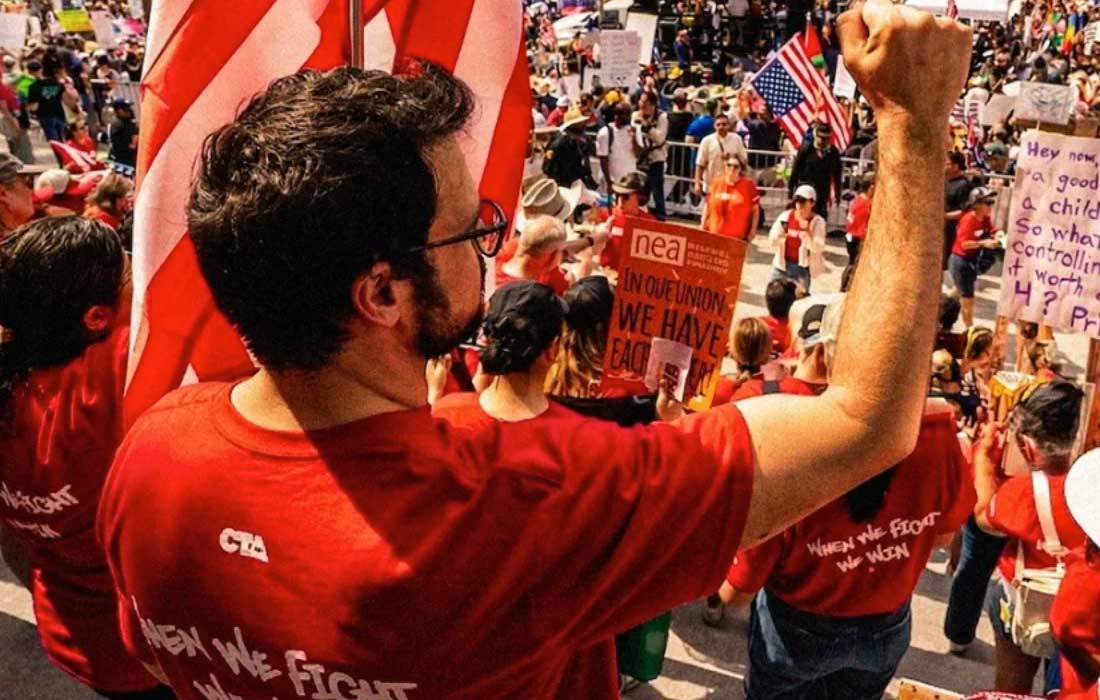

At least 8 million people participated in over 3,300 protest events across all 50 US states and parts of Europe, marking one of the largest coordinated demonstrations in recent years against Donald Trump’s policies on immigration, the Iran conflict, and civil rights.
WASHINGTON: The streets of America filled with voices on Saturday, and the message was hard to miss. At least 8 million people took part in more than 3,300 events across all 50 US states, in what organisers are describing as one of the largest coordinated protest efforts the country has ever seen.
The demonstrations, now the third major wave of protests since Trump began his second term in January 2025, dwarfed the previous two rounds which reportedly drew over 5 million and 7 million participants respectively. The scale and geographic spread of Saturday’s turnout, from major cities like New York to small towns like Driggs, suggested a movement that has grown well beyond its original base.
Minnesota served as one of the focal points of the day, where thousands gathered to protest aggressive immigration enforcement measures. The event drew musician Bruce Springsteen, who took to the stage to praise citizens for their sustained resistance against increased activity by immigration authorities.
Demonstrators voiced a broad range of concerns, including US military involvement in the Iran conflict, stricter immigration policies, economic inequality, and the rollback of transgender rights. Participants framed the movement as a defence of democratic values and a demand for accountability from elected officials at a moment they consider critical.
Most of the events passed peacefully. However, clashes erupted in Los Angeles, where authorities deployed tear gas after some demonstrators allegedly threw objects near a detention facility. Several arrests were reported.
The protests extended beyond US borders. Solidarity demonstrations took place in Rome, London, and Paris, with European participants connecting their own concerns about rising far-right politics and global conflicts to the broader themes of the movement. In Rome, protesters also directed criticism at Prime Minister Giorgia Meloni.
Republican officials and critics dismissed the rallies as extremist. Participants, however, rejected that characterisation firmly, insisting the demonstrations represent a mainstream defence of democratic principles.
With the Iran conflict, immigration crackdowns, and economic pressures all running simultaneously, the wave of public dissent shows no sign of losing momentum.