

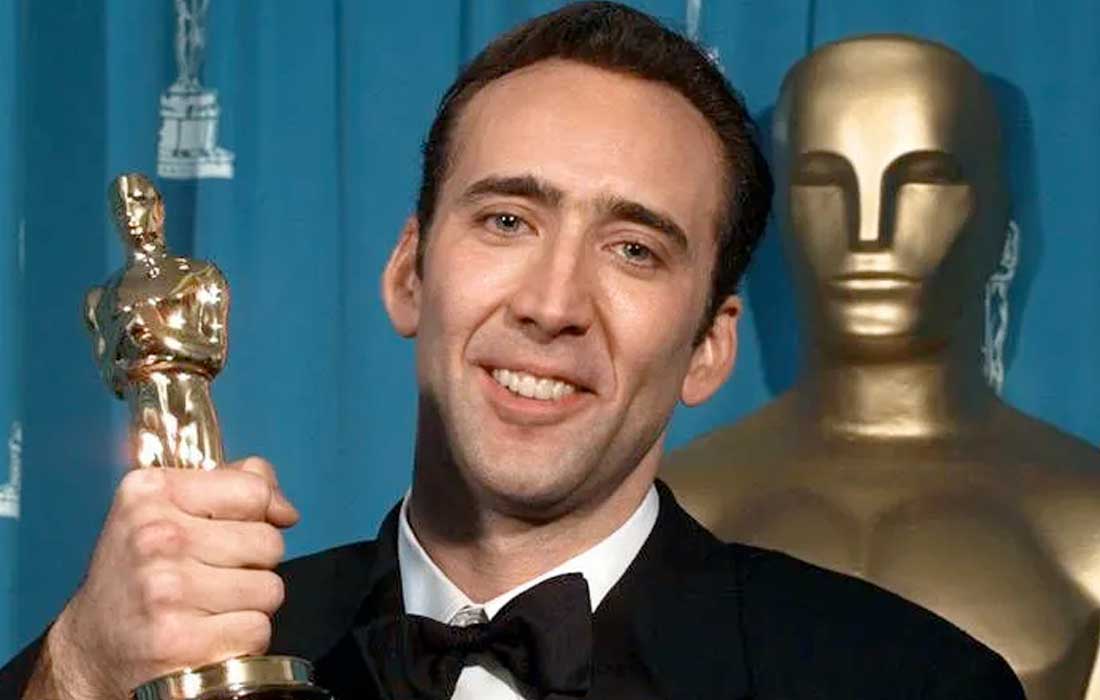

Nicholas Cage chose independence over the Coppola surname inheritance while building a fearless career defined by risk, range, and identity.
For most actors, being related to Francis Ford Coppola (Director of The Godfather and many more) would be a career shortcut. For Nicholas Cage, it was something he quietly stepped away from. Born Nicolas Coppola, he changed his surname early, not out of rebellion, but out of clarity. He wanted his work to speak before his family name ever did.
That decision shaped everything that followed. Cage did not chase safe roles or polished performances.
Nicholas Cage was born in Long Beach, California, into a household where creativity and intellect quietly shaped his world. His father, August Coppola, was a respected professor of literature, while his mother, Joy Vogelsang, worked as a dancer and choreographer. Storytelling, performance, and expression were part of daily life long before Hollywood entered the picture.
Through his father, Cage was connected to one of cinema’s most influential families. Francis Ford Coppola was his uncle. So was actress Talia Shire. But those connections never came with an easy pass. In fact, Cage learned that lesson early. At just 15, he boldly challenged his uncle in a car ride, asking for a screen test and declaring, “I’ll show you acting.” The response was silence. No encouragement. No shortcut.
At that time, Coppola had already directed some of the greatest actors in film history, including Marlon Brando, Al Pacino, Gene Hackman, and Robert De Niro. The bar was impossibly high, and Cage understood that admiration alone would not earn him credibility.
Changing his name
Although he appeared briefly in some early Coppola projects, he made a decisive move that defined his career. He changed his name from Nicolas Coppola to Nicolas Cage, determined to stand on his own. The name was inspired by Marvel’s Luke Cage and avant-garde composer John Cage. It was a signal. This was not about legacy. This was about identity.
From that point on, Cage built his career the hard way, role by role, risk by risk, without leaning on a famous surname.
While Coppola became synonymous with carefully controlled, legacy-defining cinema, Cage leaned into unpredictability. He chose characters that were awkward, intense, sometimes strange, and often risky. From Raising Arizona to Leaving Las Vegas, from Adaptation to Mandy, his choices showed an actor more interested in truth than approval. And who can forget his unforgettable performance in Face/Off with and as John Travolta, or as the energetic treasure hunter in… well Treasure Hunter.
This contrast matters. Coppola’s filmmaking represents structure, precision, and mastery of the classic form. Cage operates on instinct. He stretches scenes, emotions, and sometimes logic, but never commitment. His performances feel raw because they are meant to be. He is not trying to impress. He is trying to connect. This in turn meant a whole line of awards, from Academy Awards, Golden Globe Awards and more. The list of nominations are endless too.
There were dips along the way. Financial troubles, overexposure, and critics questioning his choices. But Cage never disappeared. He kept working, kept experimenting, and kept trusting his instincts. That consistency, even during uncertainty, is what separates him from actors who retreat when the spotlight fades.
Over time, the conversation changed. Nicholas Cage stopped being introduced as Francis Ford Coppola’s nephew. He became something else entirely. An actor who could carry a film through sheer presence. A performer who turned risk into identity.
He did not escape a shadow. He simply never stood under it.
-Inputs from Wiki