
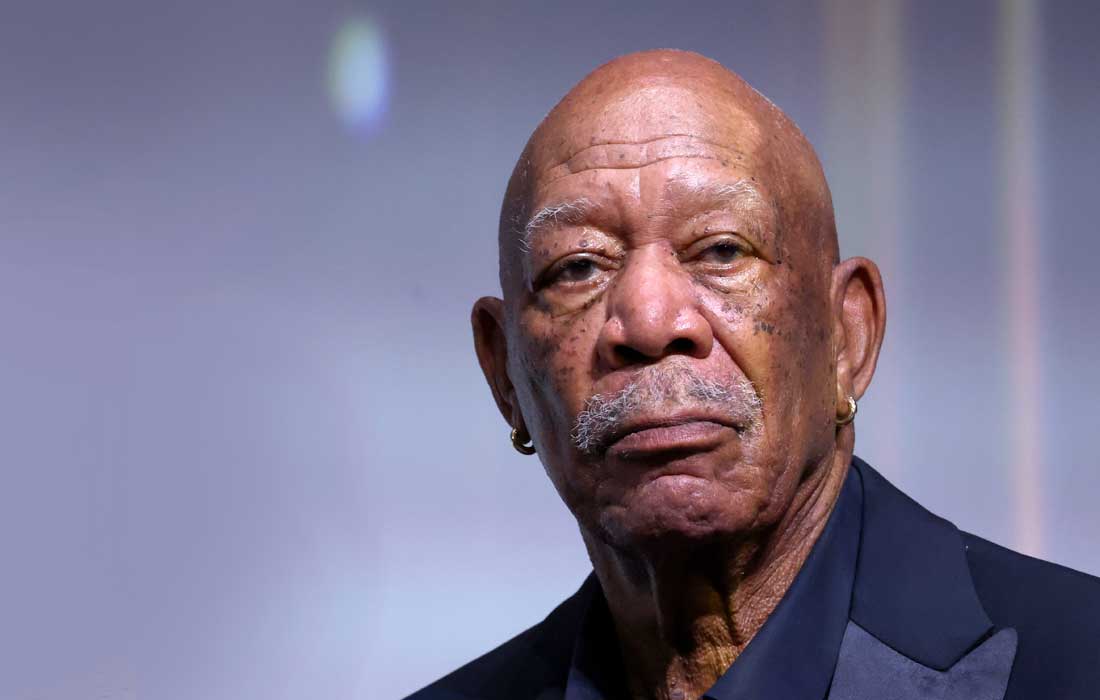

Morgan Freeman slams unauthorised AI voice clones, calling them unethical and confirms his legal team is taking action.
LOS ANGELES: Legendary actor Morgan Freeman has issued a strong rebuke against the use of AI-generated voice clones that mimic his iconic baritone without consent, calling it theft and a serious violation of creative rights.
Now 88, Freeman is known globally for his distinctive narration in films like March of the Penguins and The Shawshank Redemption. He told The Guardian that his voice is his livelihood — and using it without permission is “robbing me.” His legal team is reportedly pursuing multiple cases against unauthorised AI voice impersonations in podcasts, fictional content, and advertisements.
“I get paid for doing stuff like that. If you’re gonna do it without me, you’re robbing me,” Freeman said, highlighting the commercial misuse of his voiceprint.
He also took aim at the emerging trend of synthetic actors, including the case of “Tilly Norwood,” a digital creation nearly signed by a real talent agency. “Nobody likes her because she’s not real,” Freeman added, pointing to the loss of emotional depth and audience connection when AI replaces human performance.
Freeman’s comments come amid ongoing industry debate about the ethical limits of AI in entertainment. During the 2023 Hollywood strikes, AI likenesses and deepfakes became a major point of contention, with the SAG-AFTRA union arguing that human actors bring irreplaceable nuance that machines lack.
While some celebrities have embraced the tech—James Earl Jones, before his passing in 2024, allowed Disney to use AI to preserve his Darth Vader voice, and Matthew McConaughey now licenses his AI voice for Spanish newsletters—Freeman remains firmly against unlicensed use.
For Freeman, this isn’t just about rights — it’s about dignity, authorship, and legacy. As a performer who’s portrayed cultural icons and narrated generations of stories, he insists his voice is not a public tool, but part of a creative journey that AI should not rewrite without consent.