
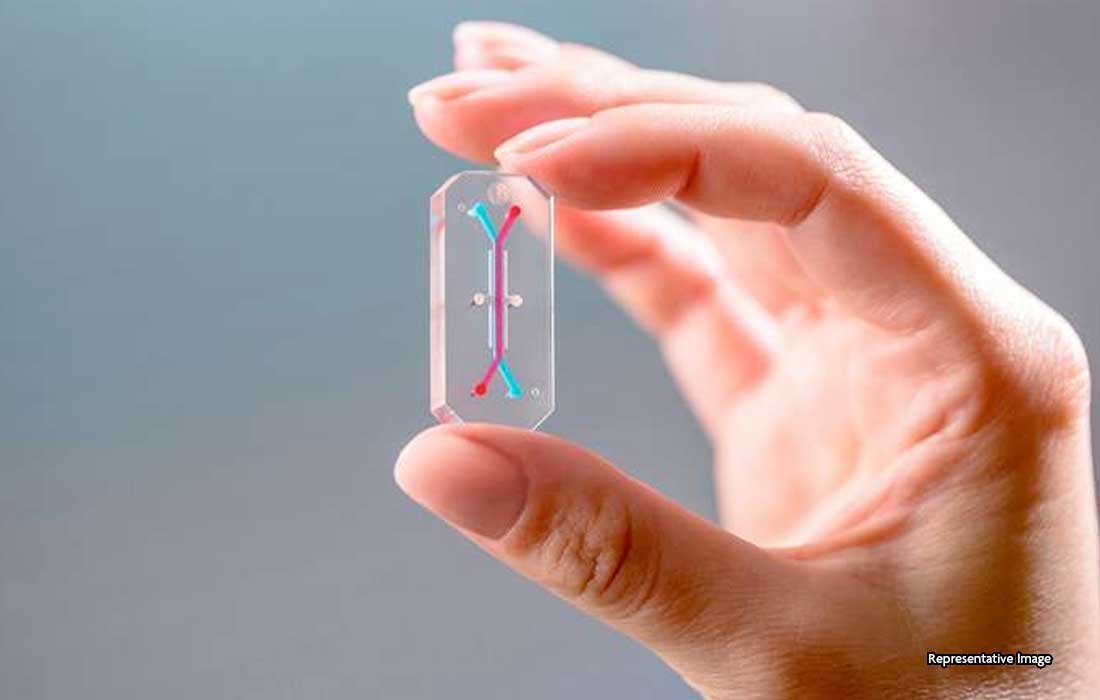

UK scientists create first lung-on-chip model using identical stem-cell-derived human cells, advancing personalised disease testing and TB research.
LONDON: Scientists at the Francis Crick Institute, in collaboration with biotech firm AlveoliX, have developed the world’s first human lung-on-chip model using genetically identical cells derived from stem cells of a single donor. This pioneering device mimics real breathing movements and enables advanced studies into early-stage lung disease and treatment response, marking a major leap in personalised medicine.
Published in Science Advances, the study outlines how researchers recreated alveoli, the microscopic air sacs in the lungs responsible for gas exchange, by using induced pluripotent stem cells (iPSCs). These were used to generate three essential lung cell types: type I and II alveolar epithelial cells and vascular endothelial cells. All cells in the model were derived from the same donor, a first in lung-on-chip research.
The team placed these cells on opposite sides of a paper-thin membrane in a custom-engineered chip by AlveoliX, which replicates the lung’s barrier structure. The device also mimics human breathing through rhythmic 3D stretching motions that promote the growth of microvilli, specialised structures that increase surface area for oxygen exchange.
To replicate immune response, the scientists introduced macrophages — infection-fighting cells — also derived from the donor’s stem cells. When tuberculosis (TB) bacteria were introduced into the chip, researchers observed infection patterns resembling those found in real human lungs, including the formation of necrotic macrophage clusters and eventual barrier breakdown, simulating lung tissue damage over time.
Max Gutierrez, senior author of the study and lead researcher at the Crick, highlighted the significance of this innovation for TB research and beyond. “With the growing demand for non-animal models, this fully human, genetically consistent lung-on-chip system offers a more accurate and ethical way to study disease progression and treatment efficacy,” he said.
The technology allows scientists to create personalised lung models for people with specific genetic traits or conditions, offering new opportunities for custom drug testing and precision medicine development in the fight against respiratory diseases.