

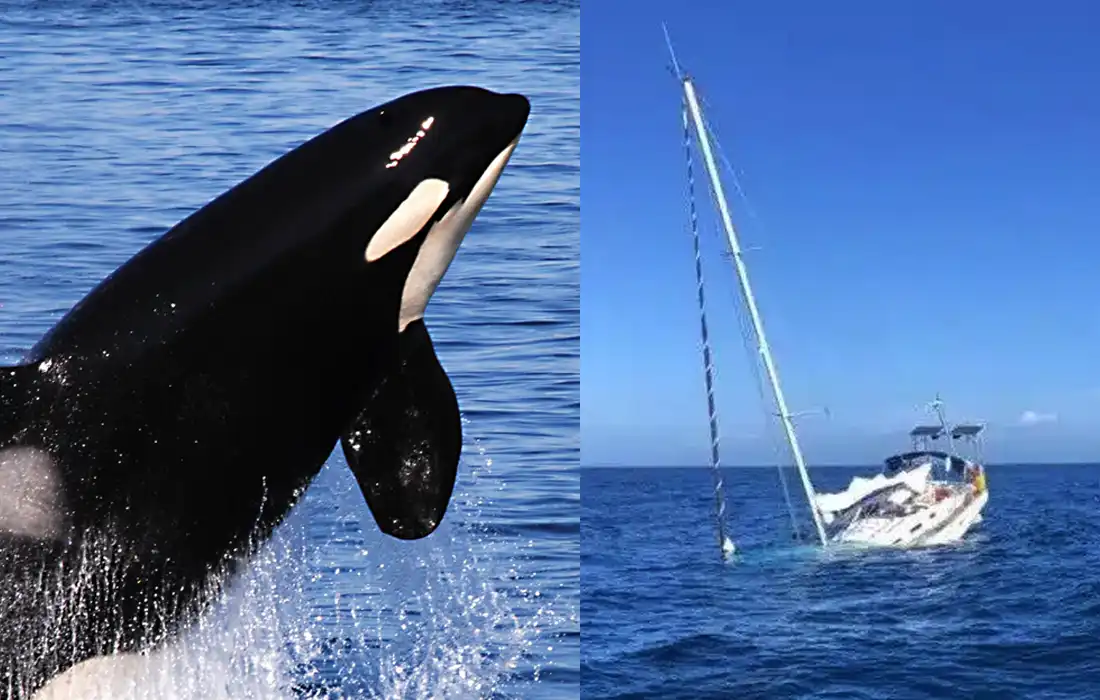

Iberian orca attacks on boats have puzzled scientists, with some researchers now suggesting the behaviour may be a learned social trend.
MADRID: A small group of orcas swimming off the coasts of Spain and Portugal has left scientists both concerned and fascinated after repeatedly targeting boats and damaging their rudders, in some cases causing vessels to sink.
Since 2020, researchers have recorded nearly 700 Iberian orca attacks involving the critically endangered population. The interactions range from gentle contact to powerful ramming incidents that have left yachts stranded or severely damaged. Despite the growing number of encounters, no human injuries have been reported.
Also read: Why Hamdan is promoting the Flame Tree; how it secretly cools Dubai while setting streets on fire
Scientists believe the unusual behaviour may have started with a single female orca known as White Gladis. One theory suggests she may have experienced a traumatic encounter with a boat, leading her to react aggressively towards vessels. Other members of the pod then appeared to copy the behaviour.
Researchers have observed adult orcas guiding younger animals towards boats, raising intriguing questions about how knowledge spreads within whale communities. Orcas are among the most intelligent and social animals in the ocean, known for passing hunting techniques and behavioural traditions between generations.
More recently, however, some scientists have proposed a different explanation. Rather than acting out of fear or retaliation, the whales may simply find the activity entertaining. According to this theory, rudders have become a kind of underwater toy, with the behaviour spreading through the population much like a social trend.
Also read: Fujairah releases rehabilitated sea turtles to boost marine conservation efforts
The phenomenon has attracted global attention because the Iberian orca attacks involve one of the world’s rarest orca populations. Fewer than 40 individuals remain, making conservation efforts particularly important.
While the exact reason behind the encounters remains uncertain, researchers continue to monitor the whales closely. Understanding why the behaviour emerged could offer valuable insights into animal intelligence, social learning and culture in the wild.
For now, the mystery continues, with the Iberian orca attacks serving as a remarkable reminder that some of nature’s most intelligent creatures still have the ability to surprise scientists.