

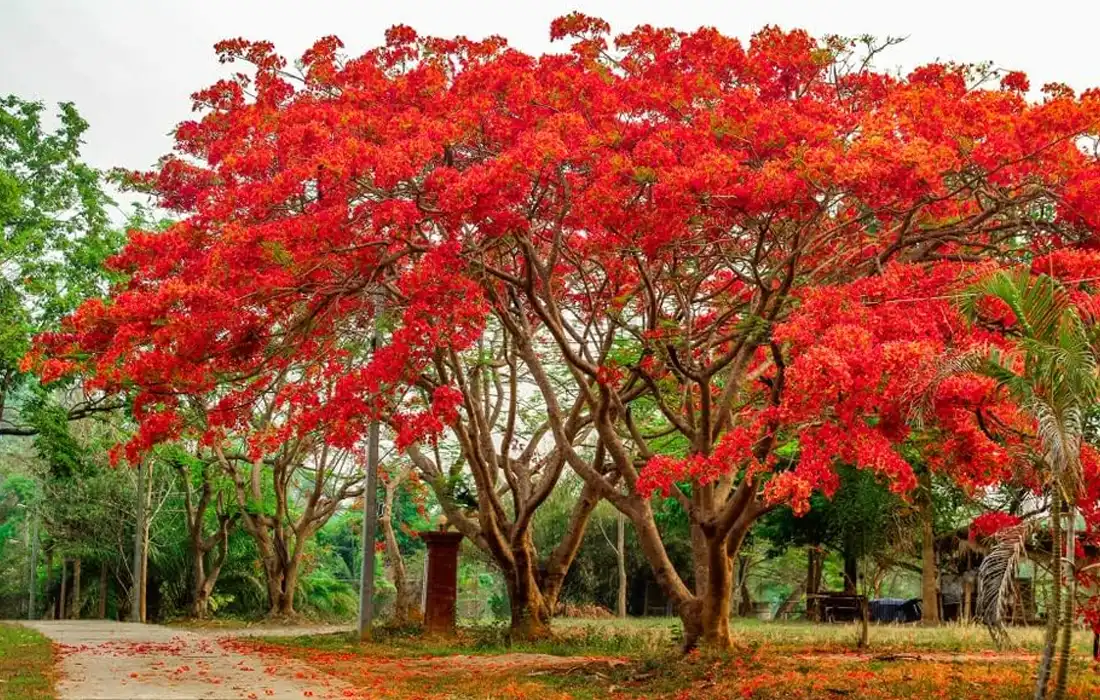

Flame Tree is a tropical tree known for fiery blooms and powerful cooling benefits, making it ideal for hot urban environments.
DUBAI: Flame Tree is a tropical tree admired for both its dramatic appearance and practical benefits, making it increasingly popular in cities with hot climates. Scientifically known as Delonix regia, the Flame Tree is famous for its bright orange-red flowers that bloom in summer, creating a striking visual effect across streets and parks.
The Crown Prince shared a video celebrating the Flame Tree, known for its wide canopy, lush green foliage and striking orange-red blossoms that bloom from May through July. The initiative aims to enhance the city’s visual appeal while improving environmental conditions during the summer months.
Speaking during a meeting with Dubai Municipality and the Dubai Future Foundation, he highlighted the tree’s role in shaping the city’s atmosphere. He said the seasonal bloom brings life to homes, majlis spaces and public areas, adding vibrancy and beauty across Dubai.
Commonly called Gulmohar in India, the Flame Tree is not just decorative but highly functional. Its soft, fern-like leaves and naturally wide canopy provide dense shade, helping to reduce ground temperatures by up to five degrees. This makes outdoor areas cooler and more comfortable, especially during peak summer.
Originally from Madagascar, the Flame Tree has adapted well to tropical and subtropical regions worldwide, including the UAE. It grows quickly in its early years and can spread up to 15 metres, making it ideal for covering large open spaces such as roadsides and public parks.
One of the key benefits of the Flame Tree is its ability to improve urban environments. It helps reduce heat, supports greener landscapes and enhances air quality by contributing to cleaner surroundings. Its low maintenance needs and adaptability to sandy or clay soil also make it a practical choice for city planners and homeowners.
During its blooming season from May to July, the tree transforms entire neighbourhoods into vibrant corridors of colour, adding aesthetic value to its environmental advantages.
Flame Tree continues to gain attention in urban planning for its dual role in beautifying cities and improving liveability, especially in regions facing rising temperatures.