


A new discussion at TechPulse MEA 2026 revealed that 70% of UAE professionals use AI daily, far above the global average. Industry leaders say artificial intelligence is now becoming a core business function, but successful adoption will depend on governance, cybersecurity and responsible implementation.
DUBAI: Artificial intelligence is rapidly becoming part of everyday business operations in the UAE, with new insights showing that 70% of UAE professionals use AI daily compared with a global average of just 18%. The finding was highlighted during the inaugural TechPulse MEA 2026 event hosted by the Indian Business & Professional Council (IBPC Dubai), where technology experts and business leaders explored how AI will shape organisations across the Middle East over the next 15 months.
The exclusive Technology, Digital & Innovation (TDI) Focus Group brought together senior executives, AI specialists, digital transformation experts and C-suite leaders to examine how businesses can embrace artificial intelligence while managing the growing challenges of governance, cybersecurity and regulatory compliance.
Opening the event, Karthik Raman, Convenor of the TDI Focus Group at IBPC Dubai and Chief Revenue Officer at RevDau, explained how technology has evolved from the internet and cloud computing to automation and now artificial intelligence. He noted that AI represents a fundamental shift because it is influencing how decisions are made rather than simply improving speed or efficiency. According to Raman, organisations must now decide which areas of their business can learn, adapt and create value through AI.
The keynote address was delivered by Aditi Nitin, Senior Partner for Data and AI at Deloitte Middle East. She explained that 70% of UAE professionals use AI daily, demonstrating how quickly the country has embraced enterprise AI compared with many global markets. However, she emphasised that widespread adoption alone is not enough. Businesses must invest in trusted data, workforce reskilling, responsible AI frameworks and strong governance to achieve sustainable long-term benefits.
Nitin also shared practical strategies for organisations looking to accelerate AI adoption. These included prompt engineering, AI-powered workflows, enterprise copilots and structured implementation plans that can help businesses move from experimentation to enterprise-wide deployment. She warned that challenges such as algorithmic bias, AI hallucinations, cybersecurity risks and data privacy concerns must be addressed before organisations can unlock AI’s full commercial value.
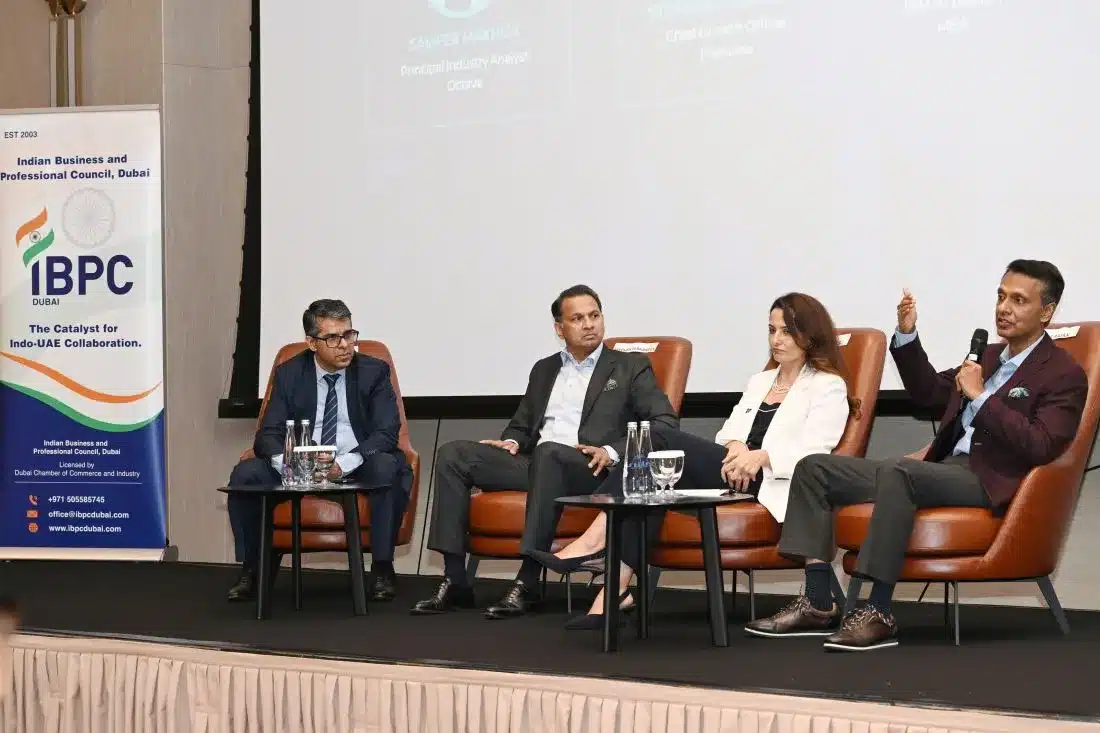
A panel discussion titled The AI Reshaping: From Ambition to Architecture expanded on these themes. Experts agreed that AI is no longer a standalone technology project but an essential business capability. As companies begin managing hybrid workforces made up of employees and AI agents, governance, executive oversight and accountability will become increasingly important.
The discussion also highlighted resilient digital infrastructure, cybersecurity and supply chain resilience as priorities for organisations operating in an increasingly complex business environment. Panellists stressed that successful AI strategies should focus on measurable business outcomes supported by transparent and auditable systems rather than adopting technology for its own sake.
Audience discussions explored AI regulation, enterprise data management, SME readiness and workforce transformation, reflecting the growing interest in responsible AI adoption across industries.
Closing the event, organisers noted that artificial intelligence is projected to contribute between US$96 billion and US$100 billion to the UAE economy by 2030. With businesses rapidly integrating AI into everyday operations, TechPulse MEA 2026 reinforced that future competitive advantage will belong to organisations that successfully combine technology, governance and human leadership.