

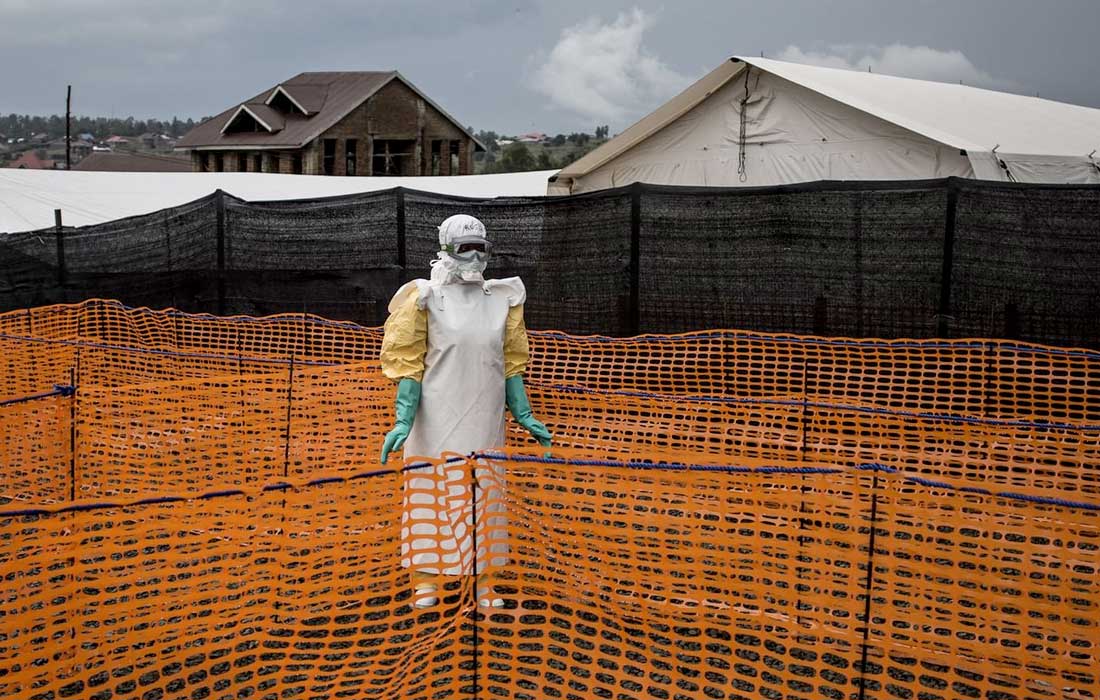

The World Health Organization has warned that most new Ebola infections in the Democratic Republic of the Congo are emerging from unknown chains of transmission, making it increasingly difficult to trace and contain the rapidly growing outbreak.
KINSHASA: The Ebola outbreak in the eastern Democratic Republic of the Congo is spreading faster than health authorities can track, with the World Health Organization (WHO) warning that around 80 per cent of newly confirmed infections are linked to unknown chains of transmission. The development highlights the growing challenge facing health workers as they attempt to contain one of Africa’s fastest-growing Ebola outbreaks.
According to the WHO, the high proportion of cases with no identifiable source indicates that the virus is circulating undetected within communities. Contact tracing, one of the most effective tools for controlling Ebola outbreaks, becomes significantly less effective when infected individuals cannot be linked to previously known patients or monitored contacts.
France’s first Ebola patient recovers after treatment following Congo humanitarian mission
Government figures released on Tuesday showed that the number of confirmed Ebola cases has reached 2,011, including 754 deaths since the outbreak began in May. The latest update from the country’s public health institute recorded 54 new confirmed infections in a single day across the provinces of Ituri, North Kivu and Haut-Uele, underscoring the speed at which the disease continues to spread.
The current outbreak is caused by the rare Bundibugyo strain of the Ebola virus, for which there is currently no approved vaccine or specific treatment. While clinical trials for potential therapies have recently begun, health officials say surveillance, early diagnosis and isolation remain the most effective measures available to slow transmission.
Dubai Humanitarian airlifts Ebola aid to support Congo response
Health experts say several factors are complicating the response. Ongoing armed conflict in eastern Congo, population displacement, community mistrust of health authorities and funding shortages have all limited efforts to identify cases quickly and monitor close contacts. In some affected areas, healthcare workers have also staged strikes over unpaid salaries and unsafe working conditions, placing additional strain on an already stretched public health system.
The Africa Centres for Disease Control and Prevention has described the epidemic as the continent’s fastest-growing Ebola outbreak. WHO officials have also warned that the true scale of the outbreak could be considerably larger than official figures suggest because many infections remain undetected. Modelling by the organisation indicates the actual number of cases may be two to four times higher than confirmed reports in some of the worst-affected areas.
Another major concern is that many patients continue to die within their communities before receiving medical treatment. This not only increases the risk of further transmission but also makes it more difficult for health teams to identify contacts and interrupt the spread of the virus. Ebola is transmitted through direct contact with the bodily fluids of infected people or contaminated materials, making rapid identification and isolation essential for outbreak control.
WHO reports 906 suspected Ebola cases as Congo outbreak worsens
International agencies continue to expand laboratory capacity, treatment centres and community engagement programmes across the affected provinces. However, WHO officials caution that stronger financial support, improved surveillance and greater cooperation from local communities will be essential if the outbreak is to be brought under control.
With infections continuing to rise and transmission increasingly occurring outside known contact networks, health authorities warn that the coming weeks will be critical in determining whether the outbreak can be contained before it spreads even further across the region.