

Dubai Electricity and Water Authority (DEWA) has strengthened cooperation with the World Water Council to promote sustainable water governance, renewable desalination and innovative solutions to address global water challenges.
DUBAI: Dubai Electricity and Water Authority (DEWA) has reaffirmed its commitment to sustainable water management by strengthening cooperation with the World Water Council, as both organisations explored ways to advance global water governance and accelerate innovation in resource management.
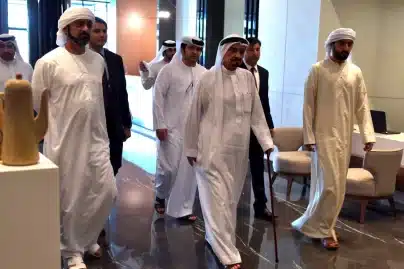
The discussions took place during a meeting between Saeed Mohammed Al Tayer, Managing Director and Chief Executive Officer of DEWA, and Loïc Fauchon, President of the World Water Council. The meeting focused on expanding collaboration to support sustainable development, improve water security and encourage greater international cooperation in addressing future water challenges.
During the meeting, Al Tayer highlighted the UAE’s long-term approach to managing natural resources through policies that balance economic development with environmental protection. He said the country’s leadership has consistently promoted advanced technologies and innovative solutions that improve resource efficiency while supporting national sustainability goals.
One of the key priorities discussed was DEWA’s comprehensive strategy for water sustainability, which aligns with the Dubai Demand Side Management Strategy 2050. The initiative seeks to position Dubai among the world’s leading cities for energy and water efficiency by encouraging responsible resource consumption and adopting advanced technologies across the water sector.
A major component of the strategy is the transition towards cleaner desalination. DEWA aims to produce 100 per cent of Dubai’s desalinated water using a combination of clean energy and waste heat by 2030. The plan is built on three strategic pillars: expanding clean energy, achieving operational excellence and diversifying water production technologies to improve resilience and sustainability.
Al Tayer explained that DEWA’s approach extends beyond increasing water production. It also focuses on improving operational efficiency, integrating renewable energy into desalination processes, diversifying supply sources and applying circular economy principles to maximise resource utilisation while reducing environmental impact.
Water security continues to be one of the most significant global challenges, particularly in regions experiencing limited freshwater resources and growing populations. By investing in innovation and modern infrastructure, Dubai aims to contribute practical solutions that can help strengthen resilience against future water shortages.
Al Tayer also emphasised that reliable access to water plays a fundamental role in supporting sustainable development, social stability and long-term economic prosperity. He reaffirmed DEWA’s commitment to developing technologies and sustainable practices that align with the UAE’s vision of using innovation to improve quality of life both locally and internationally.
For his part, Loïc Fauchon presented the World Water Council’s strategic vision for strengthening global cooperation on water governance. He stressed the importance of multilateral dialogue and closer partnerships between governments, organisations and institutions to address increasingly complex water-related issues facing communities around the world.
The discussions also highlighted the growing importance of international knowledge sharing as countries adapt to climate change, population growth and rising demand for freshwater resources. Experts increasingly recognise that sustainable water management requires coordinated action, investment in new technologies and long-term policy planning.
As Dubai continues expanding its clean energy and water infrastructure, cooperation with international organisations such as the World Water Council is expected to play an important role in supporting future innovation. The partnership reflects a shared commitment to building more resilient water systems while contributing to global efforts aimed at ensuring sustainable access to one of the world’s most valuable natural resources.