

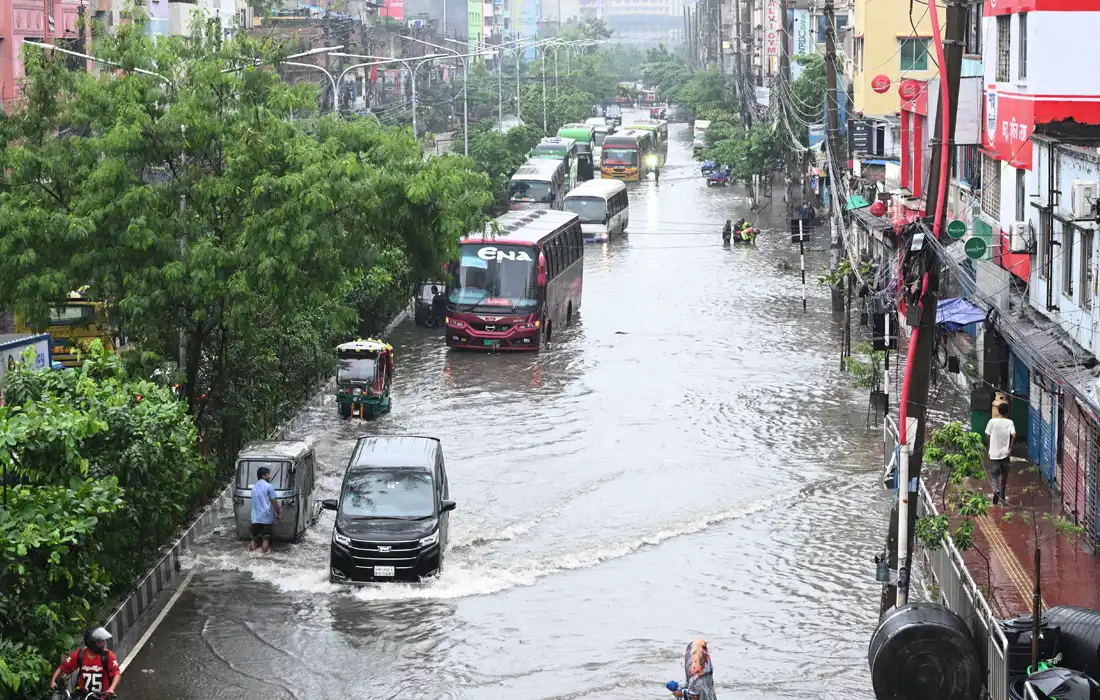

The Bangladesh floods have claimed at least 51 lives and affected more than one million people across seven districts, with thousands displaced as heavy monsoon rains, flash floods and landslides continue to disrupt daily life.
DHAKA: Bangladesh is facing a worsening humanitarian crisis after heavy monsoon rains, flash floods and landslides swept across large parts of the country, leaving at least 51 people dead and affecting more than one million residents.
According to the Ministry of Disaster Management and Relief, the Bangladesh floods have inundated 58 upazilas across seven districts, forcing thousands of families to leave their homes as floodwaters submerged villages, roads and agricultural land. Authorities continue to assess the full extent of the damage while emergency teams remain on the ground assisting affected communities.
Bangladesh measles outbreak claims 344 child deaths since March surge
What caused the floods?
Officials said the disaster was triggered by days of intense monsoon rainfall combined with flash floods flowing downstream from neighbouring hilly regions. The continuous downpours caused rivers to overflow, while landslides struck several vulnerable areas, increasing the scale of destruction.
Floodwaters rapidly spread through residential communities, damaging homes, disrupting transport networks and affecting essential public services. Many residents were forced to abandon their properties with little warning as water levels rose across low-lying areas.
The Ministry’s latest flood update confirmed that 51 people have lost their lives since the severe weather began. Authorities also reported that 39 people sustained injuries during flood-related incidents, while search, rescue and relief operations continue in several districts.
Expats from Bangladesh, India and Pakistan win AED 50,000 in Big Ticket draw
How are authorities responding?
More than 38,400 people have sought refuge in government-operated flood shelters established across the affected regions. Emergency responders are providing temporary accommodation, food, clean drinking water and medical assistance to displaced families as authorities work to address immediate humanitarian needs.
Government agencies are coordinating with local administrations to monitor water levels, distribute relief supplies and support evacuation efforts in communities that remain at risk of additional flooding.
Officials have urged residents living in vulnerable areas to remain alert, follow instructions from local authorities and move to designated shelters if further evacuation orders are issued.
The Bangladesh floods have also affected agriculture, transportation and local businesses, raising concerns about longer-term economic impacts if floodwaters persist. Flooded farmland could affect crop production, while damaged roads and bridges may delay relief efforts and hinder access to isolated communities.
Canada plans mass visa cancellations for Indian and Bangladeshi travellers
Bangladesh experiences seasonal monsoon flooding every year due to its low-lying geography and extensive river network. However, periods of exceptionally heavy rainfall combined with runoff from upstream catchment areas can significantly increase the severity of flooding, affecting millions of people across the country.
Disaster management officials continue monitoring weather forecasts and river conditions as additional rainfall remains possible in parts of the region. Relief operations are expected to continue until floodwaters begin to recede and affected communities can safely return home.
Authorities say restoring essential services, supporting displaced families and assessing infrastructure damage remain among the government’s immediate priorities as Bangladesh responds to one of the latest major monsoon emergencies.