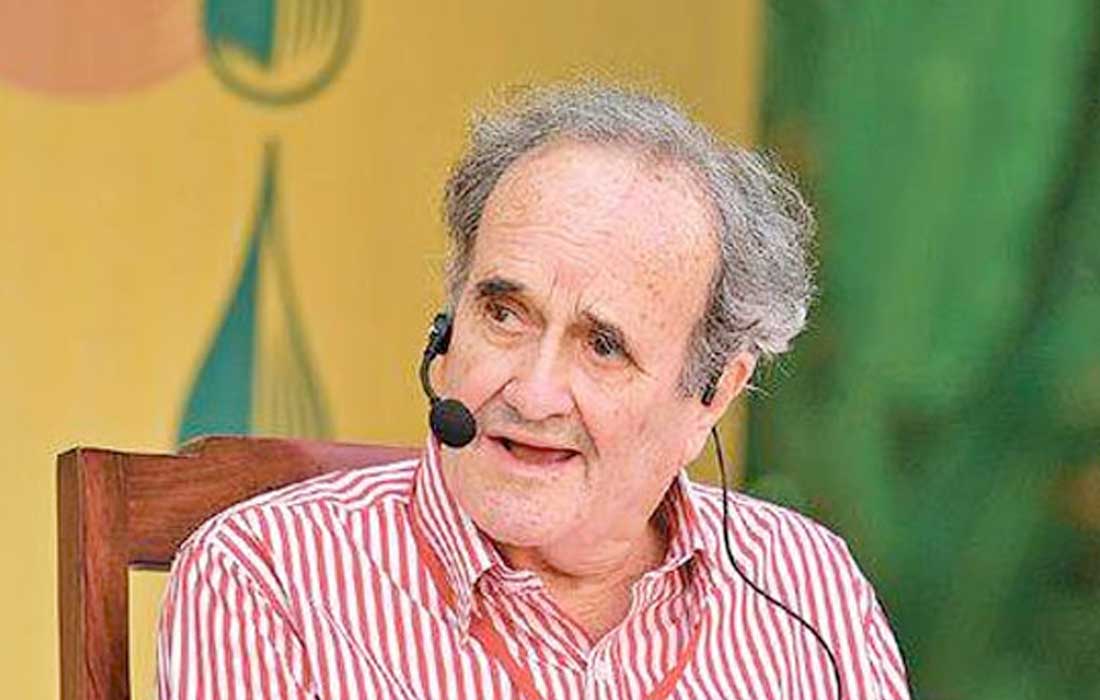

NEW DELHI: Sir Mark Tully, the legendary British journalist who served as the BBC’s voice of India for more than three decades, has passed away in Delhi at the age of 90. His distinctive voice and deeply nuanced reporting brought India’s complexities, triumphs and tragedies into global focus.
Born in Calcutta (now Kolkata) in 1935, Sir Mark was a child of the British Raj, raised between two cultures that would come to define both his life and his journalism. He joined the BBC in 1964 and soon became the bureau chief in Delhi, a role that positioned him at the centre of India’s most defining moments for the next 30 years.
Sir Mark reported on wars, political assassinations, riots, famines and one of India’s worst industrial disasters, the Bhopal gas tragedy. His coverage of the Indian army’s storming of the Golden Temple in Amritsar and the ensuing fallout brought critical international attention to the event.
In 1992, while covering the demolition of the Babri Masjid in Ayodhya, he faced real danger when a mob accused him of bias and threatened his life. He was locked inside a room until a local official and a Hindu priest intervened to escort him to safety.
Fluent in Hindi, rare among foreign journalists in India, Sir Mark was affectionately known across the country as “Tully sahib”. His deep understanding of India’s social, political and spiritual life made him a trusted figure among politicians, religious leaders, and citizens alike.
Beyond journalism, he became a respected author with acclaimed works such as No Full Stops in India and India’s Unending Journey, offering rich, reflective accounts of a rapidly changing nation.
Tributes have poured in from colleagues and admirers across the globe. Jonathan Munro, Interim CEO of BBC News and Current Affairs, called him “a pioneer of foreign correspondents,” adding, “Sir Mark opened India to the world through his reporting.”
Sir Mark’s legacy lives on through the generations of reporters he inspired and the millions who saw India through his lens. For many in India and the UK, he was more than a journalist, he was a bridge between two cultures, committed to fairness, truth and compassion.