

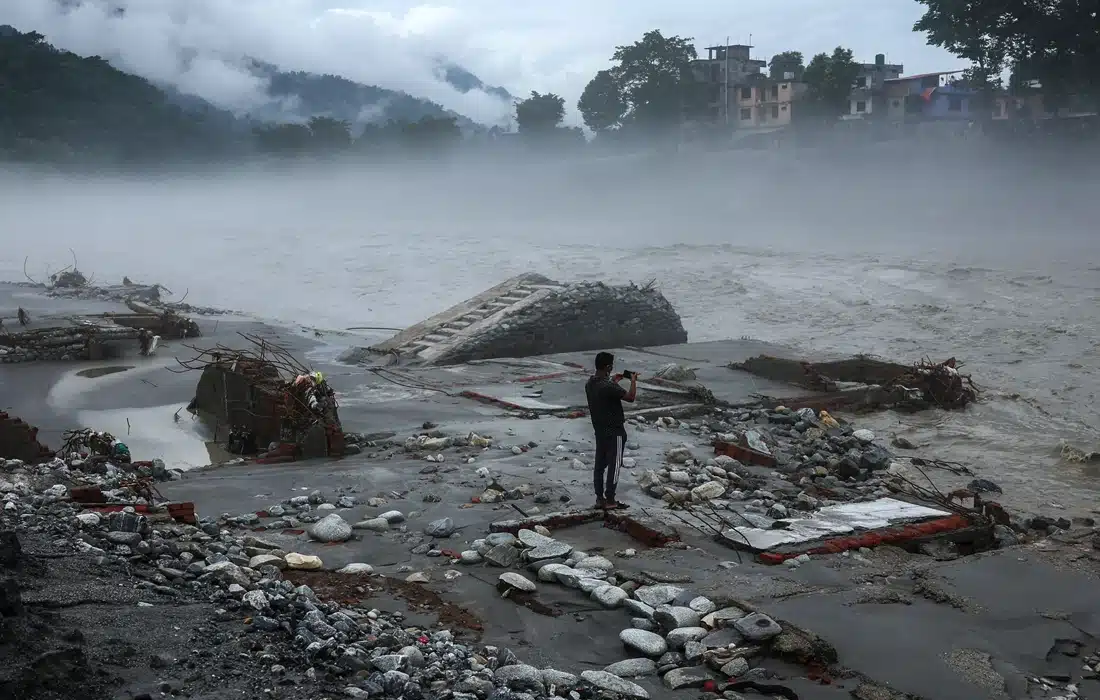

Nepal floods have killed 1,287 people and left 5,083 missing, while preliminary economic losses have reached $2.56 billion.
KATHMANDU: The scale of devastation from the Nepal floods is becoming clearer, with authorities reporting 1,287 deaths, thousands of people still missing and an estimated $2.56 billion in damage to homes, property and critical infrastructure.
Nepal’s National Disaster Risk Reduction and Management Authority said 5,083 people remained unaccounted for as of September 4, nine days after the disaster struck the Himalayan region.
The catastrophe began on August 26 when a glacier collapse triggered a massive surge of ice, rock, water and mud through the Trishuli River region near Nepal’s border with China. Entire communities were hit as floodwaters and debris swept through valleys and damaged vital infrastructure.
Also read: What really caused Nepal flood? Scientist reveals what happened in Himalayas
Authorities have placed preliminary losses from the Nepal floods at about 387.5 billion Nepalese rupees, equivalent to approximately $2.56 billion. The estimate covers damage to property, housing and infrastructure and could change as officials conduct more detailed assessments.
The housing impact alone is substantial. Officials estimate around 20,000 homes will need to be rebuilt, with at least 7,500 already destroyed.
Roads, bridges and hydropower facilities have also suffered severe damage. At least six hydropower projects were affected, complicating rescue operations and adding to concerns over the country’s recovery.
Despite the scale of the disaster, rescuers have continued to find survivors. Two workers were pulled alive from a tunnel at the Trishuli 3A Hydropower Project on September 4 after being trapped for nine days.
Authorities estimate that early recovery efforts over the first four months will require about $52.6 million. That funding would be directed towards rebuilding roads, providing temporary shelters and restoring drinking water and electricity supplies.
Thousands of security personnel and emergency workers remain involved in rescue and recovery operations as authorities search flood-hit areas and attempt to reach people trapped around damaged infrastructure.
Also read: UN climate warning says the world is running out of time
The Nepal floods have now become one of the country’s most severe recent natural disasters, leaving authorities with the simultaneous challenges of finding the missing, supporting displaced communities and beginning a costly reconstruction programme.
Impact to expect
Nepal faces a major long-term rebuilding challenge as authorities move from emergency rescue towards restoring homes, roads, electricity, water supplies and other essential infrastructure. The $2.56 billion preliminary loss estimate highlights the potential economic burden on the country.
With thousands still missing, the human toll may also change as search operations continue. Rebuilding around 20,000 homes and restoring damaged infrastructure could take considerable time and resources.
Nepal flood disaster, Nepal flash floods, Nepal landslides, Nepal flood damage