

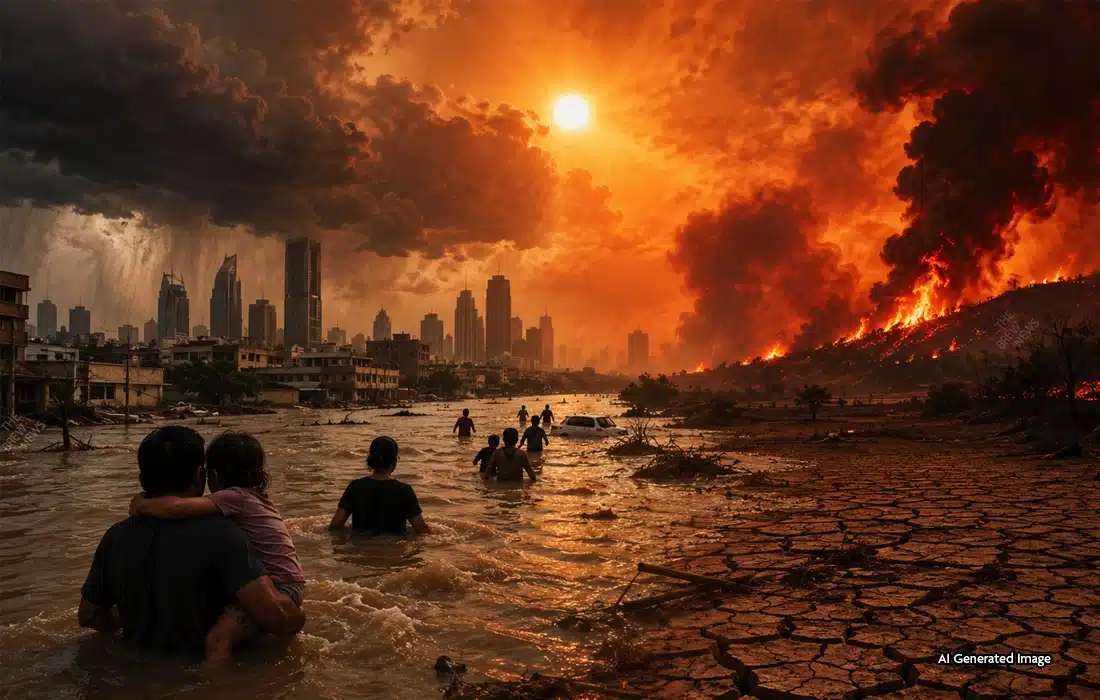

The UN climate warning is urgent: The world could cross the crucial 1.5°C limit within years, making faster climate action essential now.
NAIROBI: The world is getting dangerously hot, and the UN says there is little time to waste. Record heat, huge wildfires, deadly floods and other extreme weather are already hitting communities around the world. Now, a new UN Environment Programme report says global temperatures are likely to cross the important 1.5°C warming limit within the next few years. The UN climate warning is simple: act much faster now or face more serious damage later.
Also read: What really caused Nepal flood? Scientist reveals what happened in Himalayas
Why does 1.5°C matter so much? Countries agreed under the 2015 Paris Agreement to try to keep global warming within this level compared with temperatures before the industrial age. Crossing it does not mean the world suddenly becomes unlivable overnight. But every extra bit of warming matters. Hot days can become hotter, heavy rain can become more damaging, droughts can become harder to manage and rising seas can put more coastal communities at risk. The longer the planet stays above 1.5°C, the harder it becomes to limit these dangers.
The message from the UN is urgent, but there is still hope. Countries can cut greenhouse gas emissions much faster, move towards cleaner energy and prepare cities and communities for extreme weather. UN Secretary-General António Guterres said the world can still bring warming back below 1.5°C by the end of the century. But if temperatures first go above that level, the aim must be to keep the rise as small and as short as possible.
Also read: Climate change blamed for record-breaking Europe heatwave, scientists say
This is why the UN climate warning is not something governments can simply leave for another year. Extreme weather is already affecting people’s homes, health, jobs, food supplies and daily lives. Poorer communities can be hit especially hard because they often have fewer resources to recover after floods, fires, droughts or extreme heat. Governments also need to prepare for the climate changes that can no longer be avoided while cutting the emissions that are making the problem worse.
There is no single quick fix, but many of the solutions already exist. More renewable energy, cleaner transport, better energy efficiency and lower greenhouse gas emissions can all help. Businesses, cities and governments can also invest in stronger flood protection, heat plans and other measures that help people cope with a warmer world.
Also read: These orcas have sunk boats and scientists think they may enjoy it
The UN climate warning is ultimately a race against time. The planet may soon move past 1.5°C, but how far temperatures rise and how long they stay there can still be influenced by decisions being made today. Waiting means greater risks. Acting quickly gives the world a better chance of limiting the damage.
Impact to expect
Expect climate action to become even more urgent for governments, cities and businesses. Faster cuts to emissions and better protection against heat, floods and fires could now make a major difference to how severe future climate damage becomes.
climate emergency, global warming, 1.5°C limit, urgent climate action