

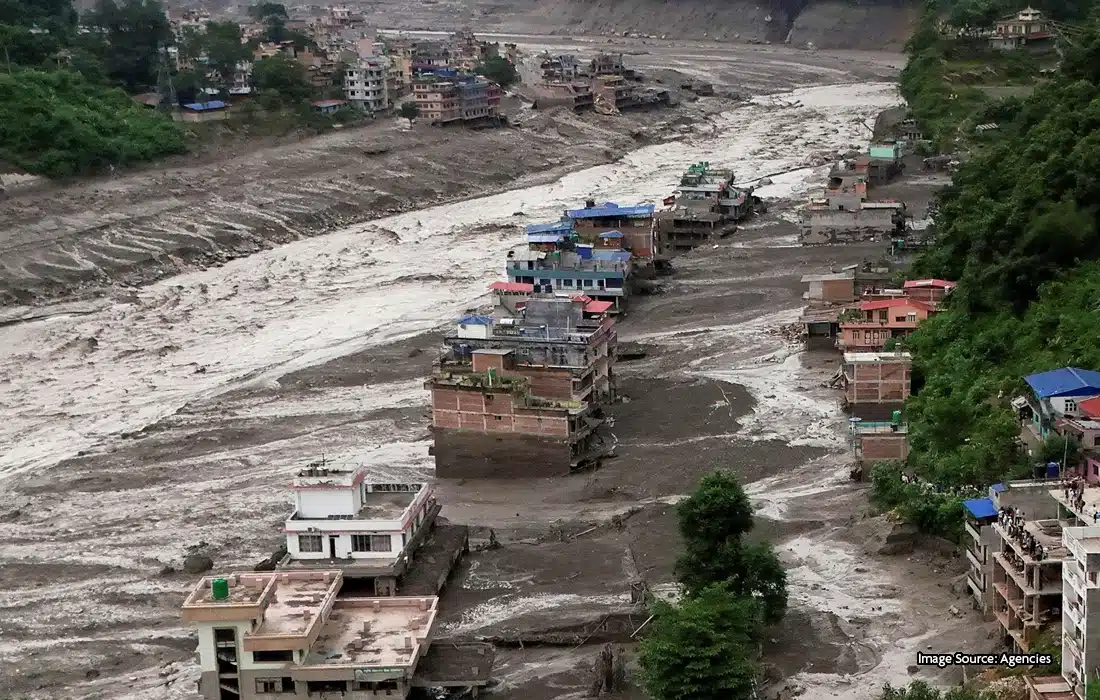

Nepal flood rescue operations have resumed after bad weather, with nearly 3,000 people missing and rebuilding costs estimated at $4 billion to $5 billion.
KATHMANDU: Nepal flood rescue operations resumed on Saturday after a brief weather-related suspension, as authorities intensified efforts to find nearly 3,000 people missing after a devastating Himalayan flood struck areas along the border with Tibet.
The disaster was triggered by a glacier collapse on Wednesday, sending a powerful torrent of rock, ice, mud and debris through mountain river systems. The surge destroyed buildings, bridges and power stations, leaving communities cut off and emergency teams facing difficult terrain.
Related read: Nepal flood disaster leaves hundreds dead as thousands remain missing
At least 669 people have been killed in Nepal, while seven deaths have been reported in China’s Tibet region. Nearly 3,000 people remain missing across the affected areas, including about 2,426 in Nepal and 554 in Tibet’s Gyirong County.
Among those unaccounted for are at least 540 foreign nationals. Many are Hindu pilgrims from India who were travelling through the Himalayan region when the disaster struck.
Search and rescue operations were temporarily halted because rain and fog made conditions unsafe. A police officer in badly affected Rasuwa district said helicopters returned to the skies after the weather improved, allowing emergency operations to continue.
The Nepal flood rescue effort is now entering a critical phase as authorities seek specialist foreign assistance. Difficult mountain conditions, damaged transport links and widespread infrastructure destruction could complicate attempts to reach isolated communities and locate survivors.
Beyond the immediate humanitarian emergency, Nepal is also confronting a major financial challenge. The country’s finance minister told Reuters that rebuilding damaged infrastructure and communities could require between $4 billion and $5 billion.
The scale of destruction could place considerable pressure on Nepal’s economy. Rebuilding roads, bridges, power facilities and homes is likely to require substantial government resources as well as international financial and technical support.
Authorities must also assess the longer-term consequences of damage to electricity infrastructure and transport networks. Restoring essential connections will be crucial for affected mountain communities and for economic activity in areas dependent on cross-border movement.
Impact to expect
The disaster could create a prolonged recovery challenge for Nepal, increasing pressure on government finances while disrupting transport, electricity and livelihoods. International technical assistance and reconstruction funding may become increasingly important as emergency operations move towards rebuilding.