
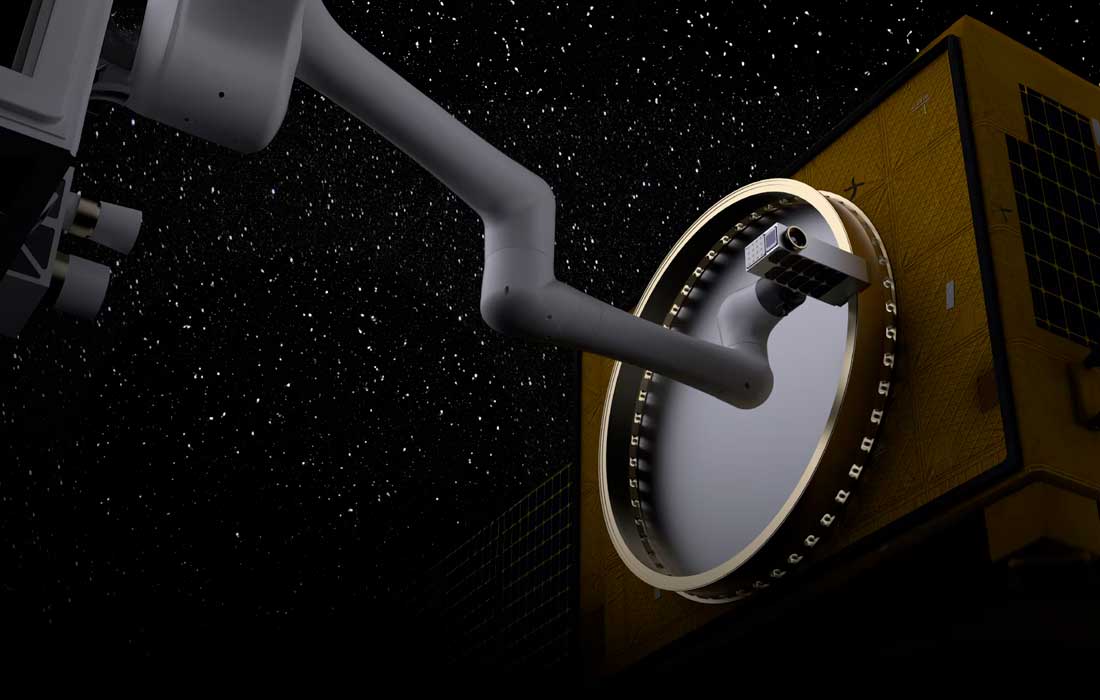

NASA has partnered with Katalyst Space to launch a $30M mission to save the Swift telescope from atmospheric reentry
FLAGSTAFF: NASA is launching an ambitious rescue mission to prevent the Neil Gehrels Swift Observatory from falling out of orbit by the end of 2026. With atmospheric drag accelerating its descent, the Swift space telescope now has a 90% chance of uncontrolled reentry unless action is taken soon.
To address the risk, NASA awarded $30 million to Arizona-based startup Katalyst Space Technologies, which is developing an innovative spacecraft named LINK. The mission, scheduled for launch by June 2026, aims to autonomously dock with Swift and boost it into a more stable orbit—giving it a second life for science.
Swift, launched in 2004, has been instrumental in observing gamma-ray bursts—some of the universe’s most powerful explosions. However, over its two decades in low-Earth orbit, the observatory has steadily lost altitude. Recent spikes in solar activity have worsened the problem, increasing drag and hastening orbital decay.
Rather than let the telescope burn up in Earth’s atmosphere—which poses no danger but would mark the end of its contributions—NASA and Katalyst are betting on air-launched rocketry for a timely and cost-effective save. Katalyst has chosen Northrop Grumman’s Pegasus rocket, which is launched mid-air from a carrier aircraft at 40,000 feet before igniting in freefall.
This unconventional approach solves several challenges at once. Swift orbits Earth at a 20.6-degree inclination to avoid high-radiation zones like the South Atlantic Anomaly. Traditional rockets from Cape Canaveral or Vandenberg would struggle to reach this orbit without significant fuel, making Pegasus the most feasible option.
Katalyst’s LINK spacecraft must be ready in less than eight months, a tight deadline that adds to the mission’s daring profile. If successful, LINK will autonomously rendezvous with Swift and perform the critical orbital boost, extending the satellite’s mission and preserving valuable scientific capabilities.
This operation also marks a potential comeback for Pegasus, which has seen limited use in recent years due to competition from cheaper, ground-based rockets. The Swift rescue could prove the value of air-launch platforms in niche orbital maneuvers.