

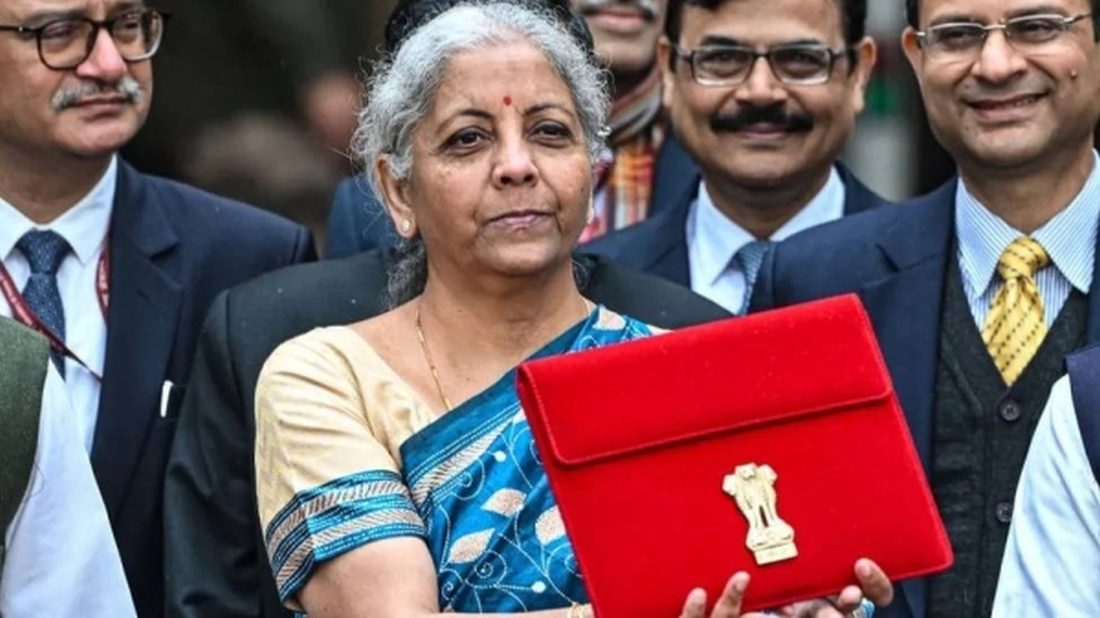

India’s Union Budget 2026–27 is expected to prioritise investment-led growth and exports, aligning with the Viksit Bharat roadmap and supporting global diaspora concerns.
NEW DELHI: The Union Budget of India for FY 2026–27, scheduled for presentation on 1 February 2026, comes at a critical juncture for India’s economic journey. Globally, growth remains uneven amid geopolitical tensions, tight financial conditions, and subdued external demand. Against this challenging backdrop, India continues to stand out with resilient macroeconomic fundamentals, credible fiscal discipline, and one of the strongest growth outlooks among major economies. As a result, the forthcoming Budget is widely perceived not merely as an annual fiscal exercise, but as a strategic launch pad for Viksit Bharat—India’s long-term aspiration to become a developed nation with a $30–40 trillion economy.
India’s real GDP growth is estimated at around 7.4% for FY26, driven by sustained government-led capital expenditure, strong services exports, and gradually improving private investment sentiment. However, moderation in consumption demand and persistent global uncertainties necessitate a carefully calibrated fiscal approach. Markets are expected to favour a Budget that balances growth support with a credible medium-term path of fiscal consolidation. In this context, Budget 2026–27 is expected to reinforce the vision of Viksit Bharat @2047, building on structural reforms undertaken over the past decade and laying the groundwork for durable, inclusive, and investment-led growth.
A key pillar of this vision is transforming India into a global manufacturing, technology, and export powerhouse. Increasing exports, fostering international partnerships, and effectively leveraging free trade and comprehensive economic partnership agreements must be central to policy execution. India has successfully concluded FTAs and CEPAs with partners such as the UAE, Australia, Oman, and the European Free Trade Association. However, concerns remain over the pace of on-ground implementation. Since signing CEPA with India in 2022, the UAE has leveraged more than twenty trade agreements globally, translating policy intent into tangible trade and investment growth. India, by contrast, has lagged in fully operationalising export incentives, import facilitation, and EXIM-friendly frameworks. The Union Budget 2026 must therefore address not only immediate requirements but also sow the seeds for a robust, execution-oriented EXIM policy regime.
Capital expenditure continues to be the primary growth engine. The Budget is expected to allocate approximately ₹12–13 trillion towards capex, representing a 10–15% year-on-year increase. Priority sectors are likely to include roads, railways, logistics infrastructure, defence indigenisation, urban infrastructure and housing, power transmission, renewables, and green energy. These investments are crucial for crowding in private capital, improving productivity, and strengthening India’s long-term competitiveness in global value chains.
At the same time, policymakers face the challenge of balancing capex-led growth with the need to support consumption. Urban consumption has shown signs of moderation, while rural demand remains uneven. Targeted measures through rural infrastructure spending, agriculture support, skilling initiatives, employment programmes, and focused welfare interventions may be necessary to sustain demand, while avoiding fiscally imprudent giveaways that could undermine macro stability.
Fiscal consolidation remains a key policy anchor. The government is expected to target a fiscal deficit of around 4.2–4.4% of GDP for FY27, reinforcing policy credibility and anchoring inflation expectations. Disinvestment and asset monetisation are likely to play a significant role in non-tax revenue generation, with potential targets of ₹50,000–70,000 crore. Clear timelines and improved execution would be positively viewed by markets.
On the tax front, while major rate cuts may be constrained by fiscal realities, the focus is expected to remain on simplification, reduction in litigation, faster refunds, and targeted incentives for manufacturing, green energy, innovation, and emerging technologies. Predictable tax policy and procedural clarity will be critical in crowding in private investment and sustaining long-term business confidence.
Beyond fiscal arithmetic, markets will closely watch signals on ease of doing business reforms, labour and logistics efficiency, digital public infrastructure, and regulatory simplification. India’s emergence as a global hub for Global Capability Centres—now exceeding 1,700—highlights the growing importance of skilled professionals and trusted governance frameworks. In an era of digitisation and artificial intelligence, responsible technology governance, data integrity, and ethical oversight are essential.
From a community perspective, particularly among NRI professionals based in the UAE, there is also a strong case for revisiting India’s customs and baggage allowance framework. The current value-based duty-free gold limits have become increasingly impractical amid volatile global prices, leading to ambiguity and avoidable disputes at ports of entry. A shift to a quantity-based allowance regime—such as 30 grams for NRI passengers and 10 grams for Indian tourists—would provide clarity, reduce discretion, and align policy with market realities while safeguarding revenue interests.
Equally important is a comprehensive review of customs exemptions for NRIs permanently returning to India. To meaningfully encourage reverse migration (Ghar Bapasi), policies must be facilitative and empathetic, recognising the economic, professional, and intellectual capital that overseas Indians bring back. Rationalising these provisions would ease compliance, strengthen trust, and deepen diaspora engagement.
In conclusion, Union Budget 2026–27 carries high expectations. It must decisively prioritise investment and exports over short-term populism, reinforce fiscal discipline, and translate strategic vision into effective execution. If delivered well, the Budget can serve as a credible stepping stone towards Viksit Bharat, strengthening India’s position as a resilient, competitive, and trusted global economic force.

This opinion piece is contributed by Dr. Sahitya Chaturvedi, a Dubai-based Chartered Accountant and PhD holder in Islamic Finance, currently serving as Secretary General of IBPC Dubai and Chief Internal Auditor at Ajmal Group. A dynamic voice in diaspora and trade diplomacy.
Dr. Chaturvedi also serves as Director at the Asia Arab Chamber of Commerce, spearheading regional trade synergies across the Gulf and West Asia.
Disclaimer: All views and opinions expressed in The Brew Opinion – our opinion section – are those of the authors and do not necessarily reflect the official policy or position of TheBrewNews.com, the company, or any of its members.