

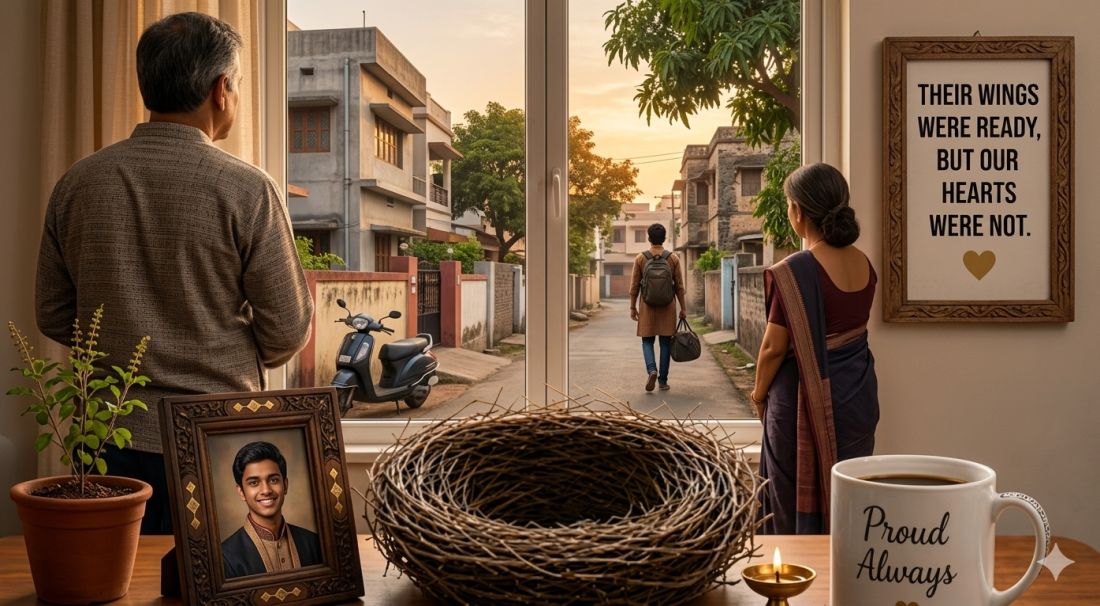

Empty nest syndrome is emerging across the Global South as parents struggle with identity, purpose and emotional adjustment after children leave home.
DUBAI: Empty nest syndrome is increasingly affecting families across the Global South, as parents face emotional and psychological challenges when children move away for education or work. In countries such as India, Pakistan, and the Middle East, where family structures are deeply rooted in daily life, this transition is often more intense and complex.
The Silent Shift in the Cultural Heart
As a parenting coach and social researcher, I have often observed a profound irony in the journey of parenthood. We spend decades managing the “beautiful chaos” of a full house – the school runs, the laundry piles and the constant noise, only to find ourselves blindsided by the silence when the last child finally walks through that door. In the specific context of India, Pakistan and the UAE, this transition is increasingly complex and emotionally charged. In these societies, family is not just a unit but the very sun around which our entire social solar system revolves. For many parents in this region, the ‘Empty Nest Syndrome’ (ENS) is not merely a household change; it is a profound identity crisis.
The Clinical Reality of a Parental Identity Crisis
According to the research in “The Empty Nest Syndrome: Critical Clinical Considerations,” this phenomenon is a psychological state characterized by intense grief, a loss of purpose and a destabilized sense of self. In the cultural landscapes of India and Pakistan, where multi-generational living and ‘enmeshment’ are common, the departure of a child for a job in Dubai or a university in London can feel like a fracture in the soul. For the mother who has spent twenty years as the primary caregiver balancing home management, societal expectations and the heavy cognitive load of child-rearing the sudden absence of these demands leaves a vacuum that is often filled with anxiety or depression. The research suggests that for these caregivers, the loss of the ‘parenting role’ is often perceived as the loss of their primary value to society.
The Expat Experience and the Perfect Storm
In the UAE, the demographic of expatriate families adds another layer of isolation. Unlike those in their home countries who might have siblings or extended cousins nearby to soften the blow, ‘Expat’ parents often find their social circles are entirely built around their children’s school activities. When the children leave, the social infrastructure collapses alongside the domestic one. This period often overlaps with other significant biological and professional transitions, such as menopause for women or the approach of retirement for parents, creating a ‘perfect storm’ of emotional vulnerability. The clinical reality is that while the world sees a parent who has successfully ‘launched’ a child, the parent often feels like they are mourning a living person.
Refilling the Nest: Strategies for Evolution
To navigate this transition, we must shift our perspective from a narrative of ‘loss’ to one of ‘evolution’. Reframing the ‘empty nest’ as a ‘refilled’ life requires a conscious effort to rediscover the individual self that existed before the labels of ‘Mom’ or ‘Dad’ took over. This involves acknowledging the grief as a valid testament to the depth of one’s investment rather than a sign of weakness. It is a time to pivot from being a ‘manager’ of a child’s life to a ‘consultant,’ using digital connectivity to maintain a bond that respects their burgeoning independence. By focusing on personal health and re-engaging with long-dormant passions, parents can demonstrate to their children that adulthood is not a slow fade into obsolescence, but a vibrant new chapter of self-discovery and also a ‘New beginning’, not only for the child, but also for the parents. The door you once opened for them may now be closed, but it is not locked. By focusing on our own growth, we show our children that adulthood isn’t just about leaving, it’s about becoming!
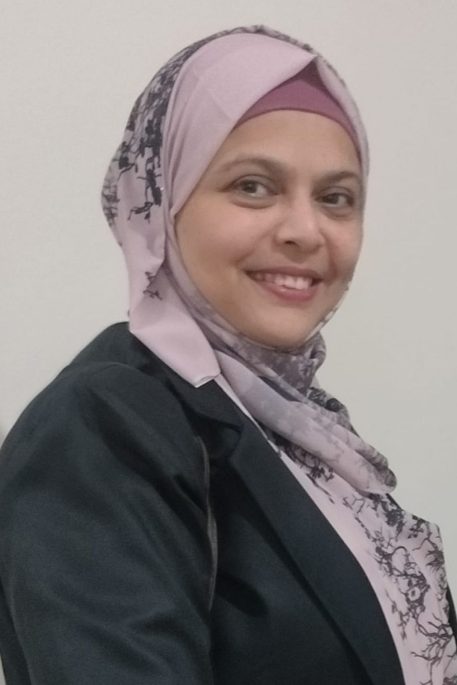
This opinion piece is written by Dr. Saman Ahmed, founder of Soulful Nurturing, parenting coach, and researcher.
Disclaimer: All views and opinions expressed in The Brew Opinion – our opinion section – are those of the authors and do not necessarily reflect the official policy or position of TheBrewNews.com, the company, or any of its members.