

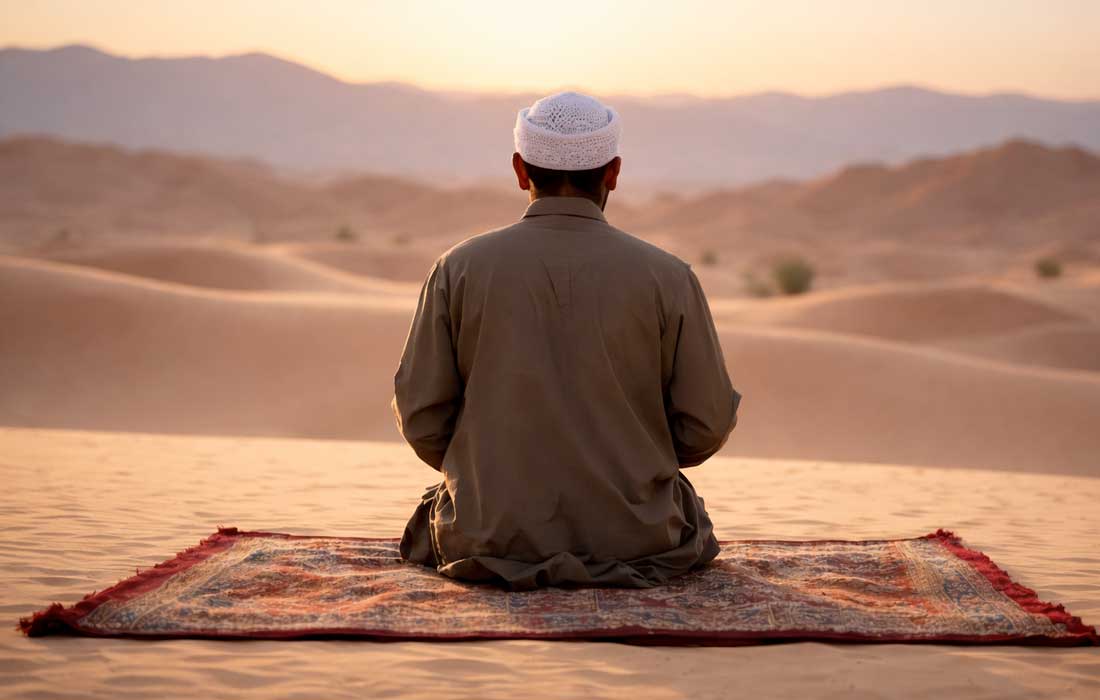

Muslims today rarely practice meditation and mindfulness. It is time for Muslims to rediscover the power of stillness and conscious reflection.
Every Muslim knows about the Cave of Hira and its significance in Islam. It is the quiet mountain cave where Prophet Muhammad (peace be upon him) would withdraw from society to spend time alone. It was in this cave that the Qur’an was first revealed, renewing the call to monotheism and changing the course of history.
Before prophethood, Prophet Muhammad (pbuh) lived a simple and hardworking life. As a young man, he was a shepherd and later became a successful and trusted businessman. He did not receive formal education, which was common for people of that era. Yet he possessed a rare clarity of thought and depth of character.
I do not claim to be a scholar in Islam but I can reasonably deduce that all Prophets understood one crucial truth… To become a better human being, the mind had to be trained.
Prophet Muhammed’s (pbuh) regular retreats to the Cave of Hira were not acts of isolation, but moments of deep reflection and awareness. In today’s language, we might describe this as mindfulness or meditation.
What is striking is that history focuses almost entirely on the moment the word “Iqra” (Read) was revealed in the Holy Qur’an. Very little attention is given to the years of reflection that came before it. Those quiet moments of contemplation are often overlooked, despite their possible role in preparing him spiritually and mentally.
In this age of fast-paced technology and unreasonable expectations, life often races ahead of our ambitions in a constant blur. Across the world, people are searching for peace, balance, and mindfulness as an antidote to mental exhaustion.
Corporates now organise wellness retreats, while healthcare providers offer rejuvenation packages for those who can afford them. Yet Muslims already possess an inherent ethos of wellness rooted in faith and reflection, one that is rarely practised consciously in daily life.
Which brings us to an uncomfortable reality. Muslims today rarely practice meditation or conscious mental stillness. The idea of relaxing the mind and disciplining it is largely absent from daily Muslim life. While salah is often described as the yoga of Islam, how often do we truly pray with calm and full focus? More often than not, our minds wander through daily worries while our lips continue to recite.
By choosing solitude in a cave, can we not reasonably conclude that the Prophet Muhammad (pbuh) valued deep reflection and inner calm? If reflection and mental discipline were part of his life, then an important question arises. So does meditation become a sunnah we are missing in life?
Perhaps it is time for Muslims to rediscover the power of stillness and conscious reflection, not as something foreign, but as something deeply aligned with our faith in Islam.
Over to you, my Muslim brothers and sisters.
Meditation practice in Islam is important to have as Islam teaches practice of meditation