
Freight costs on major Asia-UAE shipping routes have jumped from around $1,000 to $7,000 per container amid global trade disruptions. However, government officials and industry leaders say the UAE’s logistics ecosystem, supported by infrastructure investments and the Green Corridor initiative, has helped keep goods flowing and protected supply chain continuity.
DUBAI: Freight costs have risen dramatically across key shipping routes linking Asia and the UAE, creating significant pressure for businesses that depend on international trade. Yet despite the disruption, experts say the UAE has continued to demonstrate remarkable resilience, ensuring that goods reach consumers and industries without major interruptions.
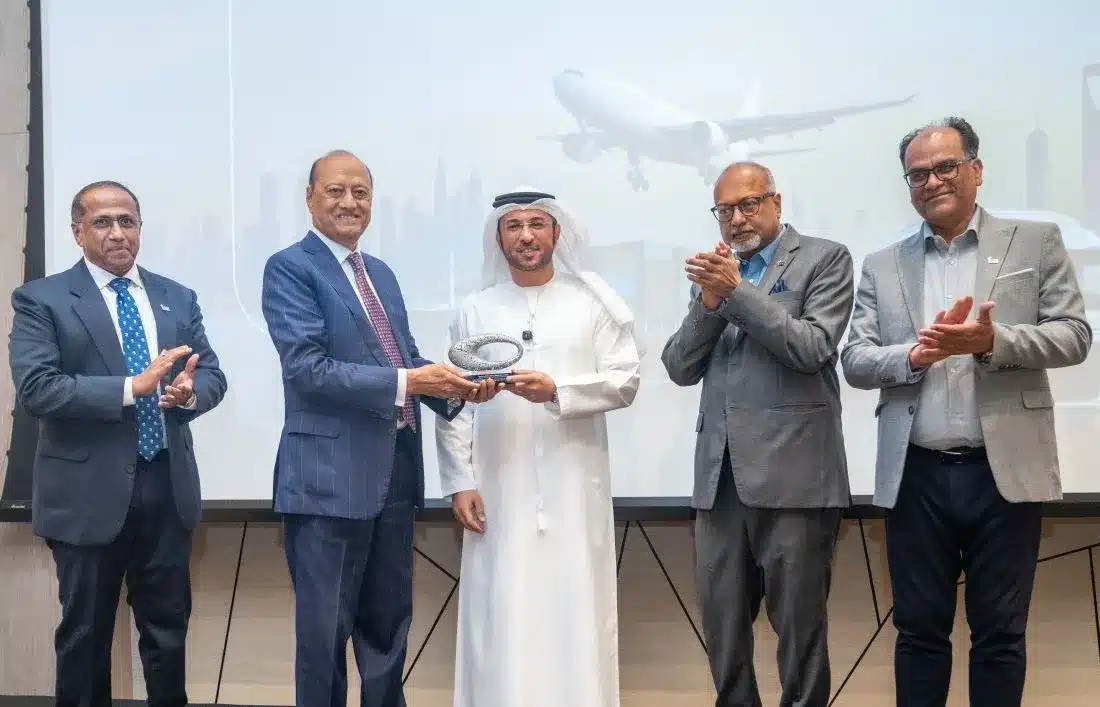
The issue took centre stage at the IBPC Dubai forum titled “Current Situation in Supply Chain, Freight, Logistics & Operational Continuity”, where government officials, logistics experts and industry leaders assessed the impact of ongoing global shipping challenges.
One of the most striking figures discussed was the sharp increase in freight rates. Shipping costs that previously averaged around $1,000 per container have climbed to approximately $7,000, representing a rise of nearly 600 percent. At the same time, some major shipping corridors have experienced volume declines of up to 90-95 percent.
So how are UAE supply chains continuing to function despite such severe pressures?
According to participants, the answer lies in years of strategic planning, infrastructure investment and close coordination between government agencies and private-sector operators.
Delivering the keynote address, H.E. Abdulla Bin Damithan, Chairman of Ports, Customs and Free Zone Corporation, Dubai, emphasised that resilience is not created during a crisis but developed long before challenges emerge. He highlighted Dubai’s ability to anticipate change, adapt quickly and implement practical solutions that keep trade moving even under difficult circumstances.
A key factor has been the Green Corridor initiative, which was introduced to facilitate cargo movement during disruptions. Combined with collaboration between ports, customs authorities, shipping companies and logistics providers, the initiative has helped maintain operational continuity and support national food security objectives.
Industry leaders noted that alternative gateways such as Khor Fakkan, Fujairah and Salalah have also played an increasingly important role. These ports have provided additional routing options, helping businesses avoid bottlenecks and maintain supply flows.
From an operational perspective, shipping companies reported that conditions have gradually improved. At the peak of the disruption, available shipping capacity dropped to as little as 10-15 percent, creating significant challenges across logistics networks. However, coordinated interventions have helped recover volumes to roughly 40 percent of pre-crisis levels.
More than 100,000 TEUs have already been moved through Green Corridor programmes, helping to ensure that essential goods continue reaching their destinations. Industry representatives stressed that food security has remained protected and refrigerated cargo shipments have continued without major disruption.
Beyond the immediate challenges, the crisis is reshaping how businesses approach logistics. Companies are increasingly prioritising flexibility, diversified sourcing strategies and stronger partnerships across supply chains. Industry executives say responsiveness, transparency and clear communication are becoming just as important as operational efficiency.
Participants agreed that the current disruption is accelerating a long-term transformation in global trade. Businesses are exploring integrated transport solutions that combine sea, air, road and emerging rail networks while developing alternative trade corridors to reduce future risks.
The forum concluded with a shared message that while global supply chains remain under pressure, the UAE’s coordinated response, infrastructure strength, and adaptability continue to position it as one of the world’s most resilient and reliable trade hubs.