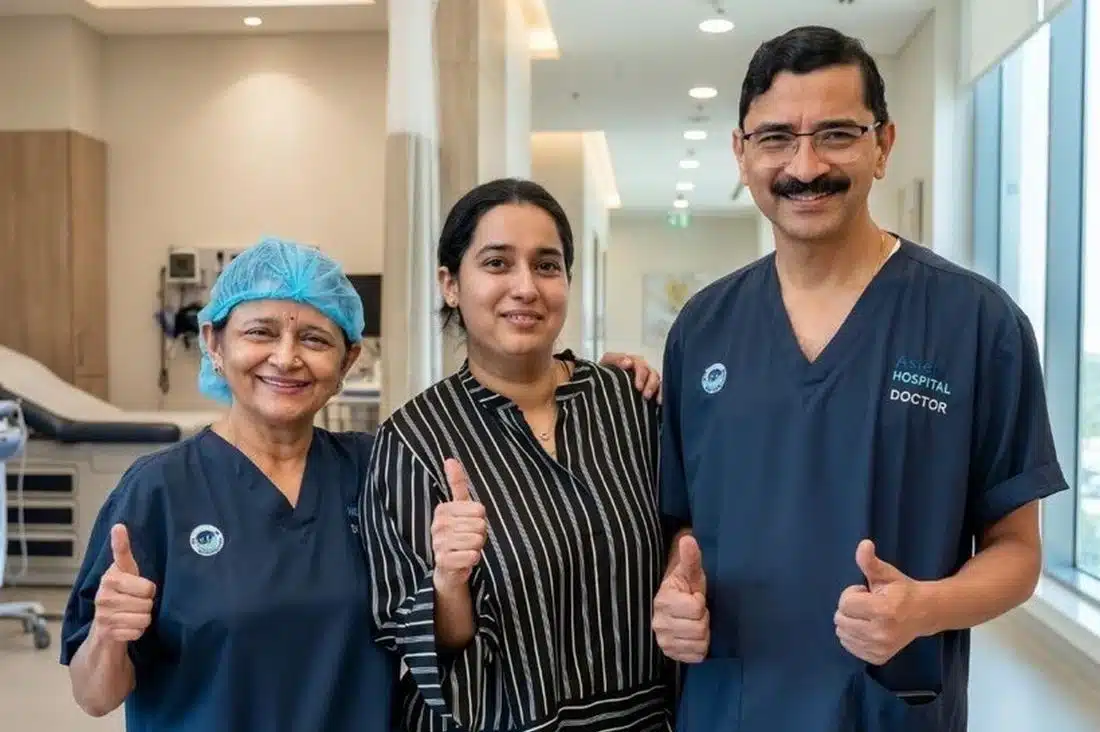

A 32-year-old Dubai resident successfully underwent a rare emergency redo heart bypass surgery at Aster Hospital, Al Qusais, just six months after her first operation. The rare cardiac surgery highlights the growing incidence of serious heart disease among younger patients and showcases the importance of specialised multidisciplinary cardiac care.
DUBAI: How rare is it for a young patient to undergo a second heart bypass surgery within six months of the first procedure?
According to cardiac specialists, such cases are exceptionally uncommon. That is why the successful treatment of a 32-year-old Dubai resident at Aster Hospital, Al Qusais, is attracting attention within the medical community.
The patient, Mahpara Ashraf, a Pakistani national residing in Dubai, underwent a rare cardiac surgery after developing severe chest pain only months after her initial coronary artery bypass grafting procedure, which had been performed outside the UAE.
Doctors revealed that Ashraf had multiple underlying health conditions, including diabetes, hypertension, high cholesterol and advanced coronary artery disease. Prior to her bypass surgery, she had already undergone a coronary stenting procedure to restore blood flow in one of her heart arteries.
However, despite these interventions, her symptoms returned. Following further investigations at Aster Hospital, specialists discovered that several native coronary arteries remained blocked and most of the previously created bypass grafts had also become critically obstructed. Only one graft remained functional.
The situation became increasingly urgent when she was diagnosed with unstable angina, a serious condition that can rapidly progress to a major heart attack if left untreated. Given her ongoing chest pain and complex medical history, doctors determined that emergency surgery was the safest option.
What made this case particularly significant was the need for a second bypass operation within just six months of the first procedure. Globally, redo bypass surgeries account for only a small percentage of all coronary bypass operations. Performing such a rare cardiac surgery on a young female patient in an emergency setting further increased the complexity.
The surgical team elected to perform the procedure on a beating heart rather than stopping the heart and using a heart-lung machine. This technique requires advanced expertise and careful surgical planning. The operation was made even more challenging because blood vessels commonly used for bypass grafts had already been utilised during the previous surgery, requiring surgeons to identify alternative options.
Dr Sandeep Shrivastava, Consultant Cardiothoracic Surgeon at Aster Hospital, said the procedure demanded meticulous preparation and coordination. He noted that the patient’s previous surgery, unstable condition and the presence of earlier grafts created significant surgical challenges.
Medical experts also pointed out another notable aspect of the case. Coronary artery bypass surgeries are more commonly performed in men, while women account for a much smaller proportion of patients globally. Female patients often present with more advanced cardiovascular disease and face higher clinical risks, making this rare cardiac surgery even more remarkable.
Following the operation, Ashraf recovered well and was discharged after an uneventful post-operative period.
Cardiologists say the case serves as an important reminder that lifestyle-related conditions such as diabetes, hypertension and high cholesterol are increasingly affecting younger adults. Early diagnosis, regular follow-up and timely medical intervention remain critical in preventing serious complications.
For Aster Hospital, the successful outcome demonstrates how specialised expertise, modern surgical techniques and coordinated multidisciplinary care can help achieve positive results even in some of the most challenging cardiac cases.escription