

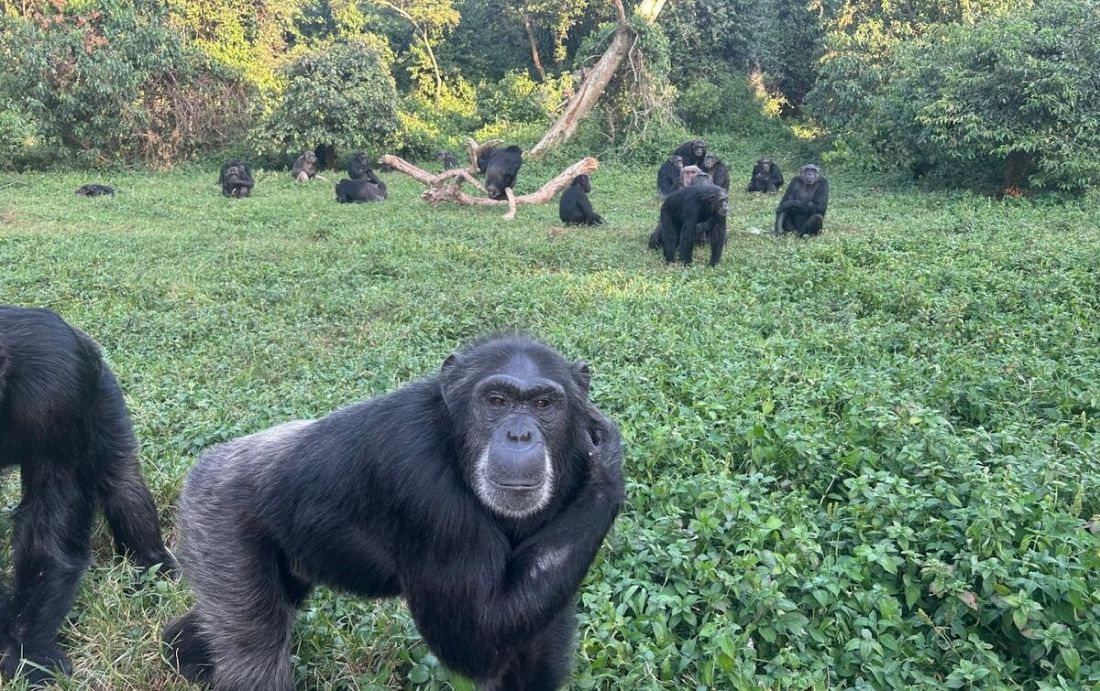

Wild chimpanzee civil war in Uganda shows organised violence between groups, surprising researchers studying primate behaviour.
KAMPALA: A rare wild chimpanzee civil war has been observed in Uganda, where two rival groups engaged in coordinated and sustained attacks, offering new insight into primate social dynamics.
Researchers studying chimpanzees in a protected forest documented a series of organised confrontations between neighbouring groups. The wild chimpanzee civil war involved ambush-style tactics, territorial patrols, and targeted aggression, behaviours that closely resemble strategic conflict rather than random violence. Scientists noted that the clashes unfolded over several weeks, indicating long-term tension between the communities.
The attacks were not isolated incidents. Instead, they appeared planned, with dominant males leading incursions into rival territory. Smaller sub-groups would break away, positioning themselves to surprise opponents. This level of coordination suggests a deeper level of social intelligence and communication among chimpanzees than previously understood.
Experts say such conflicts are often driven by competition over food, territory, and mating opportunities. However, the scale and persistence of this wild chimpanzee civil war have drawn particular attention. Observers recorded injuries, displacement of weaker members, and shifts in group hierarchy following the clashes.
The findings challenge earlier assumptions that organised warfare is a uniquely human trait. While chimpanzees have long been known to display aggression, the structured nature of these encounters highlights parallels with human conflict behaviour. Researchers believe this could help explain the evolutionary roots of cooperation and rivalry.
Despite the violence, scientists stress the importance of studying these behaviours in their natural context. Understanding how and why such conflicts arise may offer valuable clues about social organisation in early human ancestors.
The study also reinforces the need to protect chimpanzee habitats, as environmental pressures could intensify such conflicts in the future.