

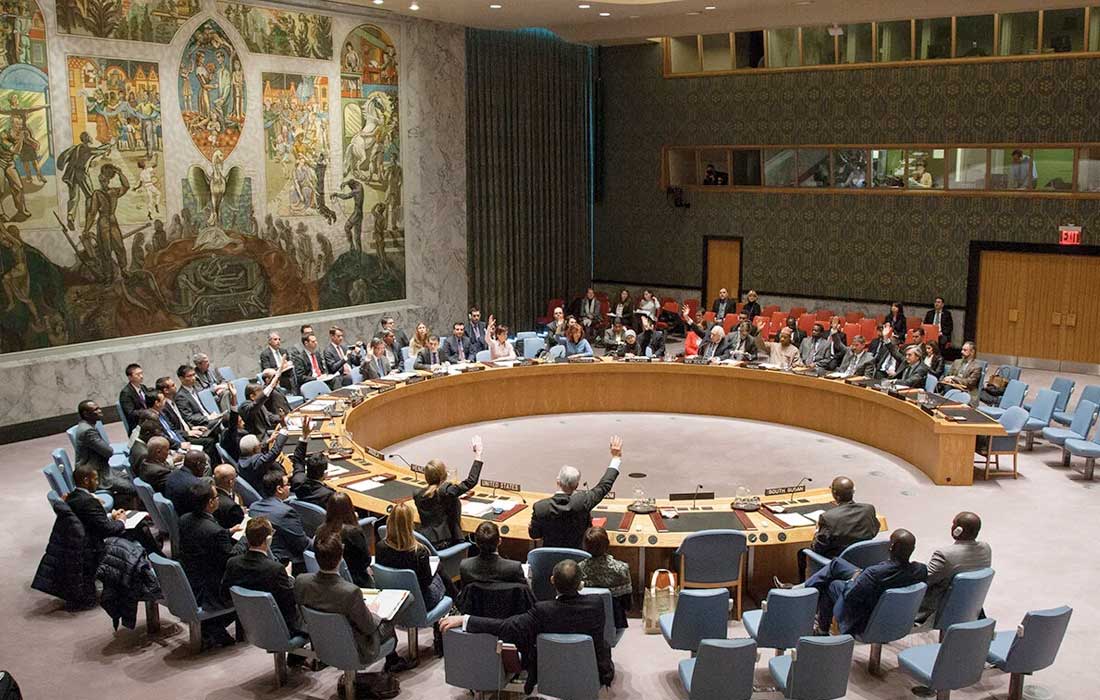

The United Nations Security Council has failed to adopt a resolution calling on Iran to cease attacks on commercial vessels and stop obstructing navigation in the Strait of Hormuz, after Russia and China used their veto power to block the Bahrain-drafted text.
NEW YORK: The United Nations Security Council has failed to adopt a resolution demanding that Iran immediately halt attacks on commercial vessels and stop obstructing freedom of navigation in the Strait of Hormuz, after Russia and China vetoed the Bahrain-drafted text despite support from 11 of the council’s 15 members. Pakistan and Colombia abstained.
The draft resolution, submitted by Bahrain, which holds the Security Council presidency for April, called on Iran to cease all attacks against commercial ships and authorised states to coordinate defensive efforts to protect vessels, including escorting them through the strait when necessary. It also demanded that Iran stop targeting civilian infrastructure, including oil and gas facilities and water stations, and expressed concern over the extension of threats to the Bab al-Mandab Strait.
Bahrain’s Foreign Minister Dr. Abdullatif bin Rashid Al Zayani expressed deep regret over the council’s failure, describing Iran’s conduct as a documented negative approach and warning that the Security Council’s inaction would have serious repercussions for humanity. He stressed that Iran has no right to close the Strait of Hormuz or deprive the world’s countries of vital resources, and that the draft resolution was fully consistent with international law and the United Nations Convention on the Law of the Sea.
Al Zayani reminded council members that the Gulf states are a primary source of global energy flow, making the Strait of Hormuz a shared international responsibility, not one country’s leverage to wield.
The vetoed UNSC resolution had stipulated the condemnation of all attacks and threats targeting commercial vessels in the strait, held Iran responsible for undermining maritime security, and reaffirmed the right of all ships to transit passage in accordance with international law.
The twin vetoes by Russia and China effectively shield Iran from binding Security Council action, leaving Gulf states and their international partners to pursue defensive coordination outside the UN framework.