

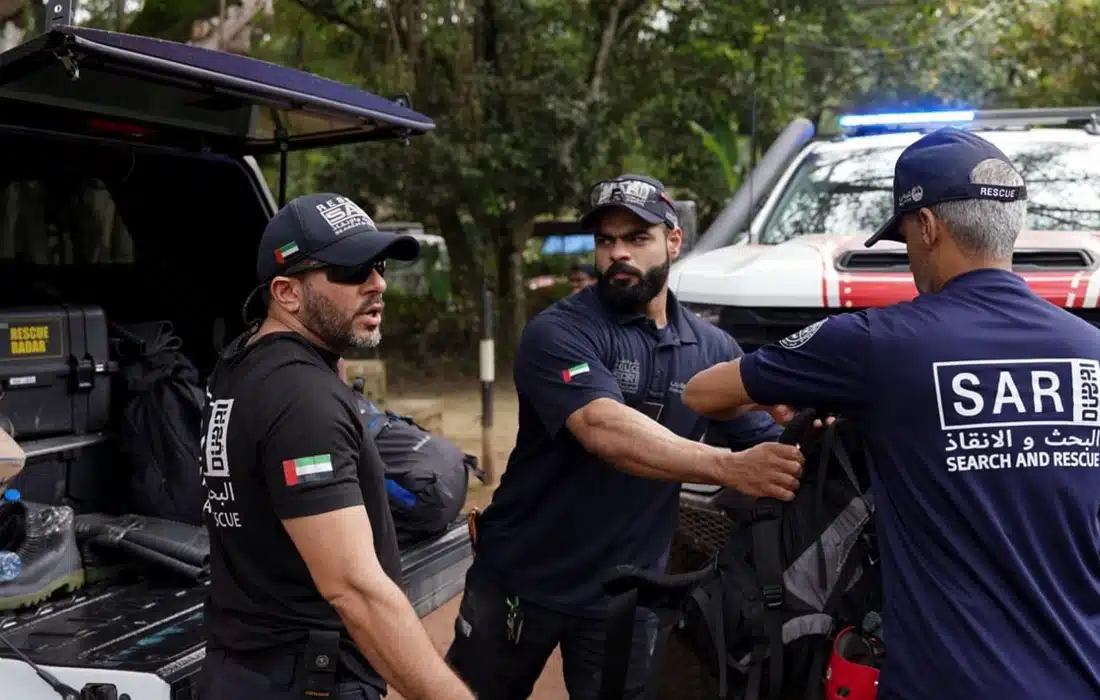

The UAE rescue team is using drones, advanced surveys and 3D mapping in Nepal’s Rasuwa region to accelerate searches for missing people.
RASUWA: The UAE Search and Rescue Team is continuing its humanitarian mission in Nepal’s flood-hit Rasuwa region, deploying drones, advanced equipment and three-dimensional mapping technology to help locate missing people and assess devastated areas.
The UAE rescue team is working alongside Nepalese authorities as search operations continue following the destructive floods. Teams are conducting detailed ground surveys while drones capture aerial images of areas that can be difficult or dangerous to reach.
The aerial data is also being used to produce three-dimensional maps, giving rescuers a clearer view of affected terrain and helping them identify locations requiring further investigation.
Also read: Nepal floods leave 1,287 dead as $2.56 billion damage emerges
The technology can reduce the time and resources needed to survey large disaster zones while allowing specialist teams to concentrate their efforts on priority areas.
Hammoud Al Afari, Director of UAE Relief Operations, said the team is deploying all available resources to provide humanitarian support under challenging conditions, locate missing people in disaster-stricken areas and assess other affected locations.
The operation comes as Nepal continues dealing with the devastating consequences of the floods, which have left large numbers of people dead or missing and caused extensive damage to communities and infrastructure.
Difficult terrain presents an additional challenge in Rasuwa, making aerial surveillance particularly valuable when conventional ground access is limited.
The UAE rescue team is combining technology with specialist personnel on the ground, allowing information collected from drones and surveys to support decisions about where rescue resources should be deployed.
Also read: What really caused Nepal flood? Scientist reveals what happened in Himalayas
Beyond the immediate search mission, assessing affected areas can also help authorities understand the scale of destruction and identify locations where humanitarian assistance is most urgently required.
The operation forms part of the UAE’s broader humanitarian response to international emergencies and natural disasters. UAE specialist teams have previously been deployed overseas to provide search, rescue and relief support during major crises.
For families waiting for information about missing relatives, every additional search capability can be significant as rescue teams continue working through challenging conditions.
Impact to expect
The deployment of drones and 3D mapping could help rescuers cover difficult terrain faster and direct specialist personnel towards priority locations. Continued UAE assistance may also support Nepalese authorities as operations gradually move from emergency searches towards longer-term relief and recovery.
The UAE rescue team’s continuing presence highlights how advanced technology can strengthen international humanitarian operations when damaged infrastructure and challenging geography make conventional searches more difficult.