

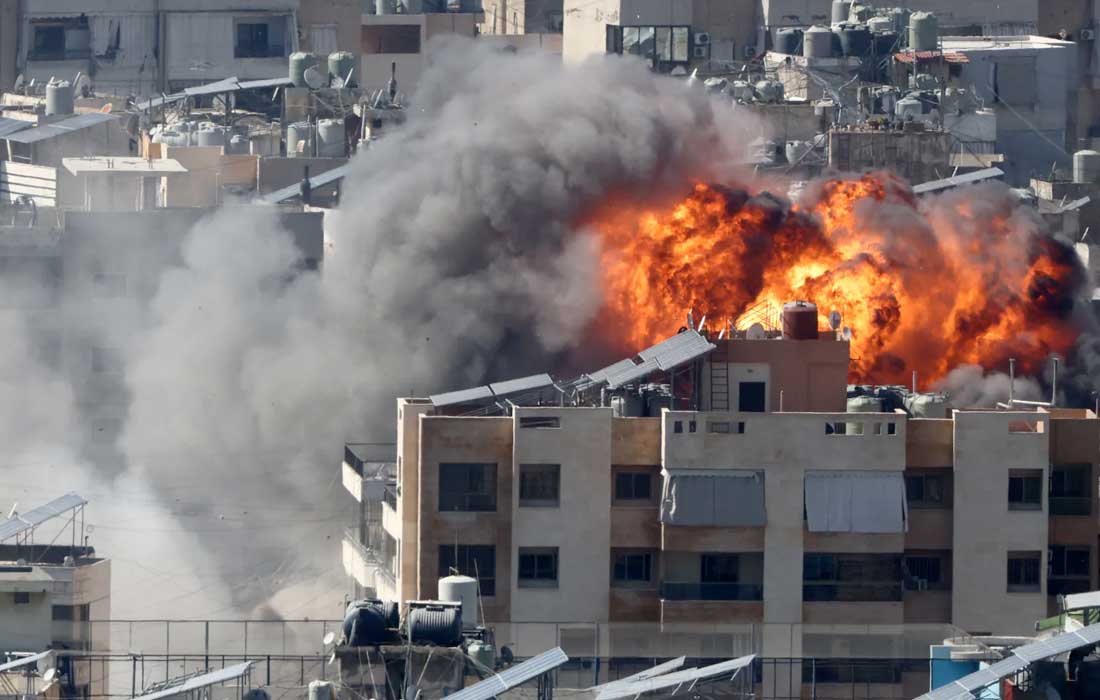

Israel has carried out its heaviest strikes on Lebanon since the conflict with Hezbollah began, with Prime Minister Benjamin Netanyahu stating that the US-Iran ceasefire does not apply to Lebanon and that military operations against Hezbollah will continue.
BEIRUT: Israel has launched its heaviest strikes on Lebanon since the conflict with Hezbollah broke out, even as the Iran-aligned group paused its attacks on northern Israel and Israeli troops in Lebanon under a two-week US-Iran ceasefire. The bombardment marks a significant escalation on the Lebanese front at a moment when diplomatic efforts elsewhere in the region appeared to be gaining ground.
Israeli Prime Minister Benjamin Netanyahu was unequivocal in his position, stating that the ceasefire agreement between the United States and Iran does not apply to Lebanon. The Israeli military confirmed that operations against Hezbollah would continue regardless of the broader regional truce, drawing a clear distinction between the Iran ceasefire and Israel’s own military objectives in Lebanese territory.
Hezbollah, which is backed by Iran, had paused its attacks on northern Israel and on Israeli troops operating in Lebanon in line with the ceasefire framework. However, Israel’s decision to press ahead with strikes suggests the country intends to use the window of reduced Hezbollah activity to advance its military position on the ground.
The strikes represent the most intense Israeli bombardment of Lebanon since hostilities between the two sides escalated, raising fresh concerns about the humanitarian situation in the country and the risk of a broader conflagration despite the fragile regional truce.
International observers and regional governments are closely watching developments, with growing calls for the ceasefire framework to be extended to cover the Lebanese front before the situation deteriorates further.