

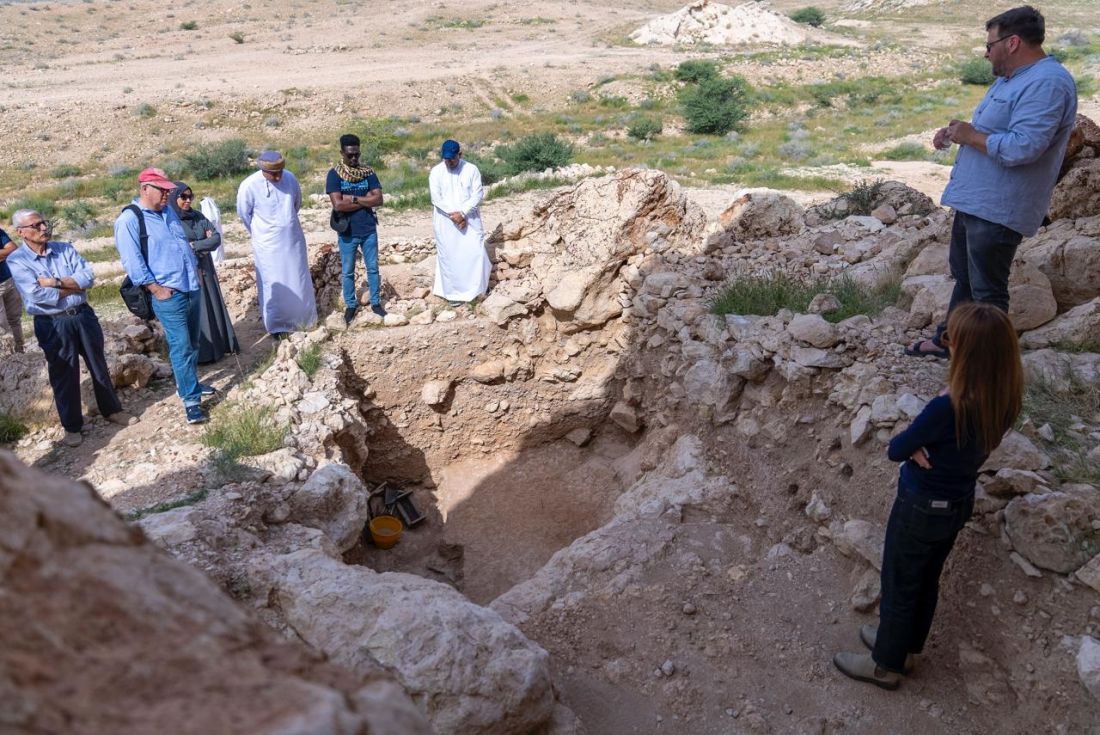

Sharjah Faya discovery uncovers repeated human settlement over 125,000 years, reshaping understanding of early human life in Arabia.
SHARJAH: Sharjah Faya discovery is reshaping scientific understanding of early human history after new research revealed repeated human settlement spanning over 125,000 years. The findings, published in Nature Communications, highlight the Buhais Rockshelter as a key site of long-term human activity.
Led by the Sharjah Archaeology Authority in collaboration with international universities, the study challenges long-held assumptions that southeastern Arabia was largely uninhabited during periods of extreme aridity. Instead, researchers found that early humans repeatedly returned to the region, adapting to shifting environmental conditions and sustaining life over millennia.
The Sharjah Faya discovery identified multiple phases of human occupation at the site, dating back approximately 125,000, 59,000, 35,000, and 16,000 years. These findings fill critical gaps in the archaeological record and extend the known timeline of human presence in the region.
Scientists linked these settlement phases to periods of increased rainfall and water availability, which created habitable conditions. This marks the first clear evidence of such environmental patterns supporting human life in Arabia during this timeframe.
The Buhais Rockshelter played a vital role in preserving this history. Its natural limestone formation protected layers of sediment containing stone tools and artefacts, enabling researchers to reconstruct a detailed timeline using advanced dating techniques.
Experts say the discovery reinforces the importance of the Faya Palaeolandscape as a major centre for understanding early human migration and adaptation. It also positions Sharjah as a key contributor to global research on human evolution.
As studies continue, the Sharjah Faya discovery is expected to further deepen insights into how early populations survived and thrived in challenging environments, offering a new perspective on humanity’s shared past.