

Dubai truck restrictions begin October 1, 2026, with tiered bans across major roads while Emirates Road remains fully exempt.
DUBAI: New Dubai truck restrictions will take effect from October 1, 2026, introducing different movement bans for heavy vehicles across key roads, crossings and residential areas as authorities work to improve traffic flow and road safety.
Under the updated system, some routes will face a complete 24-hour truck ban. These include Al Qudra Street, Al Meydan Street, all crossings and the Airport Tunnel, meaning heavy vehicles will not be permitted to use these routes at any time.
A second tier introduces a 16-hour daily restriction from 6:00 am until 10:00 pm. This applies to Sheikh Zayed Road, Beirut Street and residential areas including Al Mizhar, Muhaisnah and Oud Al Muteena. Truck operators serving these areas will need to adjust delivery and travel schedules outside the restricted period.
Other important urban routes will be covered by three peak-period bans each day. Airport Street, Oman Street and Damascus Street will restrict truck movement from 6:30 am to 8:30 am, from 1:00 pm to 3:00 pm and again from 5:30 pm to 8:00 pm.
One major exception is Emirates Road, or E611, which remains exempt from the new rules. This gives freight and logistics companies an important alternative corridor for moving heavy vehicles across Dubai while avoiding roads affected by the restrictions.
The Dubai truck restrictions are expected to require transport companies to plan routes more carefully, particularly for deliveries scheduled during peak traffic periods. Operators may need to shift some journeys to permitted times or use alternative roads where possible.
Companies that need to operate heavy vehicles during restricted hours for essential purposes can apply for a permit through Dubai’s Roads and Transport Authority. Applications are handled through the Right-of-Way Department, subject to the authority’s requirements and approval process.
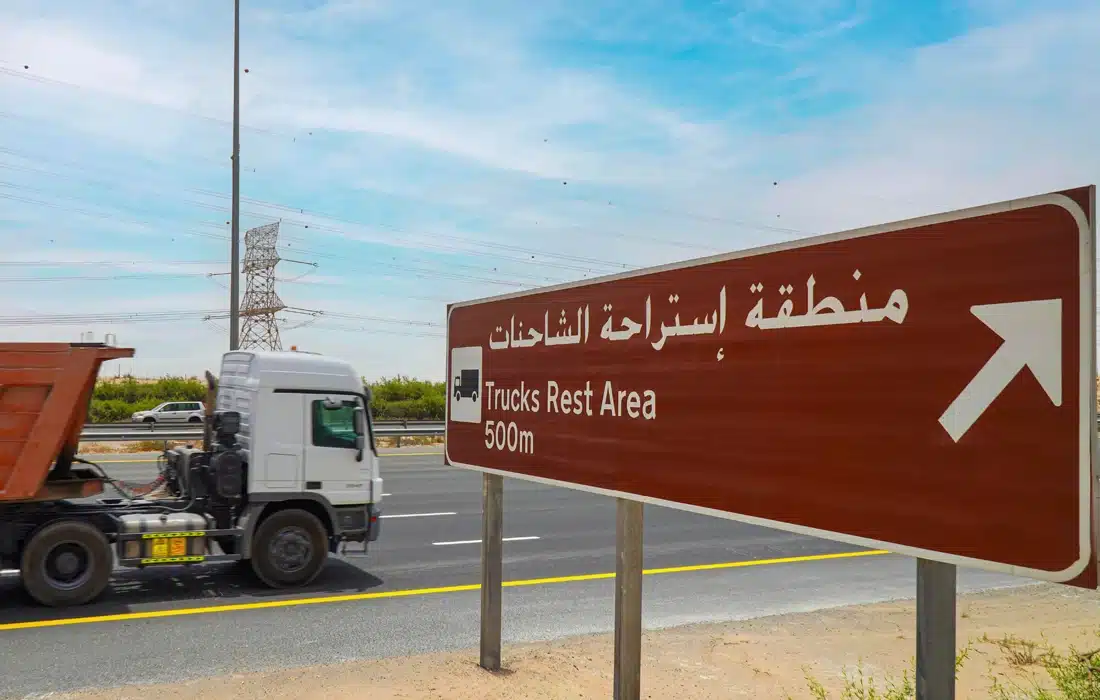
Drivers have also been advised to use designated truck rest areas during active restriction periods rather than stopping in unauthorised locations or residential areas. These facilities are intended to give truck drivers safe places to wait until movement restrictions are lifted.
Authorities say the changes are designed to reduce congestion, improve travel times and enhance road safety on some of Dubai’s busiest corridors. The rules also aim to balance freight movement with growing traffic demand across the city.
Impact to expect
The Dubai truck restrictions could change delivery schedules and freight routes across the emirate, with logistics firms likely to rely more heavily on Emirates Road and off-peak travel periods.