

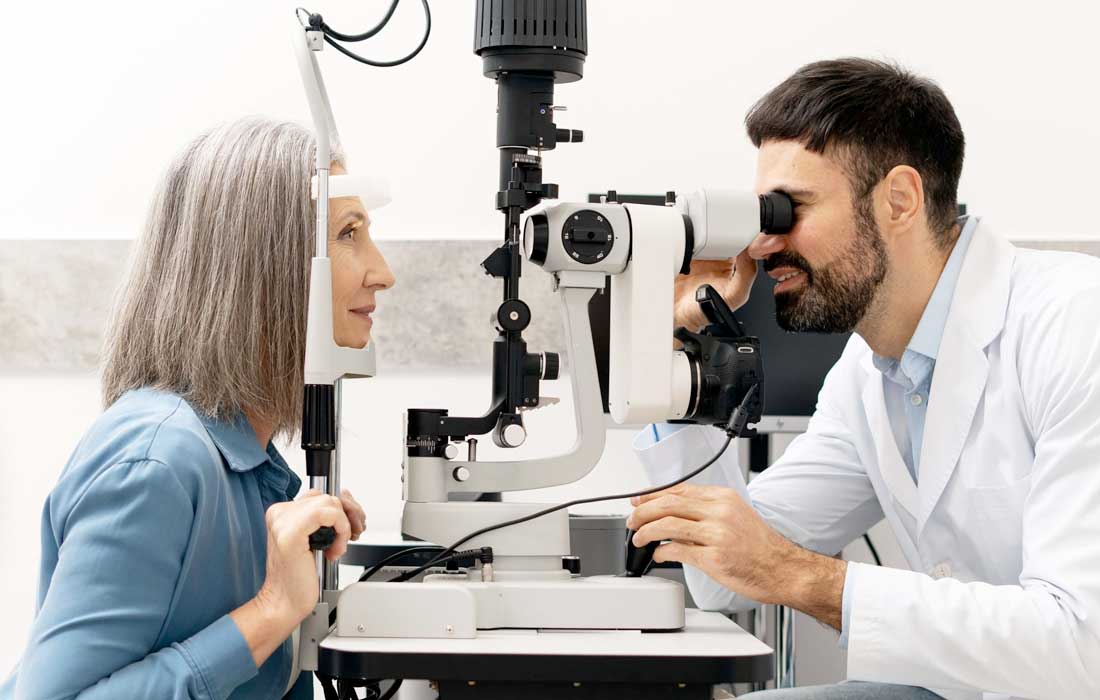

MIT scientists found that temporarily shutting down the retina can reset vision processing in the brain, potentially curing amblyopia in adults.
CAMBRIDGE: A new study from the Massachusetts Institute of Technology (MIT) may revolutionise treatment for amblyopia, commonly known as “lazy eye,” by showing that temporarily switching off the retina can reboot visual processing—even in adults.
Amblyopia is a developmental disorder where vision in one or both eyes fails to develop correctly, typically because the brain favours one eye and ignores the other. This usually happens in early childhood, and current treatments like eye patching are only effective in young children while neural pathways are still developing.
Now, researchers at MIT have shown that it may be possible to restore function in the amblyopic eye later in life. By anesthetising the retina of the weaker eye in mice for two days, the brain’s response to that eye significantly increased, effectively levelling its input with the dominant eye. This suggests that the retina can be “rebooted,” offering new hope for adults who have long been considered untreatable.
“This could be a substantial step forward,” said Dr Mark Bear, co-author of the study. “Instead of disrupting the stronger eye, we might restore the weaker one by silencing it temporarily and then reactivating it.”
The team focused on the lateral geniculate nucleus (LGN), a part of the brain that channels visual data from the eyes to the visual cortex. Past research showed that when retinal signals to the LGN are blocked, neurons fire in a synchronised burst, potentially reawakening dormant visual pathways.
In their latest experiments, published in Cell Reports, researchers injected anaesthetic into the amblyopic eyes of mice. After two days, they recorded the brain’s visual cortex activity and found that signals from the amblyopic eye were significantly stronger compared to a control group.
While the study was conducted on mice, the researchers are optimistic about testing the method in other animals and, eventually, in humans. If successful, this approach could offer a non-invasive, drug-based treatment that restores vision without disrupting the dominant eye.
This breakthrough could transform how amblyopia is treated, especially for adults who missed early childhood interventions. It suggests that the brain retains a surprising degree of plasticity and that the visual system can potentially be retrained, even later in life.