

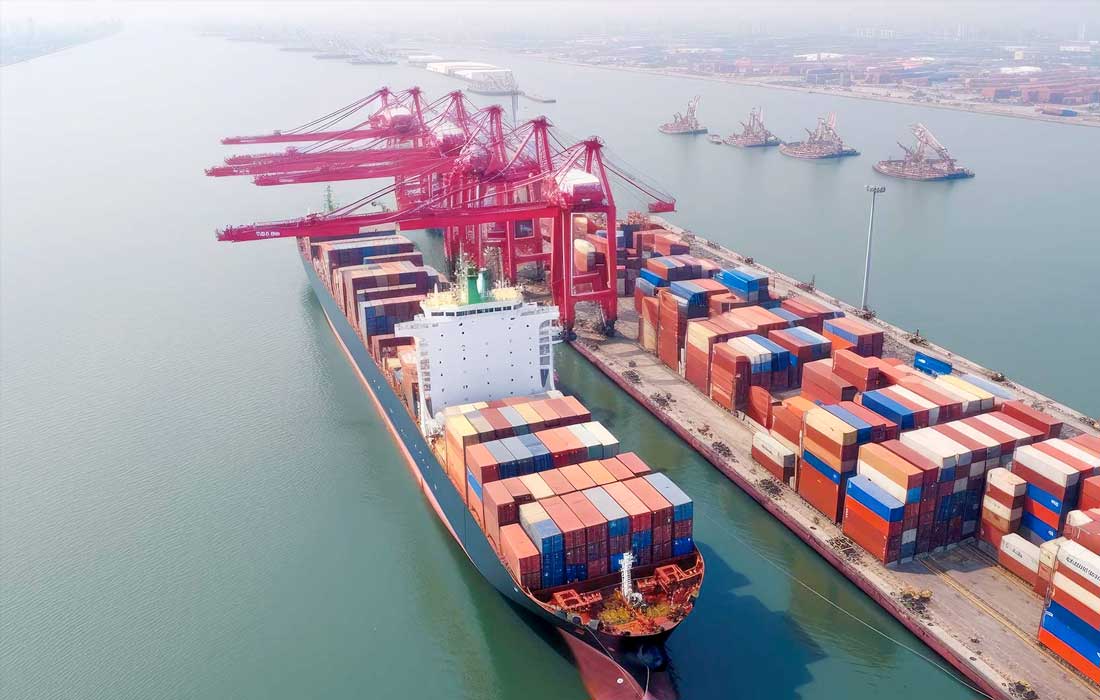

Strait of Hormuz tensions are driving higher shipping costs and supply chain risks, signalling a potential global economic shock.
When a regional conflict moves to tensions at sea, it becomes a global economic shock. Periods of regional tension often trigger dramatic headlines about the cities and economies closest to the events. Over the past few days, many such narratives have emerged about Dubai and the United Arab Emirates. Yet on the ground, the reality appears very different.
Life across the UAE continues with remarkable stability. Businesses are functioning normally, communities remain calm, and the leadership of the country continues to demonstrate steady governance, resilience and responsibility. In moments like these, the strength of institutions and social cohesion becomes visible.
However, while the region itself remains stable, the global economic implications of the current tensions may be far larger than many realize. As someone who has spent much of his professional life in maritime logistics and global trade, I tend to view such developments through the lens of shipping routes, energy flows, supply chains, and right now, the signals emerging from global shipping markets suggest that a new energy shock may already be forming at sea.
The Strait That Powers the World
The Strait of Hormuz may appear as a narrow waterway on a map, but in reality, it is one of the most crucial arteries of the global economy. Nearly one-fifth of the world’s oil supply moves through this corridor every day.
When tensions rise in such locations, the impact rarely remains confined to the local area. It travels quickly across shipping routes, financial markets, and global supply chains. In recent weeks, the cost and risk of transporting crude oil have surged sharply.
Freight rates for large crude tankers moving oil from the Middle East to Asia have risen dramatically. Other tanker segments have also experienced significant increases, reflecting the rising uncertainty and operational risks faced by vessels operating in the region.
At the same time, insurance costs for ships crossing the Strait of Hormuz have increased significantly. War-risk premiums that were once relatively modest are now several times higher, reflecting heightened geopolitical risk.
Fuel costs for ships — known as bunker fuel — have also climbed sharply, adding another layer of expense to global shipping operations.
The Human Dimension of Maritime Trade
Beyond markets and numbers lies another dimension that is often overlooked: the human factor. Ships operating in high-risk waters face crew war-risk bonuses, higher wages for dangerous voyages, and in some cases the possibility of crew members refusing to sail through conflict zones.
Seafarers are the silent enablers of globalization. Thousands of them continue to operate vessels in uncertain environments to ensure that global trade and energy supply continue uninterrupted. When tensions rise at sea, they are often the first to face the risks.
Oil Is Only Part of the Story
Much of the global debate today focuses on whether oil prices could reach $150 per barrel. But the reality is more complex. Crude oil is only one part of the global energy system moving through the region. Large volumes of liquefied natural gas (LNG), liquefied petroleum gas (LPG), and petrochemical feedstocks also transit these same maritime routes.
These energy products are deeply embedded in the modern industrial economy. Petrochemicals are used in thousands of everyday products — from plastics, packaging, electronics and textiles to fertilizers, automotive components, construction materials and consumer goods.
LNG and LPG are critical for electricity generation, industrial fuel and household energy supply in many countries. When disruptions occur in these supply chains, the impact rarely remains limited to the energy sector alone.
The Domino Effect Across the Economy
A prolonged disruption — even for one or two quarters — can create shortages of key industrial inputs, slow manufacturing cycles and increase production costs across multiple sectors. Fertilizer prices may rise, affecting agriculture. Manufacturing supply chains can tighten. Consumer goods production may face delays or cost pressures.
Small disruptions at the beginning of supply chains often trigger what economists call the bullwhip effect — where minor shocks expand into major imbalances downstream.
Over time these pressures begin to feed into the wider economy. Higher transport costs translate into higher product prices. Inflationary pressures begin to build. Central banks may respond by adjusting interest rates. Investors reassess risk.
Financial markets react, influencing stock prices, company valuations and capital flows across global markets. In highly interconnected economies, capital may shift between asset classes — from equities to commodities or hard assets — amplifying volatility.
A Global Event, Not a Regional One
This is why disruptions in critical global energy corridors cannot be viewed simply as regional conflicts. In today’s interconnected economic system, they quickly evolve into global economic events with long-lasting consequences.
Energy remains the foundation of logistics, and logistics remains the backbone of global trade. When the transportation of energy becomes more expensive or uncertain, the effects ripple through every sector — from shipping and aviation to manufacturing, agriculture and consumer markets.
The situation continues to evolve, and global shipping markets are adjusting in real time. But one thing is increasingly clear. While the world is watching oil prices, the real signal may already be emerging at sea. And in a global economy built on energy and logistics, the waves created in one narrow strait can eventually reach every corner of the world.

This opinion piece is contributed by Capt Pradeep Singh – Founder and Chairman, Karma Developers (UAE)
Captain Pradeep Singh is a globally renowned entrepreneur, visionary leader, and philanthropist. His career spans three decades, with impactful contributions to the shipping, real estate, and technology sectors.
Disclaimer: The figures and scenarios referenced are approximate estimates based on market intelligence and simulation analysis. They represent the author’s personal assessment and do not reflect the views of any organization with which he is associated.
Disclaimer: All views and opinions expressed in The Brew Opinion – our opinion section – are those of the authors and do not necessarily reflect the official policy or position of TheBrewNews.com, the company, or any of its members.