

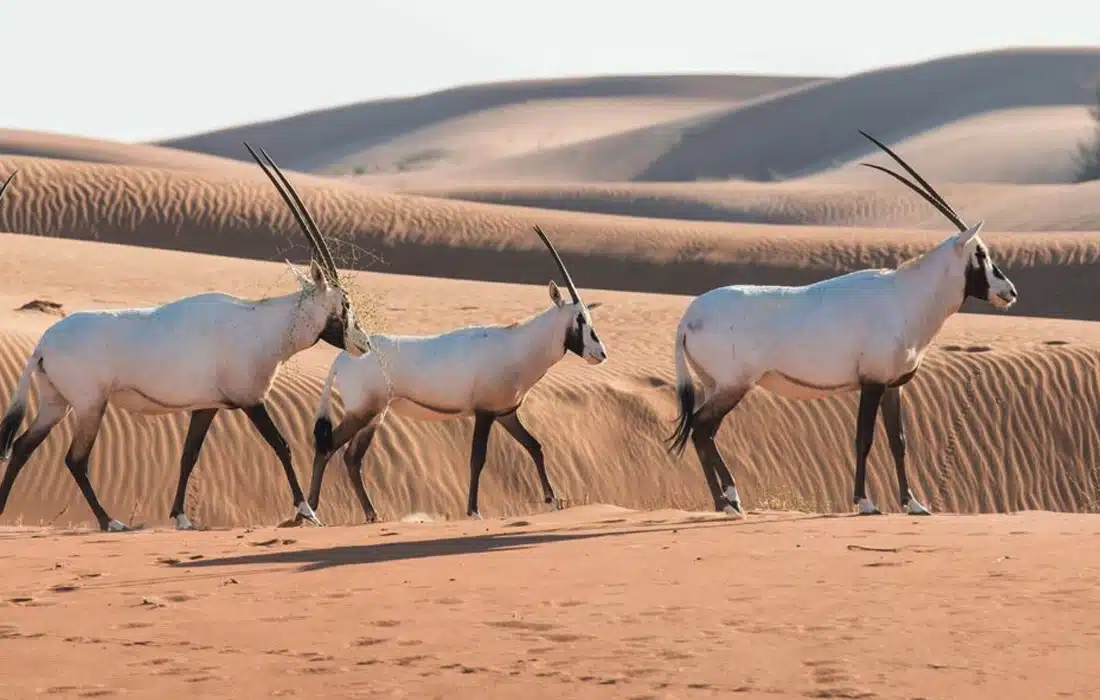

Dubai Desert Conservation Reserve protects 562 species across 225 square kilometres while preserving fragile ecosystems and the UAE’s natural heritage.
DUBAI: Beyond Dubai’s skyscrapers and busy urban landscape lies a protected desert spanning 225 square kilometres and providing a sanctuary for hundreds of species, from the Arabian oryx to rare birds and reptiles.
The Dubai Desert Conservation Reserve covers around five per cent of the Emirate of Dubai and is the emirate’s second-largest nature reserve. According to a report by the Emirates News Agency, WAM, the protected area is home to 562 recorded species.
Its biodiversity includes 142 bird species, 22 mammals, 28 reptiles, 298 invertebrates and 72 plant species.
Also read: UN climate warning says the world is running out of time
The Dubai Desert Conservation Reserve contains several distinct habitats, including sweeping sand dunes, gravel plains and ghaf woodlands. Together, these environments provide suitable conditions for native wildlife and plants while helping maintain the ecological balance of Dubai’s desert.
Among its best-known residents are the Arabian oryx, Arabian sand gazelle and mountain gazelle. Birdlife includes the houbara bustard, lappet-faced vulture and eagle owl.
The reserve also provides habitat for species of regional importance, including Gordon’s wildcat and the Egyptian spiny-tailed lizard.
Ahmed Mohammed bin Thani, Director-General of the Dubai Environment and Climate Change Authority, said: “Nature reserves are a long-term investment in Dubai’s natural capital. They not only protect wildlife species but also strengthen the resilience of ecosystems to climate change and support sustainability goals for future generations.”
Also read: Abu Dhabi brings in new rules to protect wildlife and nature
Protecting desert biodiversity presents particular challenges. Low rainfall and extreme temperatures make these ecosystems sensitive to environmental change, requiring continuous monitoring and carefully managed conservation programmes.
DECCA carries out programmes aimed at protecting native species and increasing their populations in natural habitats. These include breeding and habitat-management initiatives focused on species such as the Arabian oryx, Arabian sand gazelle and houbara bustard.
Field surveys and wildlife tracking are also conducted with research institutions and specialist partners. The resulting scientific data helps authorities monitor biodiversity and make evidence-based decisions about managing the reserve.
The Dubai Desert Conservation Reserve also combines conservation with controlled ecotourism. Visitor experiences are managed under environmental guidelines intended to minimise pressure on sensitive habitats while increasing public awareness of desert wildlife.
This approach allows visitors to experience Dubai’s natural landscape while keeping biodiversity protection at the centre of the reserve’s operations.
Impact to expect
Continued conservation work could help protect native UAE wildlife while making Dubai’s desert ecosystems more resilient to environmental and climate pressures. Scientific monitoring can also provide valuable information for future conservation policies across the emirate.
By combining wildlife protection with carefully managed ecotourism, the Dubai Desert Conservation Reserve can also strengthen awareness that Dubai’s natural heritage extends far beyond its internationally recognised urban landscape.
-Agencies / WAM