

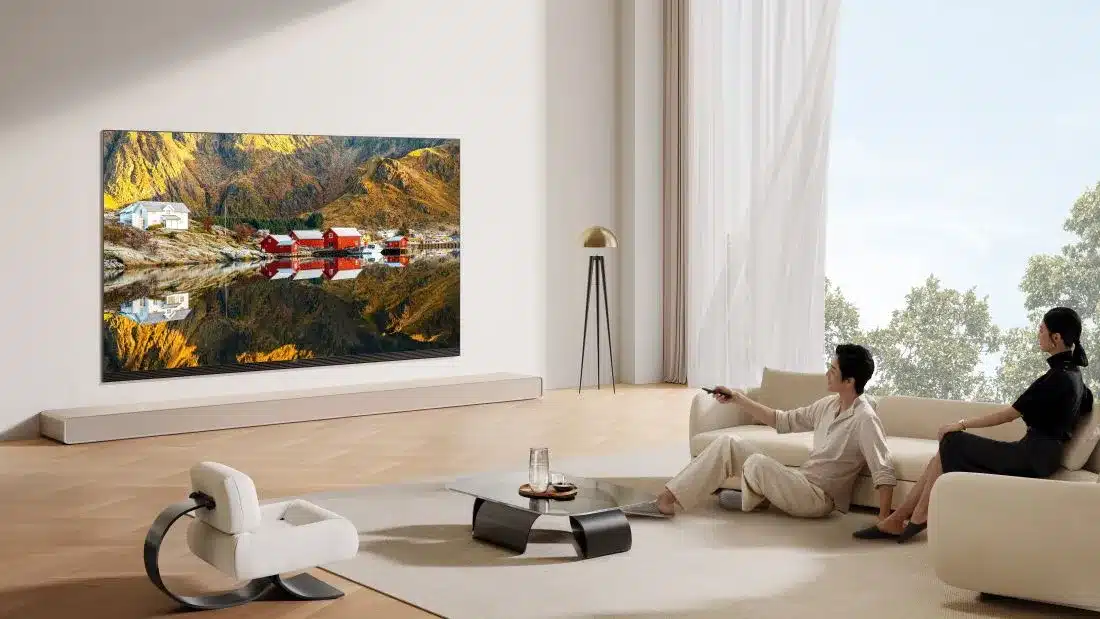

The TCL X11L TV pushes the company’s premium ambitions with a massive display, up to 10,000 nits of brightness and flagship gaming and entertainment features.
TCL built a television with a screen large enough to replace a wall, bright enough to outshine a projector at noon, and priced high enough that “budget brand” is no longer the right way to describe the company that makes it. The X11L is TCL’s new flagship, and it isn’t interested in modesty.
Start with the size. The X11L ships in 75-, 85-, and 98-inch versions, with a 115-inch model waiting in the wings for buyers who consider 98 inches a starter size. At that scale, the TV stops being an appliance in the corner of the room and becomes the room’s centre of gravity, closer to a home-cinema screen than to a television anyone grew up with. TCL is betting, correctly it seems, that “bigger” is the one upgrade nobody has to be talked into wanting.
The Brightness Arms Race
Then there’s the number that actually got people talking: 10,000 nits of peak brightness, delivered through TCL’s new SQD-Mini LED engine and spread across 20,736 individually controlled dimming zones on the 98-inch model, reportedly the most zones ever packed into a mini-LED TV. Reviewers have already called it the brightest TV money can buy, with full BT.2020 colour coverage and professional-grade colour accuracy to back it up. TCL isn’t shy about the comparison either, having pitched the X11L internally as the “King of TVs” and, more boldly, the best overall television in the industry, full stop.
That’s not a small claim in a year when Samsung, LG, and Sony are all racing toward brighter, bigger, more colour-accurate flagships of their own, several of them betting on RGB LED instead. TCL, notably, chose not to chase that particular trend with its top-tier model, sticking with its own SQD-Mini LED approach instead and daring the market to notice the difference in the numbers rather than the name on the spec sheet.
Everything Else Is Just There, Too
None of that brightness would matter if the rest of the TV felt like an afterthought, so TCL padded the X11L with everything a flagship is supposed to have: a native 144Hz panel that climbs to 288Hz for gamers, FreeSync Premium Pro, a dedicated Gamebar, sound co-tuned with Bang & Olufsen across twelve speakers, and Google TV running Gemini as its built-in AI assistant. A software update due later this year adds Dolby Vision 2 Max support and voice-driven picture and sound controls. It is, in other words, a television that assumes you’ll want to game on it, stream on it, and talk to it, and prepares for all three.
All of this comes at a price that matches the ambition. U.S. pricing lands around $7,000 for the 75-inch model, climbing to roughly $10,000 for the 98-inch, with the 115-inch version reported to cost even more overseas. That’s squarely in flagship-OLED territory, the kind of number that used to be unthinkable next to the TCL name. It’s also, quite deliberately, the point. TCL spent years building a reputation on value; the X11L is the company’s clearest signal yet that it wants to be judged on the top shelf instead, competing on specs and swagger rather than on price alone.
Whether the X11L ends up the best TV on the market is still something reviewers and living rooms will argue over for a while. But as a statement of intent, it already lands. TCL didn’t build a bigger, brighter TV because it could. It built one because it wants a seat at the table where “flagship” actually means something, and it brought a screen the size of a wall to make sure nobody could ignore the knock.