

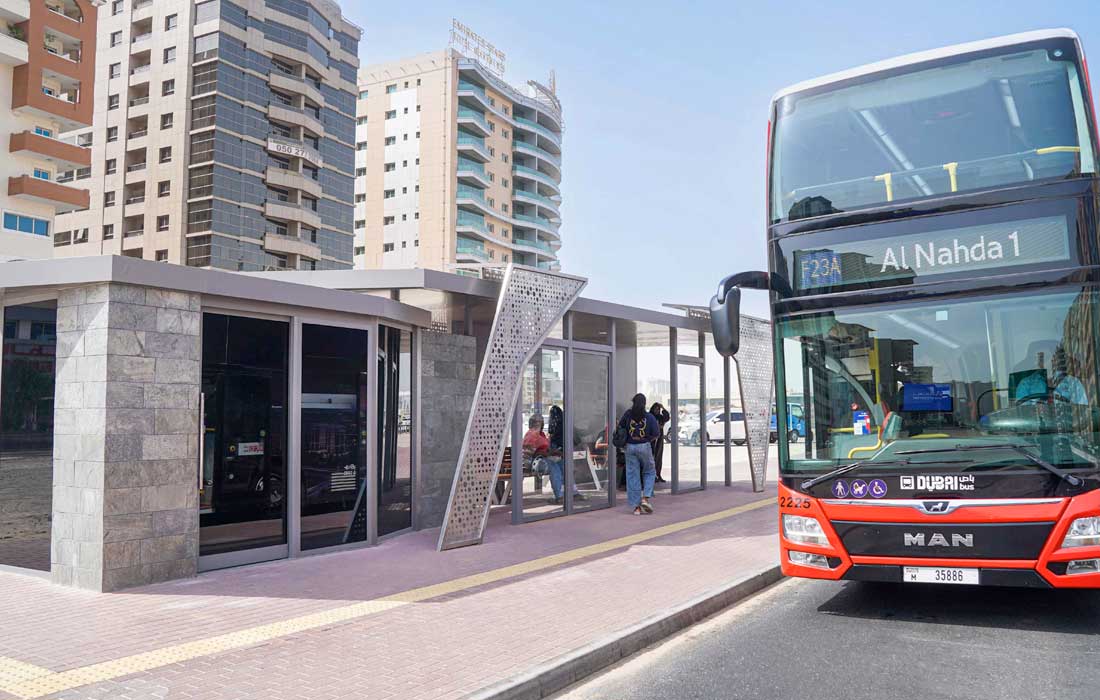

RTA completes 595 modern bus shelters across Dubai, enhancing public transport comfort and supporting sustainability goals with the focus keyphrase.
DUBAI: The Roads and Transport Authority (RTA) has completed 595 state-of-the-art bus passenger shelters as part of its wider project to construct 762 shelters across strategic areas in Dubai. Designed with both aesthetics and utility in mind, the new bus shelters are part of the emirate’s vision to promote public transport usage, reduce emissions, and increase commuter satisfaction. The project is now 89 percent complete across all phases and aims to significantly upgrade the public bus experience for Dubai’s residents and visitors.
Each of the new bus shelters has been designed to serve high-density public transport zones, with several locations supporting over ten bus routes. Currently, the RTA’s bus network accommodates more than 192 million passengers annually. His Excellency Mattar Al Tayer, Director General and Chairman of the Board of Executive Directors of the RTA, stated that the bus shelter initiative reflects the authority’s commitment to building an integrated and accessible urban infrastructure that caters to the city’s growing mobility needs.
The modern bus shelters include shaded seating, air-conditioned zones, and digital screens displaying real-time bus schedules and route maps. RTA classified the shelters into four usage-based models: primary stops (over 750 passengers daily), secondary stops (250–750 passengers), basic stops (100–250 passengers), and boarding-only stops (under 100 passengers). This classification allows for efficient placement and operational optimisation of each shelter.
Importantly, all shelters are compliant with the Dubai Universal Design Code and include dedicated space for wheelchair users. This step aligns with the “My Community… A City for Everyone” initiative, reinforcing Dubai’s goal of becoming a fully inclusive and accessible city for People of Determination. Al Tayer noted that the blend of contemporary design and service functionality will improve travel experiences, increase confidence in public transport, and help reduce congestion and travel time in the city.