
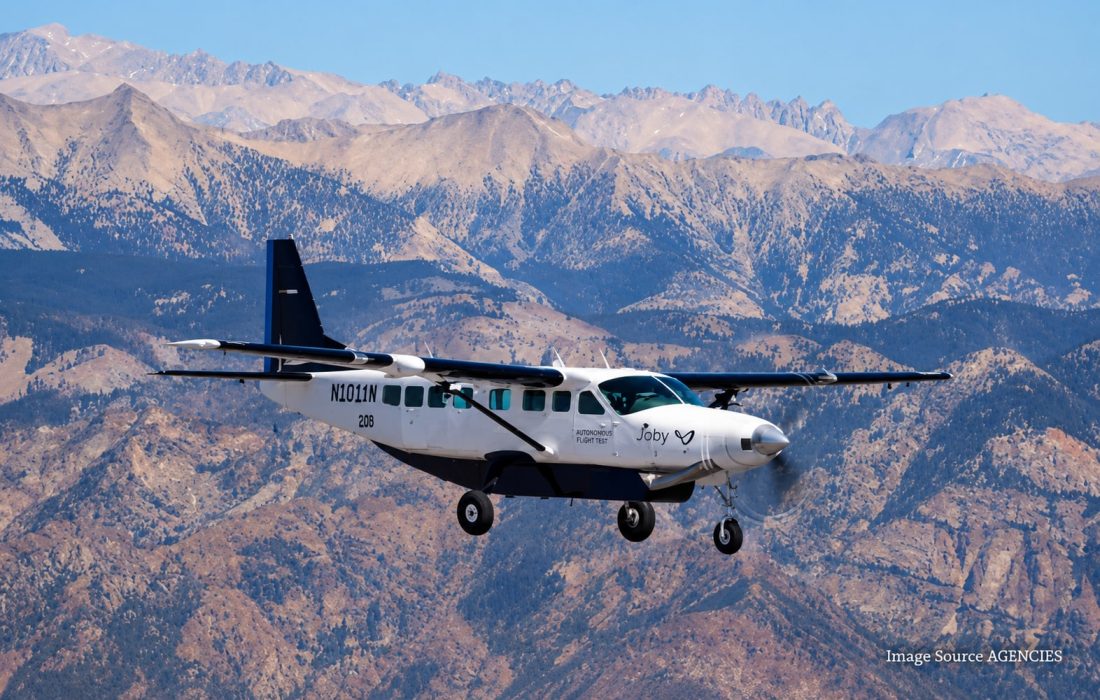

The Joby autonomous Cessna completed a 3,199-mile US journey with zero control inputs from its onboard safety pilot, including automated take-offs and landings.
SANTA CRUZ: The Joby autonomous Cessna has completed a 3,199-mile journey across the United States without its onboard safety pilot making a single control input, marking a significant test of autonomous aviation technology.
Joby Aviation says that the converted Cessna Caravan travelled from Buchanan Field Airport in Concord, California, to Dare County Regional Airport in North Carolina’s Outer Banks. The company describes the journey as the first autonomous flight across the United States.
Importantly, the aircraft was not empty. A safety pilot remained onboard and could have intervened if required, but Joby says the pilot made zero control inputs throughout the 3,199-mile journey.
The autonomous system handled taxiing, take-offs, route navigation and landings. Remote teams supervised operations from Joby’s California autonomy headquarters and Shaw Air Force Base in South Carolina, at distances reaching 2,323 miles from the aircraft.
How did the autonomous aircraft cross America?
The Joby autonomous Cessna travelled in stages rather than completing the journey as one continuous flight.
Its eastbound route took it from Concord through Phoenix, Fort Worth and Shaw Air Force Base before reaching North Carolina. After arriving on the East Coast, the aircraft made a low pass near Kitty Hawk, where the Wright brothers completed their first powered flight in 1903.
One of the more demanding demonstrations came at Phoenix Deer Valley, a busy general aviation airport. Joby says the aircraft integrated into the high-traffic environment and also rerouted around severe weather and thunderstorms during the wider journey.
The technology has now accumulated more than 400 flights and 800 automated flight hours across controlled and uncontrolled airspace. Joby expanded its autonomous aviation programme after acquiring Xwing’s autonomy division in 2024.
Why does the 3,199-mile flight matter?
Joby is best known for developing electric vertical take-off and landing aircraft for future air taxi services, but this flight involved a conventional Cessna Caravan fitted with the company’s autonomous technology.
That distinction matters because the demonstration points towards applications beyond passenger air taxis.
Joby sees autonomous aircraft potentially supporting commercial freight, medical deliveries, emergency response and defence logistics. Using autonomy on an established aircraft platform could also offer another pathway for deploying the technology as testing and regulatory work progress.
The Joby autonomous Cessna does not mean completely pilot-free commercial flights are ready for everyday operations. The demonstration retained an onboard safety pilot and remote supervision, while wider deployment would depend on regulatory approvals and additional operational testing.
Still, completing a transcontinental route without onboard control inputs provides Joby with a substantial real-world demonstration of how autonomous systems can handle multiple airports, changing terrain, busy airspace and challenging weather.
Impact to expect
Progress. The demonstration could accelerate interest in autonomous aircraft for cargo, emergency response and defence logistics while providing regulators with more real-world operational data.