

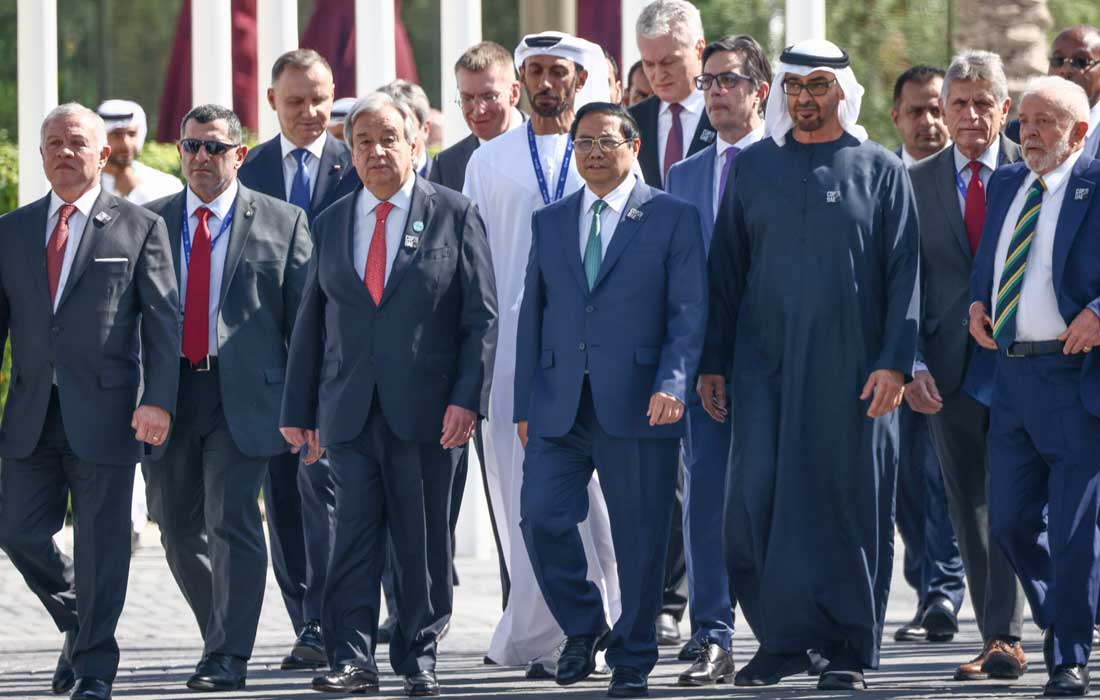

Global leaders gathered in Brazil ahead of COP30 to push for deeper climate action, warning that 1.5°C warming limit is in danger.
BELÉM: Global leaders and climate officials convened in Brazil this week for a high-level summit ahead of the COP30 UN Climate Change Conference, raising urgent calls for accelerated global action to combat rising temperatures. The pre-summit, held in Belém, marked a critical moment in climate diplomacy as participants warned that the world risks failing to meet the 1.5°C warming limit set by the 2015 Paris Agreement.
UN Secretary-General António Guterres addressed the opening session, emphasising that incremental progress is no longer enough and that bold, immediate efforts are needed to shift away from fossil fuels and safeguard the planet’s future.
Building on the momentum from COP28 in the UAE, where nations reached a consensus to gradually transition from fossil fuels, the summit in Brazil focused on practical roadmaps and international cooperation ahead of the official COP30 conference, scheduled from 10 to 21 November 2025.
Brazilian President Luiz Inácio Lula da Silva unveiled a new initiative — the Tropical Forests Forever Fund, starting with a $1 billion pledge from Brazil. The fund aims to raise $25 billion through international government partners, with hopes of eventually securing $100 billion from the private sector to protect rainforests and boost reforestation efforts.
French President Emmanuel Macron called for each country to develop its own strategy for the fossil fuel phase-out, underlining that climate progress must respect diverse national contexts while aligning with global goals.
African Union Commission Chair Moussa Faki Mahamat praised the continent’s leadership in green innovation, from solar energy adoption to sustainable farming. However, he highlighted a persistent inequality: Africa possesses 40% of the world’s renewable energy potential yet receives less than 12% of global climate finance.
With COP30 set to open next Monday, this two-day pre-summit has set the stage for intense negotiations involving nearly 200 countries and tens of thousands of delegates, all aiming to deliver stronger commitments to reduce emissions, protect ecosystems, and finance climate resilience in vulnerable regions.