

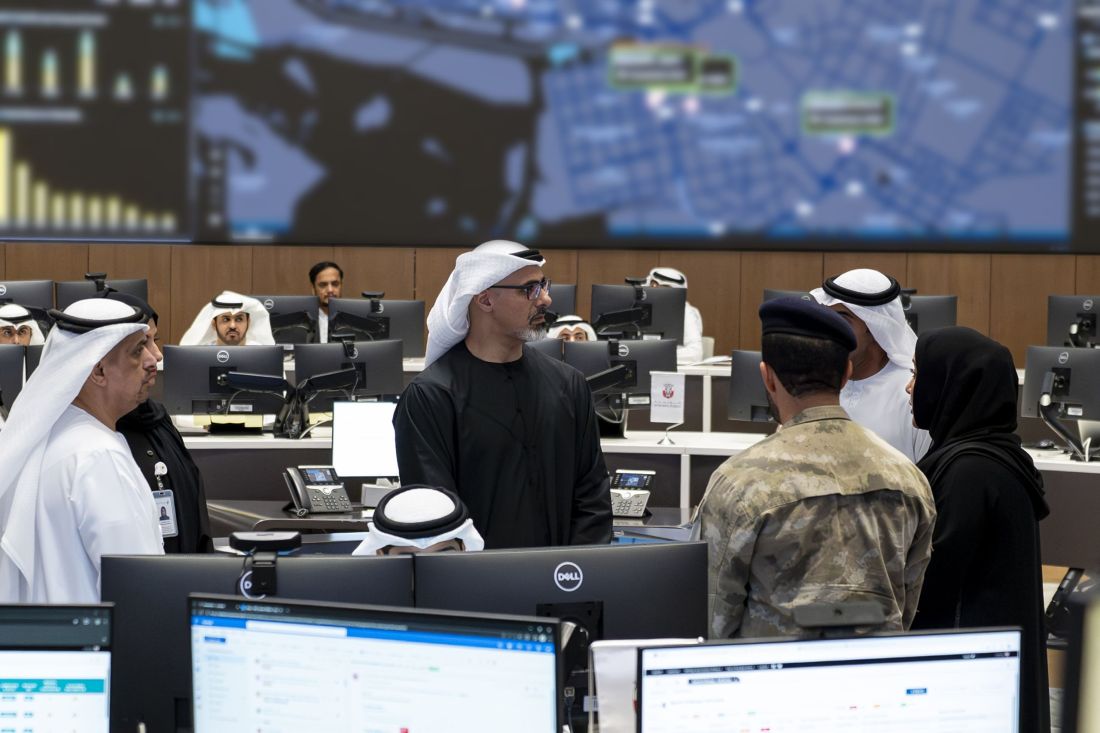

Sheikh Khaled reviewed the medical emergency response system at Abu Dhabi’s Unified Medical Operations Command Centre, highlighting preparedness and healthcare coordination following recent attacks targeting the UAE.
ABU DHABI: H.H. Sheikh Khaled bin Mohamed bin Zayed Al Nahyan, Crown Prince of Abu Dhabi and Chairman of the Abu Dhabi Executive Council, reviewed the emirate’s medical emergency response capabilities during a visit to the Unified Medical Operations Command Centre in Abu Dhabi.
During the visit, Sheikh Khaled was briefed on the medical emergency response ecosystem and its operational stages, including coordination between hospitals, ambulance services and emergency teams responsible for treating those injured in recent incidents.
Officials also presented details about strategic medical stockpiles maintained across the emirate. These reserves help ensure that healthcare services can continue operating efficiently under emergency or exceptional circumstances while protecting public safety and wellbeing.
Sheikh Khaled commended the dedication of medical, administrative and technical personnel from various public and private sector entities who have been working around the clock to support those affected by the recent Iranian attacks targeting the UAE.
He praised the strong sense of responsibility and professionalism shown by healthcare workers and frontline teams responding to the situation.
The Crown Prince emphasised that Abu Dhabi’s integrated healthcare infrastructure and advanced medical emergency response capabilities reflect the emirate’s high level of preparedness. He noted that the UAE leadership remains committed to strengthening healthcare infrastructure and improving coordination among relevant authorities to ensure rapid and effective responses to emergencies.
Officials and staff at the command centre expressed appreciation for Sheikh Khaled’s visit and support. They reaffirmed their commitment to maintaining the highest levels of operational readiness and cooperation during challenging circumstances.
They also highlighted the importance of national solidarity and coordination in safeguarding the safety and wellbeing of citizens and residents during emergencies.