



GPS interference from spoofing activity is affecting more than 700 flights daily across the Gulf region, impacting air traffic over the UAE, Iran, Iraq, and Saudi Arabia, with disruption continuing even on rerouted southern flight paths.
DUBAI: The regional conflict has opened a new and deeply unsettling front in the skies above the Gulf. GPS spoofing activity is now disrupting more than 700 flights per day across the region, according to data shared with Arabian Business, adding a dangerous layer of electronic interference to an airspace already under severe pressure.
The spoofing, which works by manipulating satellite navigation signals to feed false position data to aircraft systems, has impacted a substantial share of air traffic across a wide corridor covering the UAE, Iran, Iraq, and Saudi Arabia. Data from SkAI Data Services suggests the true scale of disruption could be even broader, as its monitoring systems are limited to aircraft within detection range, meaning many affected flights may not be captured in the figures at all.
The implications for aviation safety are serious. GPS is a fundamental layer of modern flight navigation, used for approach procedures, route tracking, and increasingly for automated systems that pilots depend on. When those signals are spoofed, crews receive false position information, creating confusion and potential safety risks, particularly in busy, complex airspace where precision matters most.
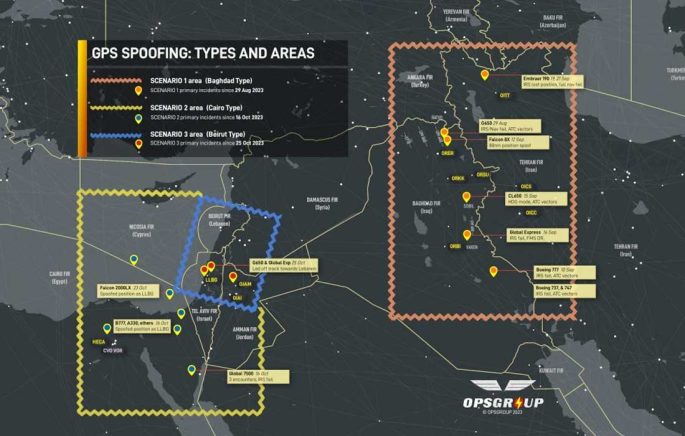
Airlines have not been sitting still. Many have already rerouted flights away from the highest-risk areas and reduced their traffic over the Gulf corridor. But the data reveals an uncomfortable truth: a significant number of aircraft are still being affected even when operating on alternative southern routes, suggesting the interference footprint is wider than diversions alone can avoid.
The development adds yet another dimension to what has already become one of the most complex and dangerous periods for commercial aviation in recent memory. Closed airspace, cancelled flights, disrupted fuel supplies, and now widespread GPS spoofing are forcing airlines to make difficult operational decisions every single day.
For the hundreds of thousands of passengers still moving through the region, and for the crews responsible for getting them there safely, the stakes could not be higher.