

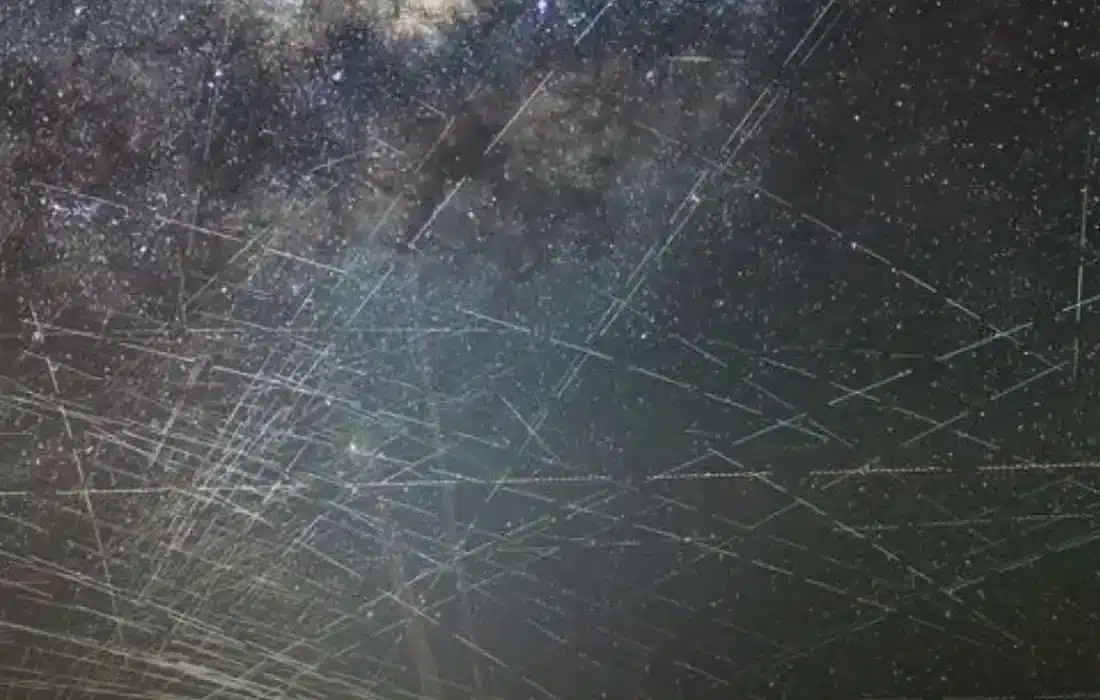

A new study says the rapid growth of satellite constellations could threaten satellite light pollution, making the night sky brighter and disrupting astronomical research.
MUNICH: Plans to launch more than 1.7 million satellites into orbit could dramatically change the way we see the night sky, according to a new study by the European Southern Observatory. Researchers warn that the growing number of satellites may create satellite light pollution on a scale that could seriously affect astronomy and make it harder to study the universe.
The study says sunlight reflecting off satellites is already making the night sky brighter. If planned mega-constellations continue to expand, the effect could become far more noticeable, reducing the ability of ground-based telescopes to detect faint stars, distant galaxies and other celestial objects.
Astronomers say the concern goes beyond streaks appearing in telescope images. A brighter sky means scientists lose access to some of the faintest signals from deep space, limiting research into how stars, planets and galaxies formed over billions of years. Some observations could become impossible without major technological solutions.
The European Southern Observatory is urging governments, space agencies and satellite operators to work together to reduce the impact. Proposed measures include designing darker satellites, adjusting orbital paths and improving international regulations to protect the night sky while allowing space technology to continue developing.
The number of satellites in orbit has increased rapidly in recent years, driven by demand for global internet coverage, communications and Earth observation services. While these systems bring significant benefits, researchers say their long-term environmental impact on astronomy must also be considered.
Scientists believe there is still time to strike a balance between innovation and scientific discovery. They argue that protecting the night sky is essential not only for professional astronomers but also for future generations who deserve to experience an unobstructed view of the universe. Without action, satellite light pollution could permanently reshape one of humanity’s oldest windows into space.