
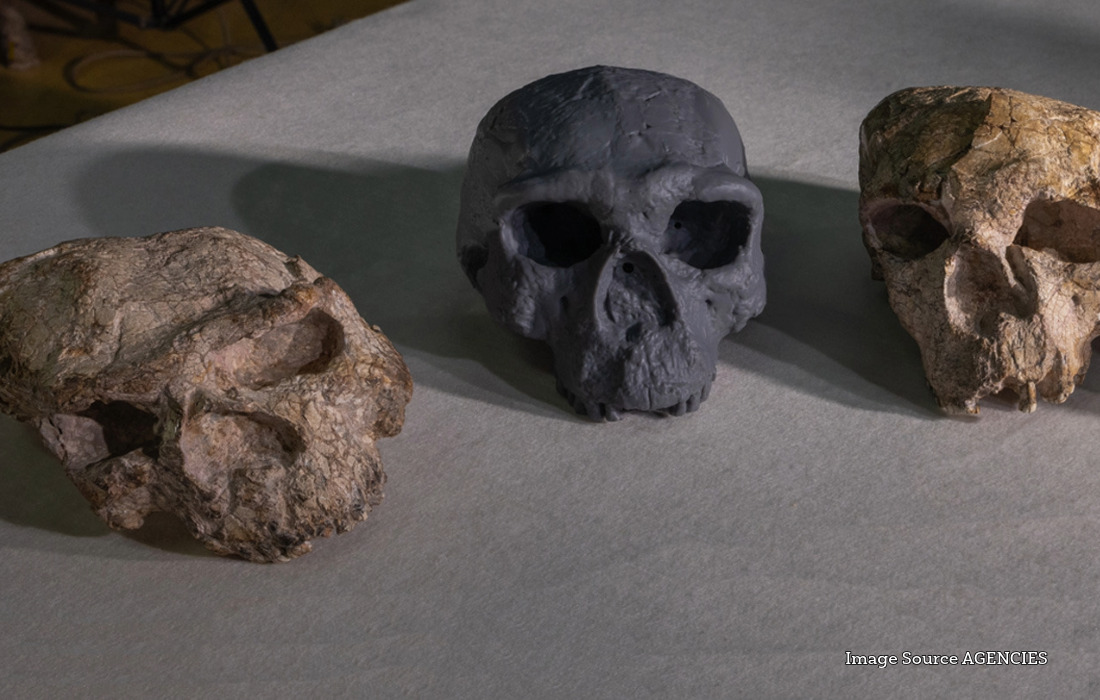

Ancient human fossils from southern China suggest Denisovans and a previously unknown human lineage may have coexisted over 100,000 years ago
BEIJING: Ancient human fossils discovered in southern China have offered fresh insights into human evolution. Researchers believe Denisovans and a previously unknown human lineage may have inhabited the same region during the Middle and Late Pleistocene.
Scientists examined four fossilised teeth from two caves in China’s Guangxi Zhuang Autonomous Region. The international research team published its findings in the scientific journal Nature on November 25, 2026. Emirates News Agency (WAM) reported the discovery on November 26, 2026.
The findings suggest that prehistoric East Asia supported a more diverse population of ancient humans than previously understood.
What did scientists discover?
Researchers examined teeth recovered from the Chuanshandong and Longchuandong caves. They analysed the shape, structure and ancient proteins preserved within the fossils to establish their evolutionary origins.
The Longchuandong specimens showed characteristics associated with Denisovans, an extinct group of ancient humans. However, the Chuanshandong specimens displayed distinct biological features that scientists could not confidently assign to a known human lineage.
Some protein signatures suggest a possible evolutionary connection with Homo erectus. However, researchers need additional fossil evidence to establish this relationship. The discovery does not officially establish a new human species. Instead, it provides evidence of greater prehistoric human diversity in southern China.
How ancient proteins helped scientists
Southern China’s warm and humid climate makes ancient DNA preservation particularly difficult. Researchers addressed this challenge by examining proteins preserved within tooth enamel.
This scientific technique, known as palaeoproteomics, helps researchers identify evolutionary relationships when ancient DNA is unavailable.
By combining protein analysis with the physical examination of ancient human fossils, scientists identified important differences between the two groups. The findings also expand the known geographical range of Denisovans into subtropical southern China.
Why the discovery matters
Scientists have long studied how different ancient human populations migrated, adapted and survived across Asia. The latest findings suggest southern China may have provided a refuge for several prehistoric human groups.
The discovery also raises questions about possible interactions between these populations. Researchers have not yet established whether the two groups directly encountered each other or interbred.
Further excavations and laboratory studies could help scientists understand their evolutionary relationships. Additional discoveries may also explain how these populations adapted to changing environmental conditions and survived in subtropical habitats.
Impact to expect
The discovery of ancient human fossils could reshape scientific understanding of human evolution across Asia. It may encourage further archaeological exploration and investment in advanced fossil analysis. Universities, museums and research institutions could also incorporate these findings into educational programmes. The discovery highlights how modern scientific techniques can uncover previously unknown chapters of humanity’s evolutionary history.