
Sharjah’s Holy Quran Complex preserves rare manuscripts, promotes Quranic sciences and connects students and scholars worldwide through digital learning and scientific research
Sharjah: The Holy Quran Complex in Sharjah stands as a global centre for Islamic scholarship, Quranic sciences and manuscript preservation. It combines centuries of religious heritage with modern technology to make Quranic knowledge accessible to future generations.
His Highness Sheikh Dr Sultan bin Mohammed Al Qasimi, Supreme Council Member and Ruler of Sharjah, inaugurated the complex in December 2020. The institution reflects his vision of promoting Islamic culture, education and historical preservation.
Preserving centuries of Quranic history
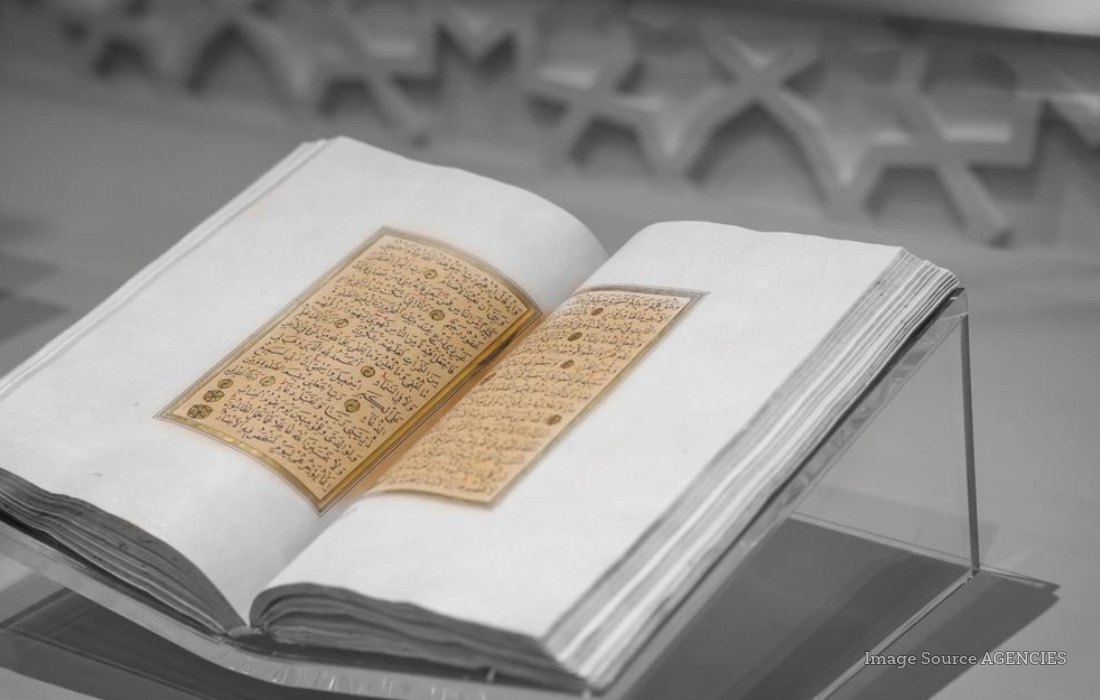
The complex houses seven specialised museums featuring rare Quranic manuscripts, historical artefacts, ancient printed editions and pieces of the Kaaba’s Kiswah.
Its exhibits trace the evolution of Quranic writing, Arabic calligraphy and manuscript preservation across centuries. Interactive displays also introduce visitors to the history of Quranic revelation and recitation.
The institution combines traditional restoration techniques with digital archiving to safeguard invaluable manuscripts. In January 2026, it established a strategic partnership with the Sharjah Institute for Heritage to strengthen these preservation efforts.
Taking Quranic education beyond borders
Through its Global Electronic Maqra’a platform, the complex enables students worldwide to study Quranic recitation under qualified specialists. It also operates a specialised research library, recording studios and educational programmes. These facilities support academic studies, Quranic interpretation and international scholarly cooperation.
On November 16, 2026, a delegation from the Sharjah Department of Islamic Affairs visited the institution to review its educational projects, scientific achievements and historical collections.
Impact to Expect
The complex continues to strengthen Sharjah’s position as an international centre for Islamic culture and education. Its manuscript preservation initiatives could protect valuable historical resources, while digital learning programmes expand access to Quranic scholarship across geographical boundaries.