

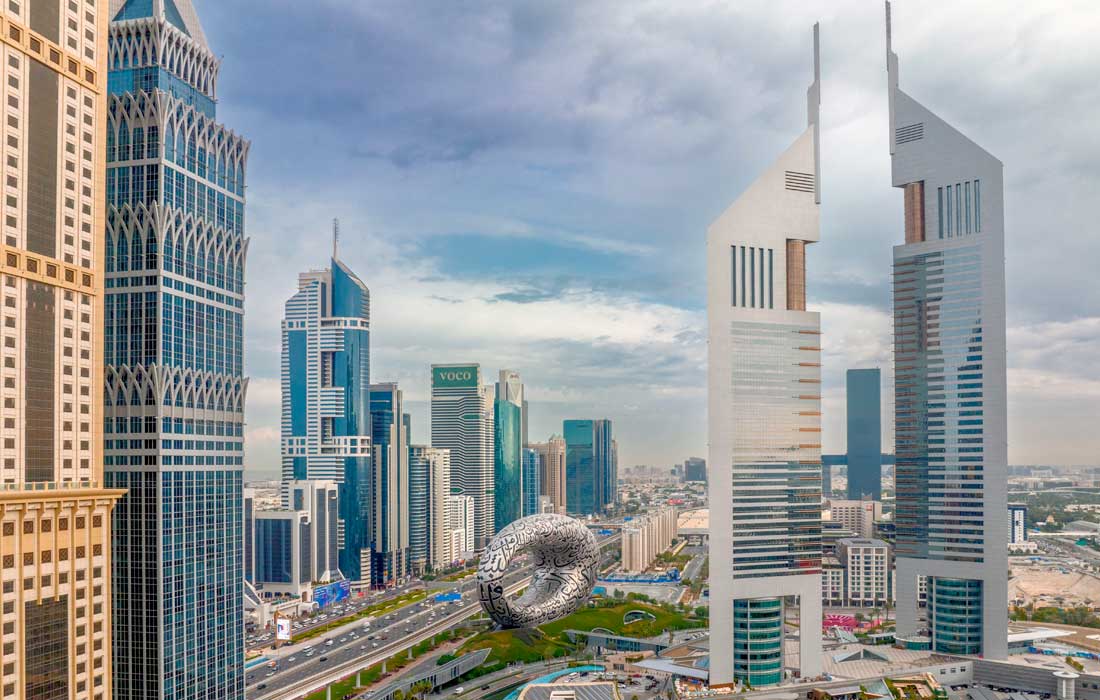

UAE foreign direct investment reached $40bn as the country strengthened its role as a trusted global financial gateway.
DUBAI: UAE foreign direct investment surged to $40bn between 2019 and 2024, doubling over five years despite mounting global economic uncertainty, according to a new report supported by Qashio.
The study, titled Mapping the UAE’s Role as a Global Financial Gateway, was published by Emerging Markets Intelligence & Research. It highlights how UAE foreign direct investment expanded even as global FDI flows stagnated due to geopolitical tensions, de-globalisation and shifting trade alliances.
In 2024 alone, FDI accounted for 40 percent of the UAE’s gross capital formation, compared to just 4.3 percent across developed economies. The country recorded 1,362 FDI projects last year, representing a 350 percent increase since 2020.
The report notes that the UAE’s neutrality and regulatory clarity have positioned it as a preferred hub for long-term capital. “The UAE is actually benefiting from the de-globalisation and the geopolitical reorientation of major power blocks. It doesn’t have adversaries, so is able to build economic ties with everyone. The speed with which the government has been able to adapt to and anticipate the new situation is remarkable,” the report states.
Financial sector growth has also accelerated. Assets under management at the Dubai International Financial Centre reached $700bn in 2024, marking a 58 percent year-on-year rise. Researchers say this reflects growing global confidence in the country’s compliance frameworks and financial infrastructure.
From Qashio’s perspective, UAE foreign direct investment growth underlines the importance of transparency and strong regulatory alignment. Founder and CEO Armin Moradi said, “As capital flows become more fragmented and regulated, trust and control are no longer optional — they are foundational.”
The report positions the UAE as a stable jurisdiction capable of supporting finance, trade, technology and digital assets, reinforcing its reputation as a resilient gateway for global capital.