

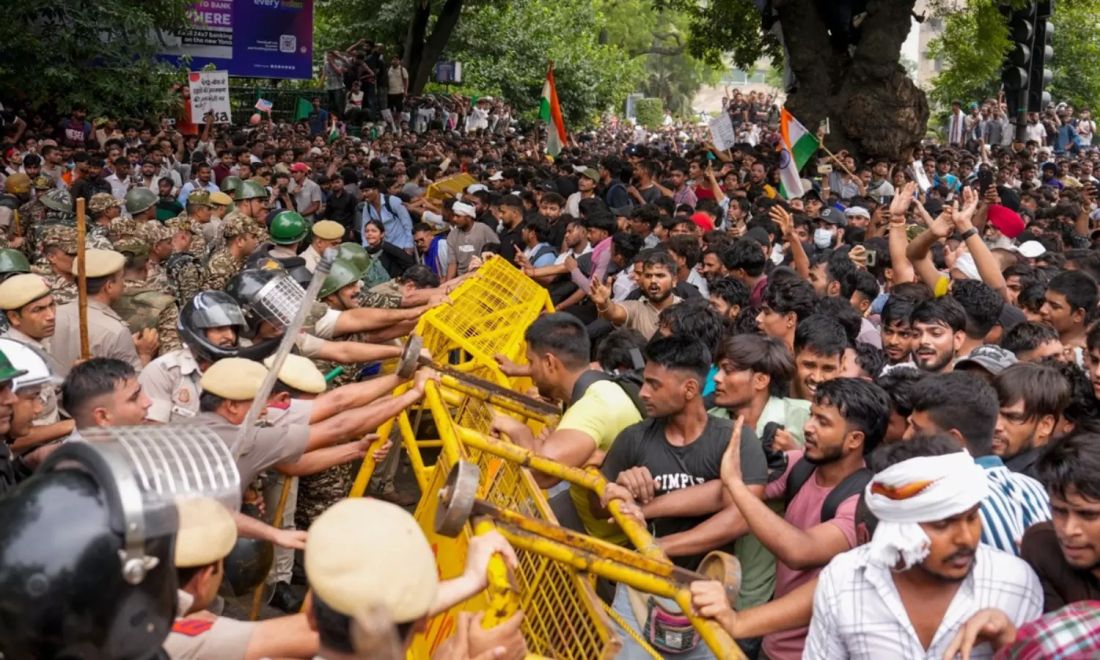

India’s youth protest movement entered formal talks with the Union government after weeks of demonstrations, but organisers said protests would continue until their key demands are addressed.
NEW DELHI: India’s youth protest movement reached a significant milestone on Friday as representatives of the Cockroach Janta Party (CJP) held formal discussions with the Union government following weeks of nationwide demonstrations over alleged examination paper leaks and education reforms. The India youth protest movement has become one of the country’s largest student-led campaigns in recent years.
The campaign began on 4 June when CJP founder Abhijeet Dipke announced a major protest in Delhi, urging students and young people to rally over alleged examination irregularities and demanding the resignation of Union Education Minister Dharmendra Pradhan. Organisers shared mobilisation plans online ahead of the first demonstration.
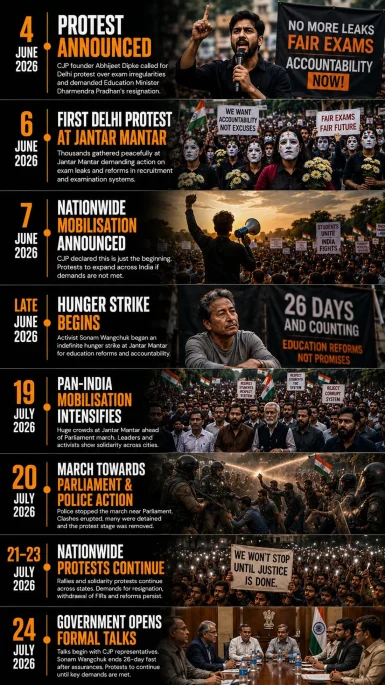
Thousands of students, parents and young professionals gathered at Jantar Mantar on 6 June. The largely peaceful protest featured demonstrators carrying flowers and wearing the movement’s distinctive cockroach-themed masks while calling for greater accountability, transparent recruitment systems and reforms to public examinations.
Following the Delhi demonstration, organisers announced plans to expand the campaign nationwide if their demands remained unmet. Volunteer networks and student groups subsequently coordinated solidarity events across several Indian states, increasing the movement’s reach.
Later in June, activist Sonam Wangchuk began an indefinite hunger strike at Jantar Mantar in support of examination reforms and greater accountability. His fast turned the protest site into the centre of the growing movement and attracted support from students, activists and opposition leaders.
Crowds returned in large numbers on 19 July ahead of a planned march towards Parliament. A day later, protesters attempted to march from Jantar Mantar but were stopped by Delhi Police, leading to clashes, detentions and the removal of the protest stage. The confrontation drew national attention and prompted fresh demonstrations in multiple states.
Between 21 and 23 July, student rallies and solidarity protests continued despite restrictions in Delhi. Protest leaders repeated demands for the Education Minister’s resignation, withdrawal of police cases against demonstrators and wider education reforms. The issue also disrupted proceedings during Parliament’s monsoon session.
On 24 July, the Union government opened formal talks with CJP representatives. Sonam Wangchuk ended his 26-day hunger strike after receiving government assurances, raising hopes of progress. However, CJP leaders said the India youth protest movement would continue until their principal demands, including the minister’s resignation and withdrawal of FIRs against protesters, are addressed. Government representatives have sought additional time to respond following the discussions.
India, Student protests, Education reforms, Exam paper leaks, Sonam Wangchuk, CJP, Jantar Mantar, Parliament, Delhi, Dharmendra Pradhan