


India UAE partnership gained fresh momentum after Prime Minister Modi’s Abu Dhabi visit and major bilateral investment agreements.
ABU DHABI: India UAE partnership discussions received strong support from the Indian professional and business community following Prime Minister Narendra Modi’s official visit to the UAE.
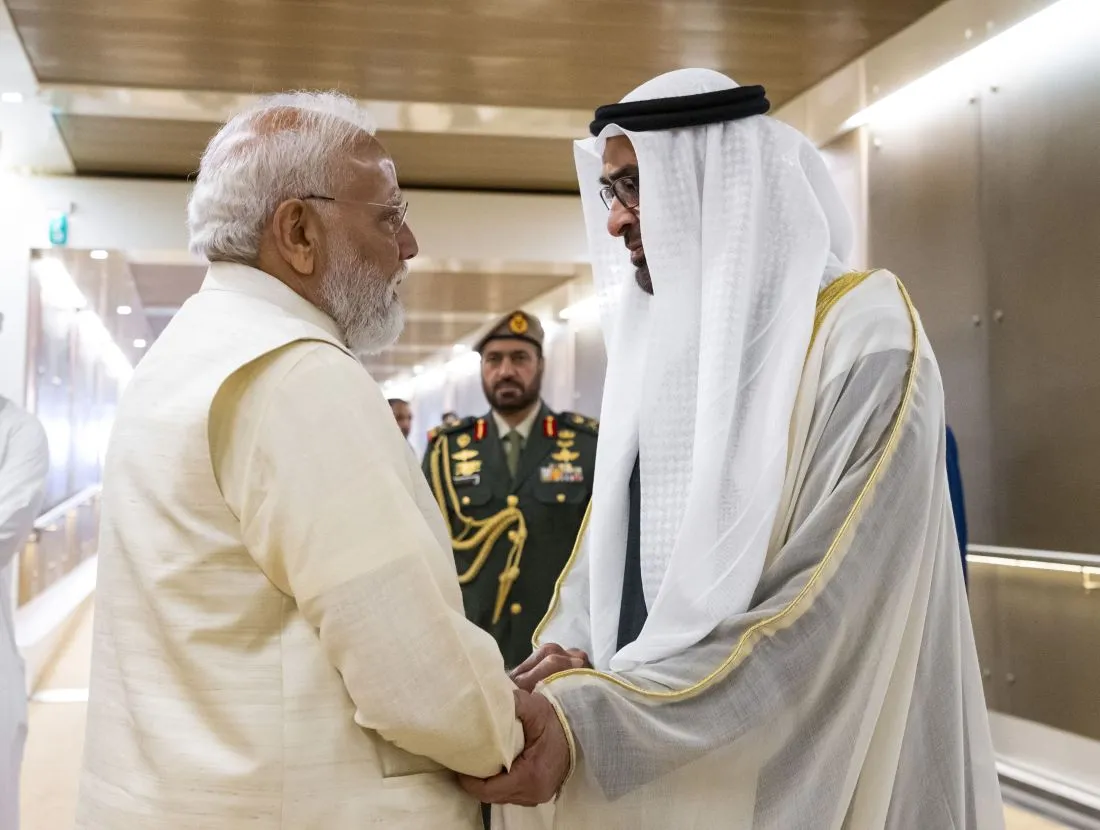
UAE President His Highness Sheikh Mohamed bin Zayed Al Nahyan bid farewell to the Indian Prime Minister at the conclusion of the visit, with a formation of UAE military aircraft escorting the aircraft as it departed UAE airspace.
The high-level visit resulted in several strategic agreements and investment announcements covering defence, energy, infrastructure, shipping, technology and financial cooperation between the two countries. Business leaders and professionals described the visit as a major step forward for bilateral relations, particularly after the announcement of USD 5 billion in UAE investments into India.
India UAE partnership ties have strengthened significantly in recent years under the Comprehensive Economic Partnership Agreement, creating new opportunities for trade, investment and entrepreneurship.
Dr. Azad Moopen, Founder Chairman, Aster DM Healthcare, expressed his positivity on PM Modi’s visit to the UAE, “Prime Minister Narendra Modi’s visit to the UAE reflects the strong and enduring partnership between the two nations, built on mutual trust, shared progress, and deep people-to-people ties. The personal rapport between Prime Minister Modi and His Highness Sheikh Mohamed bin Zayed Al Nahyan has been instrumental in elevating this relationship to new heights.
The visit further strengthens this bond through key agreements that reinforce long-term cooperation. As a healthcare organization with a significant presence across India and the GCC, Aster believe this deepening bilateral collaboration will continue to create opportunities for innovation, talent exchange, and advancing quality healthcare across the region.”
Dr. Sahitya Chaturvedi warmly welcomes these landmark developments and expresses confidence that the growing synergy between India and the UAE will continue to create transformative opportunities for businesses, professionals, investors, and the larger global community.
Commenting on the occasion, Chandra Shekhar Bhatia, Chairman, GBF Middle East, stated: “The meeting between Hon’ble Prime Minister Narendra Modi and His Highness Sheikh Mohamed bin Zayed Al Nahyan once again demonstrates the extraordinary depth of India–UAE relations. The announcement of USD 5 billion investments into India is not merely an economic commitment, but a strong expression of strategic confidence in India’s growth story.
The India–UAE partnership has evolved into a global model of cooperation encompassing trade, innovation, energy security, infrastructure, technology, and cultural harmony. Under the visionary leadership of both nations, we are witnessing the emergence of a new era of prosperity and strategic collaboration for the wider region and the global economy.
GBF Middle East wholeheartedly welcomes these landmark developments and looks forward to contributing towards stronger business, investment, and institutional engagement between India and the UAE.”
Kamal Vachani, Deputy CEO, Group Director and Partner at Al Maya Group, said the agreements reinforced the long-standing relationship between both countries.
“PM Modi’s visit powerfully reaffirms the strength and depth of the India-UAE partnership. For Al Maya Group, a proud part of this bilateral story for over five decades, these agreements inspire us to contribute even more meaningfully to this extraordinary relationship,” he said.
India UAE partnership cooperation now spans multiple sectors including energy security, logistics, innovation, defence and infrastructure development. Industry leaders said the latest agreements are expected to generate new opportunities for businesses, investors and professionals across both countries.
The visit further highlighted the growing strategic importance of UAE-India relations as both nations continue expanding economic and regional cooperation.